
30 Fascinating Facts About Berlin: Germany’s Capital
Discover compelling facts about Berlin that reveal why this German capital remains one of Europe’s most fascinating cities. From wartime destruction and Cold War division to reunification and cultural rebirth, Berlin blends deep history with a vibrant, modern identity that continues to captivate visitors worldwide.
Berlin Facts At-a-Glance
Location: Northeast Germany, Central Europe
Official Founding Year: 1237 (settlement of Cölln)
Population: Approx. 3.7 million (city proper)
Area: Approx. 892 sq km
Status: Capital and largest city of Germany; most populous EU city
UNESCO World Heritage Sites: 3 (Museum Island, Potsdam Palaces & Parks, Berlin Modernism Housing Estates)
Berlin Wall Standing: 1961–1989 (28 years)
Annual GDP: Approx. €160 billion
Facts About Berlin Geography and Physical Features
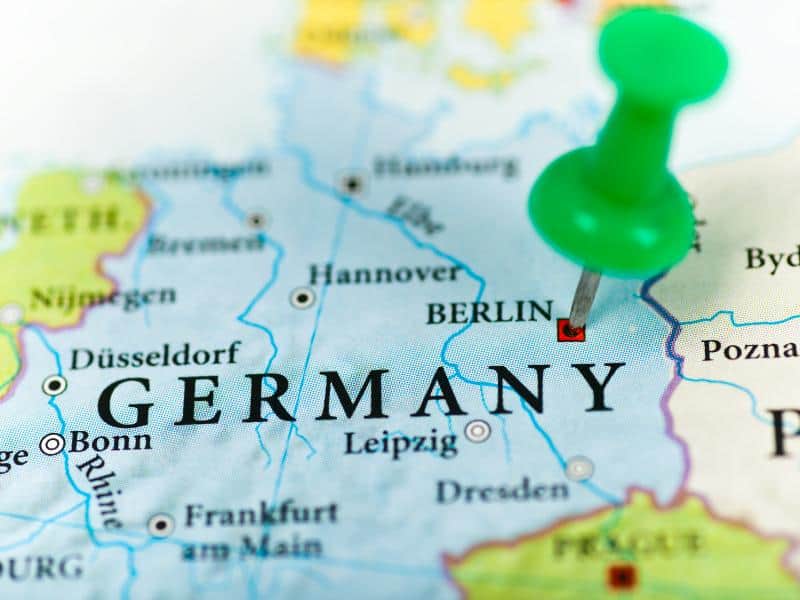
Berlin’s landscape is shaped by glacial history, winding waterways, and an impressive commitment to green space — making it one of Europe’s most distinctive capital cities in terms of natural character.
- Berlin is the capital and largest city of Germany, covering an area of approximately 892 square kilometers, making it nearly nine times the size of Paris within its city limits.
- The city sits at the confluence of two rivers, the Spree and the Havel, and contains over 180 kilometers of navigable waterways — often said to have more navigable waterways than Venice or Amsterdam.
- Berlin sits on a glacial plain formed during the last Ice Age, and the ground beneath the city is so sandy and waterlogged that construction projects regularly uncover unexploded World War II bombs, with authorities defusing an estimated 2,000 tons of unexploded ordnance in the region each year.
- Berlin has among the highest proportions of green space per capita of any major European capital, with parks, forests, and lakes covering approximately one-third of the city’s total area.
- The Grunewald forest on the western edge of Berlin covers about 3,000 hectares and contains the Teufelsberg, an artificial hill built from approximately 25 million cubic meters of World War II rubble.
Suggested Read:
Facts About Berlin History

Few cities in the world carry as much historical weight as Berlin, having served as the stage for some of the 20th century’s most defining events.
- Berlin was founded in the 13th century, with the earliest documented mention of the settlement of Cölln — its twin city across the Spree — dating to 1237, which is considered the city’s official founding year.
- During the Cold War, Berlin was divided into four occupation zones controlled by the United States, the United Kingdom, France, and the Soviet Union following Germany’s defeat in World War II in 1945.
Suggested Read:
- Hundreds of thousands of people were killed or died in Berlin during World War II, and by 1945 roughly 80 percent of the city center had been destroyed by Allied bombing and Soviet artillery.
- The Berlin Wall, constructed beginning on August 13, 1961, divided the city for 28 years until its fall on November 9, 1989, stretching 155 kilometers in total length and standing up to 3.6 meters high.
- Berlin’s Checkpoint Charlie was the most famous crossing point between East and West Berlin during the Cold War and was the site of a tense military standoff between American and Soviet tanks in October 1961.
- Berlin’s Tempelhof Airport, which closed in 2008, was once among the largest buildings in the world at the time of its construction and played a crucial role during the Berlin Airlift of 1948 to 1949, when Western Allies flew over 200,000 flights to supply West Berlin during a Soviet blockade.
- Berlin was the host city of the 1936 Summer Olympic Games, during which African American athlete Jesse Owens won four gold medals, directly contradicting Nazi ideology about racial superiority in front of Adolf Hitler.
Facts About Berlin Demographics and Population

Berlin’s population reflects both its status as Germany’s largest city and its long history as a crossroads of cultures and communities.
- Berlin has a population of approximately 3.7 million people within the city proper, making it the most populous city in the European Union.
- Berlin has a significant Turkish community, with approximately 200,000 people of Turkish origin living in the city, making it home to one of the largest Turkish communities outside of Turkey itself.
Facts About Berlin Architecture and Landmarks

Berlin’s skyline and streetscape tell the story of centuries of ambition, destruction, and reinvention, from neoclassical gates to cutting-edge contemporary design.
- The Brandenburg Gate, completed in 1791 and designed by Carl Gotthard Langhans, is one of Berlin’s most iconic landmarks and served as a symbol of division during the Cold War before becoming a symbol of reunification.
- The Reichstag building, originally completed in 1894, was famously wrapped in fabric by artists Christo and Jeanne-Claude in 1995 and later renovated with a striking glass dome designed by architect Norman Foster, which opened in 1999.
- The Holocaust Memorial, officially known as the Memorial to the Murdered Jews of Europe, was inaugurated in 2005 and consists of 2,711 concrete slabs of varying heights spread across 19,000 square meters near the Brandenburg Gate.
- The East Side Gallery, a 1.3-kilometer stretch of the original Berlin Wall along the Spree River, has been transformed into what is widely regarded as one of the world’s largest open-air galleries, featuring murals painted by over 100 artists from 21 countries in 1990.
Facts About Berlin Museums and Culture

Berlin’s cultural infrastructure is staggering in both scale and depth, encompassing world-class museums, legendary performing arts institutions, and a globally influential contemporary scene.
- Berlin is home to three UNESCO World Heritage Sites: Museumsinsel (Museum Island), the Palaces and Parks of Potsdam and Berlin, and the Berlin Modernism Housing Estates.
- Museum Island in the Spree River houses five world-renowned museums, including the Pergamon Museum, which contains the reconstructed Pergamon Altar dating from around 180 to 160 BCE and attracts over one million visitors annually.
- Berlin has more museums than rainy days per year, with over 170 museums in the city, covering topics ranging from ancient history and natural science to contemporary art and everyday life in the former East Germany.
- The Berlin Philharmonic, founded in 1882, is consistently ranked among the top orchestras in the world and has been led by legendary conductors including Herbert von Karajan, who directed it for 35 years from 1955 to 1989.
- The city hosts the Berlin International Film Festival, known as the Berlinale, which is one of the world’s most prestigious film festivals and has been held annually since 1951, attracting over 300,000 ticket buyers each year.
- The city’s nightlife and electronic music scene is globally renowned, with clubs like Berghain — which opened in 2004 in a former power plant — considered among the most influential music venues in the world.
- The city’s Zoologischer Garten, opened in 1844, is among the most visited zoos in Europe, housing over 20,000 animals from approximately 1,400 species and receiving around 3.5 million visitors annually.
Facts About Berlin Science and Notable Figures
Berlin has long been a magnet for some of history’s greatest scientific and intellectual minds.
- Albert Einstein lived and worked in Berlin from 1914 to 1933, during which time he published his general theory of relativity in 1915 and received the Nobel Prize in Physics in 1921.
Facts About Berlin Transportation

Berlin’s public transit network is one of the most comprehensive in Europe, and it carries a unique historical legacy rooted in the city’s Cold War division.
- Berlin’s public transportation network, operated by the BVG, includes U-Bahn (subway), S-Bahn (urban rail), trams, buses, and ferries, with over 1.5 billion passenger journeys recorded annually.
- Berlin is among the few cities in the world where a single subway line runs through what were once two entirely separate national transit systems — a remarkable legacy of its Cold War division.
Facts About Berlin Economy and Innovation
From federal government headquarters to a booming startup ecosystem, Berlin has reinvented itself as one of Europe’s most economically dynamic capitals.
- The city is known as one of Europe’s leading startup hubs, with over 600 startups founded there annually and companies like Zalando, HelloFresh, and Delivery Hero having their origins in Berlin.
- Berlin’s economy generates a GDP of approximately 160 billion euros annually, and the city is a major center for media, politics, science, and technology, hosting the headquarters of numerous German federal government institutions.
Explore Fascinating Facts About Europe’s Iconic Capitals
Quick insights and highlights from some of the continent’s most famous cities.
- 125 Interesting Facts About London England
- 101 Fun Facts About Rome: Discover The Eternal City
- 120 Fascinating Facts About Athens
- 25 Fun Facts About Helsinki: Top-Tier Quality of Life
- 50 Fun Facts About Paris: The City of Light Unveiled
- 30 Fun Facts About Lisbon: Where Trams Meet Traditions
- 35 Fun Facts About Copenhagen: From Vikings to Michelin Stars
- 100 Interesting Facts About Vienna: The City of Dreams
- 30 Interesting Facts About Madrid: Spanish Capital
- 108 Interesting Facts About Amsterdam


