
Fun Facts About Big Ben in London: Famous Clock
Big Ben is one of London’s most recognizable sights, but the name is a bit trickier than most people think. This list gathers fun and informative facts about Big Ben, covering its names, its construction, its famous bell, and the clockwork that keeps it running. Here’s what makes this famous clock and tower so interesting.
Big Ben Facts At-a-Glance
Strictly Speaking: Big Ben is the name of the Great Bell, not the tower or clock
Tower Name: Elizabeth Tower (renamed in 2012)
Clock Name: Great Clock of Westminster
Construction Began: 28 September 1843
Bell Weight: About 13.7 tonnes (more than 13 tons)
Accuracy: Within two seconds per week
Climb to the Belfry: 334 steps
Sources: UK Parliament, Uk Parliament, Encyclopedia Britannica, Wikipedia, Mental Floss, Visit London
What Is Big Ben, Exactly?
People use the name for the whole landmark, but each part has its own title.
- Strictly speaking, the name Big Ben belongs to the Great Bell inside the tower, not to the tower or the clock as a whole.
- The clock itself carries the formal name Great Clock of Westminster.
- The Clock Tower was renamed the Elizabeth Tower in 2012 to honour Queen Elizabeth II’s Diamond Jubilee.
How the Tower and Clock Began
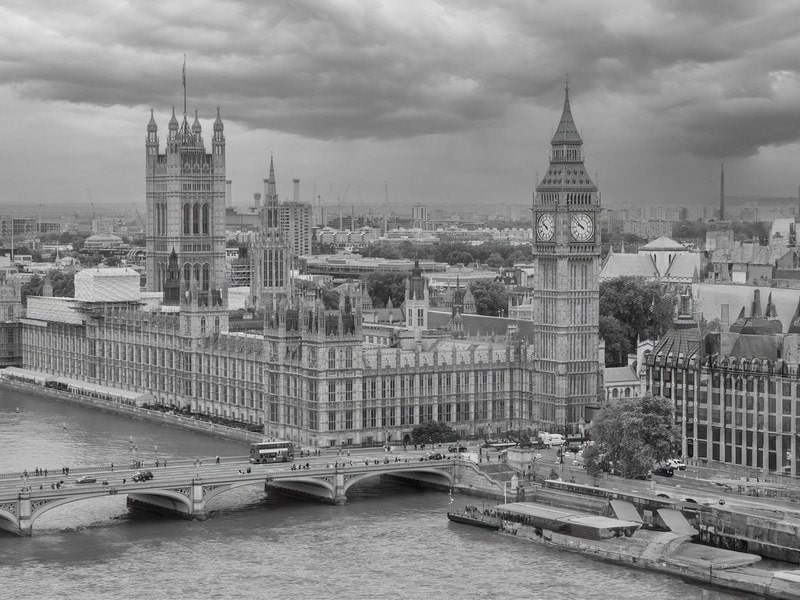
The story starts with a fire on 16 October 1834 that largely destroyed the Palace of Westminster and led to a new palace whose design included a tower and clock.
- A fire on 16 October 1834 largely destroyed the Palace of Westminster, leading to a new palace whose design included a tower and clock.
- Construction of the Clock Tower began on 28 September 1843 with the laying of its foundation stone.
- Denison’s double three-legged gravity escapement gave the clock exceptional accuracy and became the standard for later tower clocks.
The Great Bell and Its Rocky Start
The first bell, cast at Stockton-on-Tees, cracked irreparably and was melted down and recast in Whitechapel in 1858, then hauled to the tower on a carriage drawn by 16 horses.
- The first bell, cast at Stockton-on-Tees, cracked irreparably and was melted down and recast in Whitechapel in 1858.
- The replacement bell was transported to the tower on a carriage drawn by 16 horses.
- The Great Bell weighs about 13.7 tonnes and is over seven feet tall and nine feet across.
How the Clock Keeps Time

Keeping a Victorian clock accurate takes hand winding and a surprising bit of loose change.
- The clock is wound by hand three times a week, and each winding takes more than an hour.
- The clock is accurate to within two seconds per week.
- The clock is regulated by adding or removing old pre-decimal pennies on the pendulum, with each coin altering its rate by 0.4 seconds per day.
The Tower Itself
The tower is tall, steep inside, and not perfectly upright.
- Reaching the belfry requires climbing 334 steps, and the Ayrton Light at the top is 399 steps up.
- The tower leans slightly to the north-west because of the soft London clay beneath it.
Recommended Read: 25 Fun Facts About the Eiffel Tower: History & Surprises
Big Ben on the Air and Out of Service
The chimes were first broadcast by the BBC in 1923, and they have also fallen silent more than once.
- The BBC first broadcast Big Ben’s chimes on 31 December 1923.
- A mechanical failure in August 1976 silenced Big Ben for nearly nine months, until May 1977.
- Big Ben stopped chiming in August 2017 for restoration work, apart from special occasions such as New Year’s Eve and Remembrance Sunday.
Recommended Read:


