
25 Interesting Facts About Canyons: Carved Landscapes
Facts about canyons reveal how slow geological processes can shape some of the most dramatic landscapes on Earth. Carved over millions of years by water, ice, and tectonic forces, canyons provide valuable insight into erosion, climate history, and the planet’s changing surface.
Canyons Facts At-a-Glance
What: Deep valleys with steep sides, often carved by rivers
Primary Cause: Erosion over long periods of time
Typical Location: Mountain regions, plateaus, and arid landscapes
Time Scale: Thousands to millions of years
Scientific Value: Reveal rock layers and geological history
Top 5 Famous Canyons:
– Yarlung Tsangpo Grand Canyon (Tibet/China)
– Grand Canyon (Arizona, USA)
– Fish River Canyon (Namibia)
– Copper Canyon (Mexico)
– Colca Canyon (Peru)
1. Most Canyons Are Formed by Running Water
Most canyons are created by rivers eroding rock over long periods through hydraulic action and abrasion. This explains why many major canyons still contain active rivers at their base.
2. Canyon Formation Takes Millions of Years
Large canyons typically form over millions of years because erosion removes rock very slowly under normal conditions. This long timescale allows canyons to record extended geological history.
3. The Grand Canyon Is Over a Mile Deep
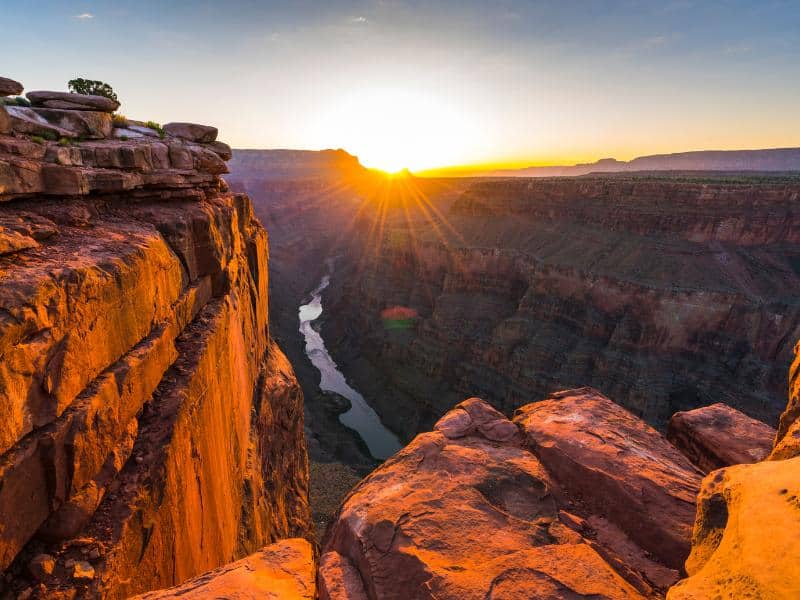
The Grand Canyon, located primarily in Arizona and extending into Utah, reaches depths of more than 6,000 feet (about 1,800 meters). This extreme depth exposes rock layers spanning nearly two billion years of Earth’s history.
Suggested Read:
4. Canyons Reveal Earth’s Geological Timeline
Rock layers visible in canyon walls are arranged chronologically, with older layers at the bottom and younger layers above. This allows scientists to reconstruct past environments and tectonic events.
5. Not All Canyons Are Found in Deserts
Canyons also form in forests, mountains, and polar regions wherever erosion exceeds rock formation. This shows that climate influences canyon appearance but not the underlying process.
6. Rivers Can Cut Down Faster Than Land Rises
Some canyons form while land is being uplifted by tectonic forces. Rivers that erode downward at a similar rate maintain canyon depth despite rising terrain.
7. Slot Canyons Are Among the Narrowest
Slot canyons form when fast-moving water cuts deeply into narrow fractures in rock. Their shape demonstrates how erosion can be highly focused rather than spread evenly.
8. Flash Floods Shape Slot Canyons

Most erosion in slot canyons occurs during short-lived flash floods rather than constant flow. This makes their formation episodic but extremely efficient.
Suggested Read: 10 Interesting Facts About Floods: Nature’s Watery Fury
9. Some Canyons Were Carved by Ice
Glacial canyons form when moving ice erodes rock through plucking and abrasion. These processes typically create wider, U-shaped valleys instead of narrow channels.
10. Submarine Canyons Exist Under the Ocean
Submarine canyons form on continental shelves through sediment flows and underwater currents. They play a major role in transporting sediment to the deep ocean.
11. The Largest Canyon System Is Underwater

Zhemchug Canyon in the Bering Sea is larger than the Grand Canyon in both length and volume. Its size shows that canyon formation is not limited to land.
12. Canyons Influence Local Climate
Canyon depth and orientation affect sunlight exposure, wind flow, and temperature. This creates microclimates that differ significantly from surrounding terrain.
13. Many Canyons Support Unique Ecosystems
Different elevations within a canyon create varied environmental conditions over short distances. This allows distinct plant and animal communities to coexist vertically.
14. Humans Have Lived in Canyons for Thousands of Years
Archaeological evidence shows long-term human occupation in canyon regions due to access to water and natural shelter. Canyons often served as stable living environments in harsh landscapes.
15. Canyons Can Act as Natural Barriers

Steep canyon walls restrict movement across landscapes. This has influenced migration routes, settlement patterns, and cultural boundaries.
16. Erosion Rates Depend on Rock Type
Hard rocks like granite erode more slowly than softer sedimentary rocks such as sandstone. Rock composition directly affects canyon shape and slope stability.
17. Some Canyons Are Still Actively Growing
Active rivers continue to deepen and widen many canyons today. Measuring these changes helps scientists estimate modern erosion rates.
Suggested Read: 10 Fascinating Facts About Antelope Canyon
18. Wind Plays a Secondary Role in Canyon Formation
Wind contributes mainly by removing loose sediment rather than cutting bedrock. Its effects are most noticeable in dry, exposed canyon environments.
19. Canyons Can Form Without Rivers
Some canyons result primarily from tectonic faults, landslides, or volcanic collapse. This shows that erosion by water is common but not required.
20. Canyon Walls Often Preserve Fossils

Sedimentary rock layers exposed in canyon walls can contain fossil remains. These fossils help scientists study ancient ecosystems and evolutionary change.
21. The Steep Walls Increase Rockfall Risk
Gravity causes frequent rockfalls in steep canyon walls. This ongoing process continually reshapes canyon profiles.
22. Canyons Help Scientists Study Erosion Rates
Scientists use canyon depth, sediment volume, and exposure ages to calculate erosion speed. These measurements improve models of landscape evolution.
23. The Word “Canyon” Comes from Spanish
The term “canyon” comes from the Spanish word cañón, meaning a tube or gorge. Its usage spread through exploration and mapping of the Americas. [Learn more: 55 Interesting Facts About North America]
24. Some Canyons Are Younger Than They Appear
Certain canyons formed rapidly due to sudden changes in water flow or land uplift. Their appearance can resemble much older landscapes.
25. Canyons Are Natural Records of Earth’s Past
Each canyon preserves a layered record of erosion, climate, and tectonic change. This makes canyons valuable tools for Earth science research.
Discover Fascinating Facts About Earth’s Natural Wonders:
- 50 Mind-Blowing Facts About Nature for Students
- 10 Interesting Facts About Rocks: Earth’s Building Blocks
- 25 Interesting Facts About Rivers: Life Lines
- 25 Fascinating Facts About Glaciers: Icy Giants Explored
- 50 Amazing Facts About Antarctica: Icy Wonders
- 25 Fun Facts About Mountains: Earth’s Majestic Giants


