
25 Fascinating Facts About Earthquakes: Earth’s Tremors
Facts about earthquakes reveal that these powerful seismic events reshape landscapes, trigger tsunamis, and impact communities worldwide. This article explores their global patterns, environmental effects, and the science helping us better understand and prepare for them.
Earthquakes Facts At-a-Glance
Type/Classification: Seismic event
Geographic Distribution: Global, concentrated along tectonic plate boundaries
Notable Examples: 2011 Tohoku (Japan), 1960 Valdivia (Chile), 1906 San Francisco (USA)
Key Characteristics: Ground shaking, surface rupture, seismic waves
Scientific Significance: Reveals Earth’s internal structure and plate tectonics
Environmental Impact: Landslides, tsunamis, changes in topography
Human Interaction: Building codes, early warning systems, seismic monitoring
Research Status: Ongoing, focus on prediction and risk assessment
Source: U.S. Geological Survey
Scientific Understanding
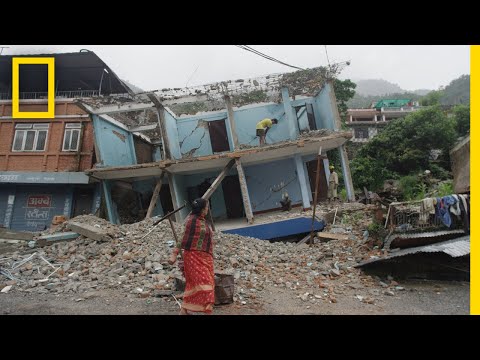
The scientific understanding of earthquakes has evolved dramatically over the past century, providing crucial insights into the Earth’s structure and dynamics. From the development of plate tectonic theory to the use of advanced seismological instruments, our knowledge of these seismic events continues to grow.
- Earthquakes occur when tectonic plates suddenly slip past each other, releasing stored energy in the form of seismic waves. This process, known as elastic rebound theory, was first proposed by geologist Harry Fielding Reid after the 1906 San Francisco earthquake. [Learn more: 110 Striking Facts About San Francisco]
- The focus of an earthquake is the point within the Earth where the rupture begins, while the epicenter is the point directly above the focus on the Earth’s surface. Understanding this distinction helps scientists accurately locate and study seismic events.
- Seismologists use three main types of seismic waves to study earthquakes: P-waves (primary), S-waves (secondary), and surface waves. P-waves are the fastest and can travel through both solids and liquids, while S-waves are slower and can only travel through solids.
Formation and Processes

The formation and processes behind earthquakes involve complex geological mechanisms operating deep within the Earth. Understanding these processes is crucial for predicting and mitigating the impacts of seismic events.
- The majority of earthquakes occur along plate boundaries, particularly in subduction zones where one tectonic plate is sliding beneath another. The Pacific Ring of Fire, encompassing the edges of the Pacific Plate, is responsible for about 90% of the world’s earthquakes.
- Earthquakes can occur at various depths within the Earth, categorized as shallow (0-70 km), intermediate (70-300 km), or deep (300-700 km). Shallow earthquakes are the most common and typically cause the most damage due to their proximity to the surface.
- Foreshocks and aftershocks are smaller earthquakes that occur before and after a main seismic event, respectively. While foreshocks can sometimes indicate an impending larger quake, they are only identified retrospectively, making earthquake prediction challenging.
Global Distribution and Patterns
Earthquakes exhibit distinct global distribution patterns, closely tied to the Earth’s tectonic structure. These patterns provide valuable insights into the planet’s geological activity and help identify areas at higher risk of seismic events.
- The most seismically active region on Earth is the circum-Pacific seismic belt, also known as the Ring of Fire. This horseshoe-shaped zone, stretching along the Pacific Ocean’s edges, experiences about 81% of the world’s largest earthquakes. [Learn more: 30 Surprising Facts About the Pacific Ocean]
- Intraplate earthquakes, occurring within tectonic plates rather than at their boundaries, are less common but can still be significant. The 1811-1812 New Madrid earthquakes in the central United States are prime examples of powerful intraplate seismic events.
- The frequency of earthquakes follows a logarithmic pattern known as the Gutenberg-Richter law. For every magnitude 8 earthquake, there are about 10 magnitude 7 quakes, 100 magnitude 6 quakes, and so on, illustrating the relative rarity of major seismic events.
Environmental Impact

Earthquakes can have profound and lasting effects on the environment, reshaping landscapes and triggering secondary hazards. These impacts range from immediate physical changes to long-term ecological shifts.
- Large earthquakes can cause significant changes in topography, creating new hills, valleys, or even redirecting rivers. The 2015 Nepal earthquake, for instance, caused Mount Everest to shrink by about 2.5 cm (1 inch) and shifted the ground in some areas by up to 5 meters.
- Submarine earthquakes can trigger devastating tsunamis, as seen in the 2004 Indian Ocean earthquake and tsunami. This event, one of the deadliest natural disasters in recorded history, affected 14 countries and caused over 230,000 fatalities.
- Earthquakes can induce landslides and avalanches in mountainous regions, posing additional hazards to communities and ecosystems. The 1970 Ancash earthquake in Peru triggered a massive landslide that buried the town of Yungay, claiming about 20,000 lives.
Suggested Read:
Human Interaction and Cultural Significance
Throughout history, earthquakes have played a significant role in shaping human societies, influencing everything from architectural practices to cultural beliefs. Our interaction with these powerful natural events continues to evolve as our understanding grows.
- Ancient civilizations often attributed earthquakes to supernatural causes. The Greek god Poseidon was known as the “Earth-Shaker,” while in Japanese mythology, earthquakes were caused by a giant catfish named Namazu thrashing about underground.
- The development of earthquake-resistant building techniques has significantly reduced fatalities in seismically active regions. Japan’s rigorous building codes, implemented after the 1995 Kobe earthquake, have made its structures among the most earthquake-resistant in the world. [Learn more: 40 Interesting Facts About Japan]
- Earthquake early warning systems, such as Japan’s nationwide system implemented in 2007, can provide crucial seconds of advance notice before strong shaking begins. These systems use the faster-traveling P-waves to detect an earthquake before the more damaging S-waves arrive.
Research and Discoveries

Ongoing research in seismology continues to yield new discoveries about earthquakes and the Earth’s internal structure. These advancements not only deepen our scientific understanding but also contribute to improved hazard assessment and mitigation strategies.
- The discovery of slow-slip events or “silent earthquakes” in the 1990s revolutionized our understanding of tectonic plate movement. These events release energy over weeks or months without producing detectable seismic waves, potentially influencing the occurrence of larger, destructive earthquakes.
- Seismologists have identified a new layer within the Earth’s inner core, announced in 2023. This “innermost inner core,” about 650 km in diameter, may hold clues to the planet’s formation and magnetic field generation.
- Artificial intelligence and machine learning are increasingly being applied to earthquake research, improving our ability to detect and locate seismic events. In 2018, researchers used AI to identify 17 times more earthquakes in Oklahoma than were previously known.
Future Challenges
Understanding and mitigating earthquakes impacts on human societies and ecosystems is crucial. Future challenges involve improving prediction capabilities and enhancing resilience in vulnerable regions.
- Climate change may indirectly influence earthquake activity through processes such as glacial isostatic adjustment. As ice sheets melt, the reduced weight on the Earth’s crust can lead to increased seismic activity in affected regions. [Learn more: 25 Fascinating Facts About Glaciers: Icy Giants Explored]
- The growing population in earthquake-prone urban areas poses a significant challenge for disaster preparedness. By 2050, it’s estimated that 68% of the world’s population will live in cities, many of which are located in seismically active zones.
- Induced seismicity, or human-caused earthquakes, is an emerging concern. Activities such as hydraulic fracturing (fracking) and wastewater injection have been linked to increased earthquake activity in some regions, prompting new regulatory challenges.
- Earthquake prediction remains one of the most challenging aspects of seismology. While scientists can identify areas at risk, predicting the exact time and location of an earthquake is still not possible with current technology.
- The development of next-generation seismic monitoring networks, including seafloor observatories, is enhancing our ability to study earthquakes. These advanced systems provide more comprehensive data, particularly for undersea seismic events.
- Earthquake-resistant infrastructure is evolving beyond traditional building techniques. Innovative designs, such as base isolation systems and energy-dissipating devices, are being implemented to protect structures from seismic forces.
- The concept of “earthquake culture” is gaining importance in high-risk areas. This involves educating communities about earthquake preparedness, conducting regular drills, and integrating seismic awareness into everyday life to build resilience against future events.
Top 5 Earthquakes in History

Now that we’ve explored the most fascinating facts about earthquakes, let’s take a closer look at five of the most powerful and devastating seismic events in recorded history. These earthquakes stand out for their immense energy, destruction, and lasting impact on the world.
1. 1960 Valdivia Earthquake (Chile)
Date: May 22, 1960
Magnitude: 9.5 (largest ever recorded)
Fatalities: Estimated 1,000–6,000
Countries Affected: Chile, Hawaii, Japan, Philippines, and more
Details: The most powerful earthquake ever recorded. It triggered tsunamis across the Pacific Ocean and displaced thousands in southern Chile. Entire towns were destroyed, and the quake caused significant geological shifts.
Suggested Read:
2. 2004 Indian Ocean Earthquake
Date: December 26, 2004
Magnitude: 9.1–9.3
Fatalities: Over 230,000
Countries Affected: Indonesia and surrounding regions
Details: This undersea megathrust earthquake off the coast of Sumatra caused one of the deadliest tsunamis in history. The quake itself was felt as far away as Alaska and lasted up to 10 minutes.
Suggested Read: 20 Amazing Facts About Tsunamis: Ocean’s Fury Unleashed
3. 2011 Tōhoku Earthquake (Japan)
Date: March 11, 2011
Magnitude: 9.0
Fatalities: Over 15,000 (earthquake and tsunami combined)
Country Affected: Japan
Details: The strongest earthquake ever recorded in Japan. It caused a massive tsunami and led to the Fukushima Daiichi nuclear disaster. The earthquake shifted the Earth’s axis and shortened the day slightly.
4. 1976 Tangshan Earthquake (China)
Date: July 28, 1976
Magnitude: 7.5
Fatalities: Officially 242,000 (unofficial estimates exceed 600,000)
Country Affected: China
Details: One of the deadliest earthquakes of the 20th century. Struck early in the morning, flattening much of Tangshan. The high death toll was due to poor infrastructure and lack of early warning.
5. 1906 San Francisco Earthquake (USA)
Date: April 18, 1906
Magnitude: Estimated 7.8
Fatalities: Over 3,000
Country Affected: United States
Details: Devastated San Francisco and led to widespread fires that caused most of the destruction. It remains one of the most significant seismic events in U.S. history and helped advance modern seismology.
Suggested Read: 110 Striking Facts About San Francisco


