
70 Interesting Facts About England and the UK
Discover fascinating facts about England and the UK, a realm steeped in history, tradition, and global influence. From ancient landmarks and royal heritage to modern innovations and cultural exports, England and the broader United Kingdom have shaped world history in countless ways.
Let’s explore this captivating nation and uncover some of its most intriguing aspects, from purely English traditions to the remarkable achievements of the UK as a whole.
England and UK Facts At-a-Glance
Location: Northwestern Europe (England is the largest country within the UK)
Population: England ~56 million; UK ~67 million
Area: England 130,279 km²; UK 243,610 km²
Languages: English (official); Welsh, Scottish Gaelic also official in respective regions
Government: Constitutional monarchy with parliamentary democracy
Climate: Temperate maritime
Currency: Pound Sterling (£)
Sources: Office for National Statistics, UK Government
Historical Significance
England’s rich history spans millennia, shaping not only its own identity but also influencing global events. From ancient civilizations to modern times, the country has been at the forefront of numerous historical developments.
- England was first inhabited by modern humans around 35,000 years ago, with some of the earliest evidence found at Kents Cavern in Devon, where stone tools and human remains reveal our ancestors’ sophisticated survival techniques during the Ice Age.
- The Romans invaded England in 43 AD under Emperor Claudius and ruled for nearly 400 years, establishing Londinium (London) as a major trading hub and building over 9,000 kilometers of roads that connected their empire across Britain.
- The Norman Conquest of 1066 led by William the Conqueror at the Battle of Hastings completely transformed England’s language, culture, and architecture, introducing French influences that still permeate English vocabulary today with over 10,000 French-derived words.
- The Magna Carta, signed by King John in 1215 at Runnymede, established the revolutionary principle that even kings must obey the law and became the foundation for constitutional governments worldwide, including the US Constitution.
- England played a crucial role in both World Wars, with London surviving the Blitz during WWII when German bombs fell for 57 consecutive nights, yet the city’s spirit remained unbroken, symbolizing British resilience.
- The English Civil War (1642-1651) resulted in the only period in English history when the country was briefly a republic, called the Commonwealth, after King Charles I became the first English monarch to be publicly executed for treason.
- England was the birthplace of the Industrial Revolution in the 18th century, with the world’s first steam-powered cotton mill opening in Manchester in 1783, forever changing how humans work and live.
Monarchy and Government
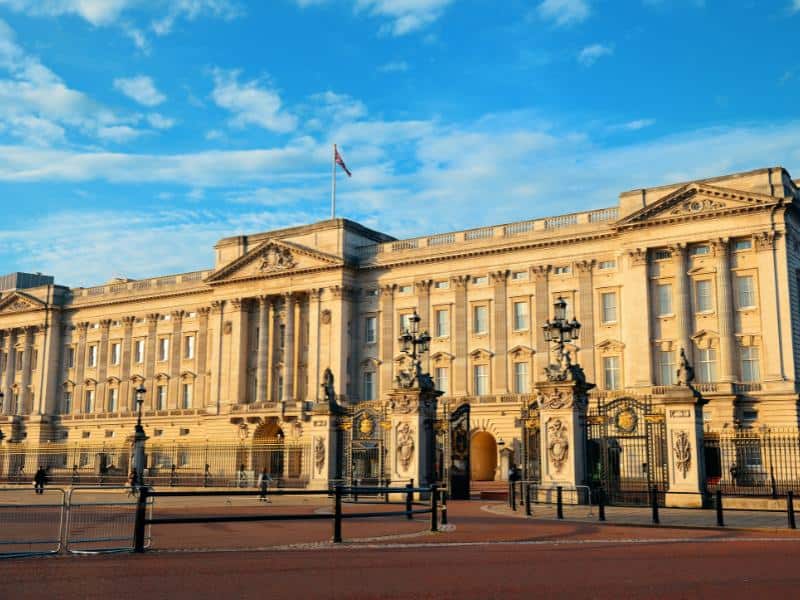
England’s system of governance has evolved over centuries, with the monarchy playing a central role in its history and current affairs.
- Buckingham Palace serves as the monarch’s official residence and administrative headquarters, containing 775 rooms, including 19 State rooms, 52 royal and guest bedrooms, and its own post office, police station, and hospital.
- King Charles III ascended to the throne in September 2022 at age 73, making him the oldest person ever to become British monarch, after waiting longer than any heir apparent in British history.
- England does not have its own separate government but is governed directly by the UK Parliament at Westminster, which has operated from the same location for over 900 years despite being bombed during WWII.
- The Prime Minister traditionally resides at 10 Downing Street in London, a modest Georgian townhouse that has been the official residence since 1735 and contains over 100 rooms despite its narrow street frontage.
- The House of Commons has 650 elected Members of Parliament, with the chamber deliberately designed too small to seat everyone at once, forcing MPs to stand during popular debates to maintain the intimate, confrontational atmosphere.
- The British Parliament is often called the “Mother of Parliaments” because it’s the world’s oldest functioning democracy, with some democratic traditions dating back over 1,000 years to Anglo-Saxon councils.
- England still uses an ancient ceremony called “Black Rod” to summon MPs from the Commons to hear the monarch’s speech, where the House of Commons door is symbolically slammed shut and only opened after three knocks, representing parliamentary independence.
Iconic Landmarks

England boasts numerous world-famous landmarks that attract millions of visitors each year. These structures stand as testaments to the country’s rich history and architectural prowess.
- The Tower of London has served as a royal residence, prison, treasury, armory, and zoo over its 950-year history, and still houses the Crown Jewels worth an estimated £20 billion.
- Big Ben is actually the nickname for the largest bell inside Elizabeth Tower (the clock tower’s official name), weighing 13.76 tons and chiming every hour with such precision that it’s used to set clocks across Britain.
- Westminster Abbey has been the coronation site for English monarchs since 1066, with 39 kings and queens crowned there, and serves as the final resting place for over 3,000 notable figures including Charles Darwin and Isaac Newton.
- Stonehenge, built in stages between 3100-1600 BC, remains one of archaeology’s greatest mysteries, with its massive stones transported from Wales over 150 miles away using technology that still puzzles scientists today.
- The Roman Baths in Bath are over 2,000 years old and still flow with naturally heated spring water at a constant temperature of 46°C (115°F), pumping out 1.17 million liters of mineral-rich water daily.
- Windsor Castle is the world’s oldest occupied castle, having been home to 40 monarchs over 900 years, and is so large it functions like a small town with its own postal code and fire brigade.
- Hadrian’s Wall, built by Romans in 122 AD, stretches 84 miles across northern England from coast to coast and represents the northernmost frontier of the Roman Empire, with parts still standing nearly 2,000 years later.
Suggested Read: 37 Fun Facts About Wales: The Land Of Castles
Geography and Natural Wonders

Despite its relatively small size, England offers diverse landscapes and natural features that have shaped its history and culture.
- The White Cliffs of Dover rise up to 110 meters high and are composed of pure white chalk formed from microscopic marine organisms over 90 million years ago, serving as England’s symbolic gateway since Roman times.
- Scafell Pike stands as England’s highest peak at 978 meters (3,209 feet) in the Lake District, where on clear days climbers can see Scotland, Wales, Ireland, and the Isle of Man from its summit.
- Windermere in the Lake District National Park is England’s largest natural lake, stretching 18 kilometers long and reaching depths of 64 meters, inspiring poets like William Wordsworth who lived on its shores.
- The River Thames flows 346 kilometers through southern England, serving as London’s lifeblood and containing over 200 bridges, including the famous Tower Bridge which opens approximately 1,000 times per year for river traffic.
- The Jurassic Coast in Dorset spans 153 kilometers and reveals 185 million years of geological history, making it a UNESCO World Heritage site where dinosaur fossils are regularly discovered by beachcombers.
- England shares a 154-kilometer border with Scotland marked by Hadrian’s Wall and the Cheviot Hills, plus a 257-kilometer border with Wales running through the Cambrian Mountains.
- England’s coastline stretches over 4,400 kilometers despite the country being roughly the size of Alabama, creating more seaside per square mile than almost any other country.
Cultural Contributions
England has made significant contributions to global culture, particularly in literature, music, and sports.
- William Shakespeare, born in Stratford-upon-Avon in 1564, wrote 39 plays and 154 sonnets that are performed more often today than when he was alive, with his works translated into every major language on Earth. [Learn more: 35 Fun Facts About the English Language]
- The Beatles, formed in Liverpool in 1960, became the best-selling music act of all time with over 600 million records sold worldwide, revolutionizing popular music and youth culture globally.
- Football (soccer) was codified in England in 1863 when the Football Association established the first official rules at a London tavern, making England the birthplace of the world’s most popular sport.
- Wimbledon, the world’s oldest tennis tournament, has been held annually since 1877 and maintains unique traditions like requiring players to wear predominantly white clothing and serving strawberries and cream to spectators.
- The Harry Potter series by English author J.K. Rowling has sold over 500 million copies worldwide in 80 languages, making it the best-selling book series in history and generating a global franchise worth billions.
- England gave the world The Rolling Stones, Led Zeppelin, Queen, Pink Floyd, and countless other legendary rock bands, earning the nickname “the birthplace of rock and roll” alongside America.
- Charles Dickens revolutionized literature with novels like “A Christmas Carol” and “Oliver Twist,” creating some of the most memorable characters in English literature while exposing social injustices of Victorian England.
Culinary Traditions

English cuisine, often underrated, has its own unique flavors and traditions that have influenced global gastronomy.
- Fish and chips became England’s national dish in the 1860s when railways allowed fresh fish from coastal towns to reach inland cities, with the first fish and chip shop opening in London’s East End in 1860.
- The traditional full English breakfast includes eggs, bacon, sausages, baked beans, grilled tomatoes, mushrooms, black pudding, and toast, providing enough calories to fuel manual laborers through long working days.
- Afternoon tea was popularized by Anna, the 7th Duchess of Bedford, in 1840 to bridge the gap between lunch and dinner, creating the elegant tradition of serving tea with finger sandwiches, scones, and pastries on tiered stands.
- Yorkshire pudding, despite its name, is a savory popover-like dish made from batter and traditionally served with roast beef and gravy, originally designed to be filling and economical for working-class families.
- Cheddar cheese originated in the village of Cheddar in Somerset during the 12th century, aged in the area’s natural limestone caves which provided perfect temperature and humidity conditions for maturation.
- England consumes more tea per capita than almost any other country except Turkey, with the average Briton drinking 876 cups annually, and the ritual of adding milk to tea is a distinctly English tradition.
- The Sunday roast tradition dates back to medieval times when families would place meat in communal ovens before attending church, returning to perfectly cooked meals accompanied by Yorkshire pudding and seasonal vegetables.
Education and Innovation

England has been at the forefront of education and scientific innovation for centuries, boasting some of the world’s oldest and most prestigious institutions.
- The University of Oxford, with teaching dating back to 1096, is the oldest university in the English-speaking world and has educated 28 UK Prime Ministers and countless world leaders, scientists, and Nobel Prize winners.
- Sir Isaac Newton formulated his laws of motion and universal gravitation while living in England, revolutionizing physics and mathematics during his time at Cambridge University in the late 17th century.
- Charles Darwin developed his groundbreaking theory of evolution while living in England, conducting research at his home in Kent for over 20 years before publishing “On the Origin of Species” in 1859.
- Tim Berners-Lee, an English computer scientist, invented the World Wide Web in 1989 while working at CERN, fundamentally changing human communication and information sharing forever.
- England has produced over 120 Nobel Prize winners, more per capita than almost any other nation, with discoveries ranging from penicillin to the structure of DNA. [Learn more: 38 Fascinating Facts About DNA: Life’s Blueprint]
- Cambridge University, founded in 1209, has produced more Nobel Prize winners (121) than any other institution in the world, including Stephen Hawking, who developed theories about black holes and the universe.
- The Royal Society, founded in London in 1660, is the world’s oldest scientific academy still in existence and has counted Isaac Newton, Charles Darwin, and Albert Einstein among its fellows.
Quirky Traditions

England is known for its eccentric and sometimes peculiar traditions that have been passed down through generations.
- The Changing of the Guard at Buckingham Palace occurs every other day and follows a tradition dating back to 1660, with guards wearing the iconic red tunics and tall bearskin hats that weigh 1.5 pounds each.
- The annual cheese rolling event in Gloucestershire involves brave participants chasing a 9-pound wheel of Double Gloucester cheese down the treacherously steep Cooper’s Hill at speeds reaching 70 mph, often resulting in spectacular tumbles.
- Morris dancing, a folk dance featuring bells, ribbons, and wooden sticks, dates back to the 15th century and is performed by groups called “sides” who dress in white with colorful baldrics and dance to ward off evil spirits.
- The Ceremony of the Keys at the Tower of London has occurred every single night for over 700 years without fail, even during the London Blitz, making it the world’s oldest military ceremony still in operation.
- Punting on the rivers in Oxford and Cambridge involves propelling flat-bottomed boats using long poles, a tradition dating back to medieval times when these boats were used for fishing and transportation.
- The King’s Speech (formerly Queen’s Speech) delivered annually by the monarch opens each new session of Parliament and is transported from Buckingham Palace to Westminster in a special silk bag, arriving by horse-drawn carriage.
- England celebrates Bonfire Night every November 5th by burning effigies of Guy Fawkes, who attempted to blow up Parliament in 1605, making it possibly the only country that celebrates thwarting terrorism with fireworks.
Modern England
While steeped in history, England continues to evolve and adapt to the modern world, maintaining its global influence in various spheres.
- London ranks as one of the world’s top three financial centers alongside New York and Hong Kong, with the City of London generating over £200 billion annually and employing over 500,000 people in financial services.
- The English Premier League is the most-watched sports league globally, broadcast to 4.7 billion people in 212 territories and generating over £6 billion in revenue annually, making English football a massive cultural export.
- London successfully hosted the 2012 Summer Olympics, welcoming over 10 million spectators and 4 billion television viewers worldwide, with the event generating £9.9 billion in economic benefits for the UK.
- The Channel Tunnel, opened in 1994, connects England to France via a 50-kilometer underwater rail link that is the longest undersea tunnel in the world, allowing passengers to travel from London to Paris in just over 2 hours.
- England’s creative industries, including film, television, music, and digital media, contribute over £115 billion annually to the economy, making it one of the fastest-growing sectors and a major cultural influencer worldwide.
- London’s financial district operates in a unique position between Asian and American markets, staying open during business hours for both continents and facilitating over $5 trillion in daily foreign exchange trading.
Suggested Read: 125 Interesting Facts About London England
Natural and Environmental Facts
England’s diverse ecosystems and commitment to environmental conservation make it a unique place for nature lovers and conservationists alike.
- The New Forest, established as a royal hunting ground by William the Conqueror in 1079, remains one of the largest areas of unenclosed pasture land in Southern England, where wild ponies still roam freely across 566 square kilometers.
- England contains 10 national parks covering 13,000 square kilometers, including the Peak District (Britain’s first national park established in 1951) and Dartmoor with its mysterious granite tors and Bronze Age remains.
- The Eden Project in Cornwall houses the world’s largest indoor tropical rainforest within massive geodesic domes, containing over one million plants from around the globe and demonstrating sustainable living practices.
- England’s intricate coastline stretches over 4,400 kilometers and includes everything from dramatic granite cliffs in Cornwall to expansive sandy beaches in Norfolk, supporting diverse marine ecosystems and coastal wildlife.
- The London Eye, standing 135 meters tall, was once Europe’s tallest observation wheel and offers visitors panoramic views extending up to 40 kilometers in all directions on clear days, encompassing virtually all of Greater London.
- England is home to ancient woodland that has existed continuously since the last Ice Age, with some oak trees over 1,000 years old still standing in places like Sherwood Forest, the legendary home of Robin Hood.
- The Pennines, known as the “backbone of England,” form a chain of hills and mountains running 400 kilometers from Scotland to the Peak District, creating England’s main watershed and supporting unique upland ecosystems.
- England experiences a remarkably mild climate for its northern latitude thanks to the Gulf Stream, with the Isles of Scilly off Cornwall maintaining subtropical conditions that allow palm trees and exotic plants to thrive naturally at the same latitude as frozen Labrador in Canada.
More Fascinating Facts About UK Destinations:
- 125 Interesting Facts About London England
- 50 Fascinating Facts About the Lake District
- 37 Fun Facts About Wales: The Land Of Castles
- 64 Brilliant Facts About Bristol
- 20 Interesting Facts About Stonehenge
- 66 Memorable Facts About Manchester
- 62 Interesting Facts About Leeds
- 65 Interesting Facts About Sheffield
- 61 Interesting Facts About Birmingham
- 77 Interesting Facts About Liverpool


