
30 Fascinating Facts About India: Culture, History & Diversity
These facts about India highlight why it is one of the world’s most fascinating countries. From its ancient history and rich cultural traditions to its booming economy, space achievements, and incredible diversity, India offers a unique blend of heritage and innovation that continues to shape the modern world.
India Facts At-a-Glance
Location: South Asia, bordered by Pakistan, China, Nepal, Bhutan, Bangladesh, and Myanmar
Population: Over 1.47 billion (world’s most populous country)
Area: Approximately 3.29 million km² (7th largest country by land area)
Capital: New Delhi
Independence: August 15, 1947 (from British colonial rule)
Government: Federal parliamentary constitutional republic; world’s largest democracy
Official Languages: Hindi and English (federal level); 22 scheduled languages recognized in the Constitution
Facts About India Geography and Demographics
India’s sheer scale — in land, people, and natural diversity — makes it one of the most geographically remarkable countries on Earth. From towering Himalayan peaks to vast mangrove forests, the country’s physical landscape is as varied as its population.
- India is the world’s most populous country, surpassing China in 2023 with a population exceeding 1.44 billion people, according to United Nations estimates.
- India is the seventh-largest country by land area, covering approximately 3.29 million square kilometers, and shares borders with six nations: Pakistan, China, Nepal, Bhutan, Bangladesh, and Myanmar.
- Mount Kangchenjunga, located on the border of India and Nepal, is the world’s third-highest mountain at 8,586 meters and is considered sacred by local Sikkimese communities. [Learn more: 25 Fun Facts About Mountains]
- The Ganges River, stretching approximately 2,525 kilometers from the Himalayas to the Bay of Bengal, is considered sacred in Hinduism and supports the livelihoods of over 400 million people living along its basin. [Learn more: 25 Interesting Facts About Rivers]
- India’s Western Ghats mountain range, stretching about 1,600 kilometers along the western coast, is one of the world’s eight “hottest hotspots” of biological diversity and is home to at least 325 globally threatened species of plants, fish, amphibians, reptiles, birds, and mammals.
- The Sundarbans, spanning approximately 10,000 square kilometers across India and Bangladesh, is widely regarded as the world’s largest tidal halophytic mangrove forest and was designated a UNESCO World Heritage Site in 1987 for its extraordinary biodiversity.
- India’s diaspora population is among the world’s largest, with approximately 18 million people of Indian origin living abroad as of recent UN estimates, with significant communities in the United States, United Arab Emirates, United Kingdom, Canada, and Australia.
Suggested Read:
Facts About India History
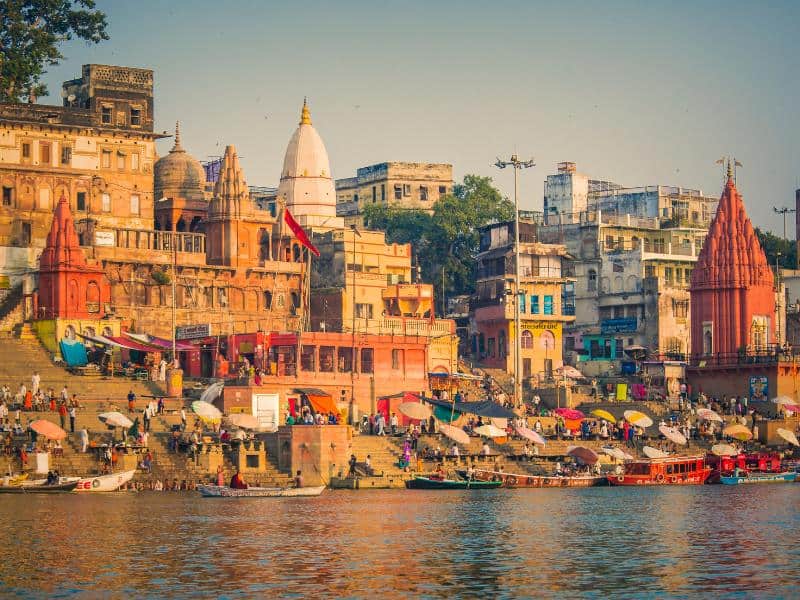
India’s history stretches back thousands of years, encompassing some of the world’s earliest urban civilizations, pioneering scientific minds, and a defining independence movement that inspired nations across the globe.
- The Indus Valley Civilization, one of the world’s oldest urban cultures, flourished in what is now northwestern India and Pakistan around 3300–1300 BCE, featuring advanced city planning, drainage systems, and standardized weights and measures.
- India gained independence from British colonial rule on August 15, 1947, after nearly 200 years of British presence, largely through a nonviolent resistance movement led by Mahatma Gandhi.
- The ancient Indian scholar Aryabhata, born in 476 CE, was among the earliest mathematicians to contribute to the conceptualization of zero as a numerical placeholder and made significant contributions to algebra, trigonometry, and astronomy, including proposing that the Earth rotates on its axis.
Facts About India Government and Politics
India’s democratic framework is both historic and logistically extraordinary, underpinned by the world’s longest written constitution and an electoral system that mobilizes hundreds of millions of voters.
- The Indian Constitution, adopted on January 26, 1950, is the longest written constitution of any sovereign nation in the world, containing 448 articles, 12 schedules, and 104 amendments as of 2021.
- India is the world’s largest democracy, conducting general elections in which hundreds of millions of citizens vote, making its electoral process one of the most complex logistical operations on Earth.
Facts About India Language and Culture

India’s cultural landscape is staggeringly diverse, shaped by thousands of years of religious tradition, linguistic variety, and social customs that have influenced civilizations far beyond its borders.
- Hindi and English are the two official languages at the federal level, but India recognizes 22 scheduled languages in its constitution, and linguists estimate that over 19,500 distinct dialects and languages are spoken across the country. [Learn more: 35 Fun Facts About the English Language]
- India is the birthplace of four major world religions: Hinduism, Buddhism, Jainism, and Sikhism, making it one of the most spiritually significant regions in human history.
- The game of chess is widely believed to have originated in India around the 6th century CE, where it was known as “Chaturanga,” before spreading to Persia and eventually the rest of the world.
- Yoga, which originated in ancient India over 5,000 years ago and is documented in texts like the Rigveda, has become a global wellness practice. The United Nations recognized its global significance by declaring June 21 as International Yoga Day in 2015.
- India is home to one of the world’s largest vegetarian populations, with estimates suggesting that 20–39% of the population follows a vegetarian diet, largely influenced by religious and cultural traditions.
- The Kumbh Mela, a Hindu pilgrimage and festival held at rotating sacred river sites, is widely regarded as one of the world’s largest human gatherings. The 2019 Prayagraj Kumbh Mela attracted an estimated 200 million visitors over 49 days.
Facts About India Architecture and Heritage

India’s built heritage spans thousands of years and dozens of dynasties, leaving behind monuments and sites that rank among the most celebrated in the world.
- The Taj Mahal in Agra, built between 1632 and 1653 by Mughal Emperor Shah Jahan as a mausoleum for his wife Mumtaz Mahal, is considered one of the finest examples of Mughal architecture and was designated a UNESCO World Heritage Site in 1983.
- India is home to 40 UNESCO World Heritage Sites as of 2023, including natural wonders, ancient temples, historic cities, and wildlife reserves.
Facts About India Economy and Industry
India’s economy is one of the world’s most dynamic, driven by a powerful technology sector, agricultural dominance, and a pharmaceutical industry that supplies medicines to countries across the globe.
- The Indian economy is the fifth-largest in the world by nominal GDP as of 2025, and the third-largest by purchasing power parity, with major sectors including information technology, agriculture, manufacturing, and services.
- India’s IT industry, centered in cities like Bengaluru, Hyderabad, and Pune, generated revenues of approximately $245 billion in the fiscal year 2023–24, with companies like Tata Consultancy Services, Infosys, and Wipro serving clients worldwide.
- India is widely regarded as the world’s largest exporter of generic pharmaceuticals, supplying approximately 20% of global generic medicine exports by volume and providing affordable medicines to over 200 countries.
- India is the world’s largest producer and consumer of milk, producing over 220 million metric tons annually, and is also among the world’s largest producers of spices, with its spice exports reaching markets across the globe.
- India is among the world’s largest producers of tea, with the Assam and Darjeeling regions being globally renowned for their distinctive tea varieties. Tea cultivation in India dates back to the early 19th century under British colonial administration.
Facts About India Entertainment and Media
India’s entertainment industry is a cultural powerhouse, producing more films annually than almost any other country and reaching audiences across every continent.
- India has the world’s largest film industry by number of films produced annually, with Bollywood — the Hindi-language film industry based in Mumbai — producing hundreds of films per year, and regional industries like Tollywood and Kollywood contributing significantly to the overall total.
Suggested Read: 110 Magical Facts About Mumbai
Facts About India Science and Technology
India’s scientific achievements have accelerated dramatically in recent decades, with its space agency earning global recognition for cost-effective and groundbreaking missions.
- The Indian Space Research Organisation (ISRO) made history in August 2023 when its Chandrayaan-3 mission successfully landed near the Moon’s south pole, making India the first country to achieve a soft landing in that region.
Facts About India Transportation and Infrastructure
India’s infrastructure networks are among the largest and most heavily utilized on the planet, reflecting the demands of a population exceeding 1.4 billion people.
- The Indian Railways network is one of the largest in the world, operating over 67,000 kilometers of track, running more than 13,000 passenger trains daily, and employing approximately 1.2 million people, making it one of the world’s largest employers.
Facts About India Social Programs and Wildlife

India’s commitment to social welfare and wildlife conservation is reflected in programs and ecosystems that are unmatched in scale anywhere else on Earth.
- The Bengal tiger, India’s national animal, is found primarily in the Sundarbans mangrove forest — widely regarded as the world’s largest mangrove ecosystem, shared between India and Bangladesh — as well as in various national parks across the country.
- India operates the world’s largest school meal program, the Pradhan Mantri Poshan Shakti Nirman scheme (formerly Mid-Day Meal Scheme), which provides free lunches to approximately 120 million children across 1.27 million schools every day.
Suggested Read: 75 Amazing Facts About Asia: Land of Diversity


