
50 Interesting Facts About Italy: La Dolce Vita
Discover fascinating facts about Italy, a country renowned for its rich history, stunning art, and delectable cuisine. From ancient Roman ruins to Renaissance masterpieces, Italy has captivated the world for centuries. Let’s explore the wonders of this boot-shaped peninsula in the heart of the Mediterranean.
Italy Facts At-a-Glance
Location: Southern Europe
Population: 59 million (2023)
Area: 301,340 sq km (116,346 sq mi)
Capital: Rome
Languages: Italian (official), various regional dialects
Religion: Predominantly Roman Catholic
Climate: Mediterranean, Alpine in the north
Source: CIA World Factbook, World Bank
Ancient History and Roman Empire
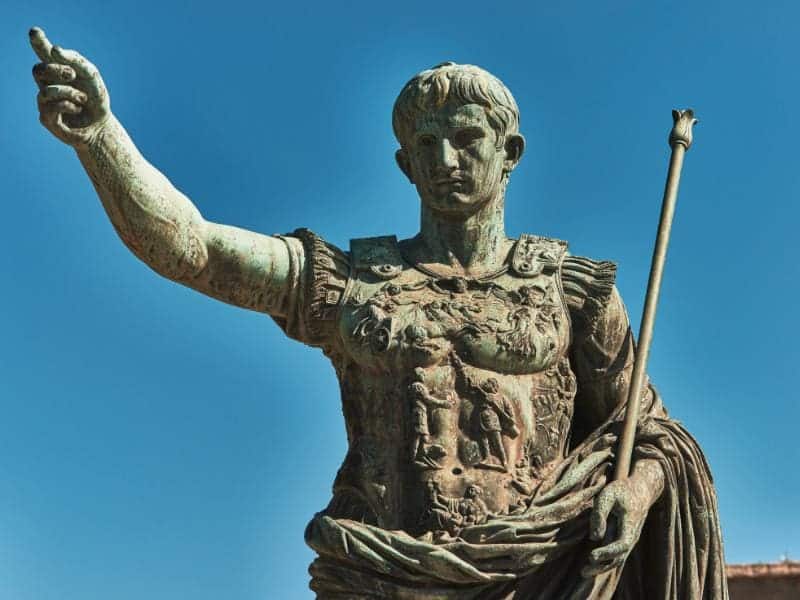
Italy’s history stretches back thousands of years, with the Roman Empire leaving an indelible mark on world civilization. Let’s explore some fascinating facts about Italy’s ancient past.
- Rome, Italy’s capital, was founded in 753 BCE according to legend, when Romulus killed his twin brother Remus and established the city that would become the center of one of history’s greatest empires.
- The Roman Empire, at its peak under Emperor Trajan (around 117 CE), covered over 5 million square kilometers, stretching from Britain to Mesopotamia and encompassing most of Europe, North Africa, and parts of the Middle East.
- The Colosseum, completed in 80 CE under Emperor Titus, could hold between 50,000-80,000 spectators and hosted gladiatorial contests, animal hunts, executions, battle reenactments, and later Christian martyrdoms.
- Pompeii, destroyed by Mount Vesuvius’s eruption in 79 CE, remained buried under volcanic ash for nearly 1,700 years before its accidental rediscovery in 1748, providing an unprecedented snapshot of Roman life frozen in time.
- The Roman road system spanned over 400,000 kilometers (250,000 miles) across the empire, with many roads so well-constructed that portions still exist today, embodying the saying “all roads lead to Rome.”
Suggested Read: 101 Fun Facts About Rome: Discover The Eternal City
Renaissance and Cultural Heritage

Italy was the birthplace of the Renaissance, a period of great cultural and artistic achievement. This era left an enduring legacy that continues to inspire the world.
- The Renaissance began in Florence in the 14th century, sparked by increased trade, the rediscovery of classical texts, and patronage from wealthy families like the Medicis who funded artists and scholars.
- Leonardo da Vinci epitomized the Renaissance ideal of the universal genius, making groundbreaking contributions to art, anatomy, engineering, astronomy, and geology through his insatiable curiosity and observational skills that allowed him to perceive connections between seemingly unrelated phenomena centuries before they were scientifically proven.
- Michelangelo spent four years (1508-1512) painting the Sistine Chapel ceiling, creating over 300 figures while working on his back on scaffolding, and later returned to paint “The Last Judgment” on the altar wall.
- Italy has 60 UNESCO World Heritage Sites, the most of any country in the world, including entire historic city centers like Venice, Florence, and San Gimignano.
- The University of Bologna, founded in 1088, is recognized as the oldest continuously operating university in the world, pioneering the concept of academic freedom and establishing many practices still used in universities today.
Suggested Read: 55 Fabulous Facts About Florence
Geography and Natural Wonders

Italy’s diverse landscape includes mountains, volcanoes, and picturesque coastlines. Here are some intriguing facts about Italy’s geography.
- Italy’s distinctive boot shape kicks the triangular island of Sicily, with the country extending 1,185 kilometers from the Alps in the north to the Mediterranean Sea in the south.
- Italy has three major active volcanoes: Mount Vesuvius near Naples, Mount Etna on Sicily (Europe’s tallest active volcano), and Stromboli in the Aeolian Islands (which has been erupting continuously for over 2,000 years). [Learn more: Interesting facts about volcanoes]
- The Alps form Italy’s northern border, with Monte Bianco (Mont Blanc) reaching 4,809 meters as the highest peak in both Italy and Western Europe.
- Lake Garda, Italy’s largest lake, covers 370 square kilometers and reaches a depth of 346 meters, creating a microclimate that allows Mediterranean plants like olive trees and lemons to grow at unusually northern latitudes.
- The Po River, Italy’s longest waterway, stretches 652 kilometers from the Cottian Alps to the Adriatic Sea, with its fertile valley producing much of Italy’s rice, including the varieties used for authentic risotto.
Explore Facts About Italy’s Iconic Landmarks:
Italian Cuisine and Food Culture

Italian cuisine is celebrated worldwide for its flavors and traditions. Discover some interesting facts about Italy’s food culture.
- Pizza Margherita was created in 1889 by pizzaiolo Raffaele Esposito to honor Queen Margherita of Savoy, using tomatoes, mozzarella, and basil to represent the red, white, and green of the Italian flag.
- Italy produces over 600 pasta shapes, each designed to hold sauce differently, with regional variations often closely tied to local ingredients and traditional dishes.
- Italians consume approximately 23 kg of pasta per person annually, the highest consumption rate in the world and more than double the amount consumed by the average European.
- Espresso was invented in Italy with Luigi Bezzera patenting the first espresso machine in 1901, revolutionizing coffee consumption with a method that forced hot water through finely-ground coffee beans under pressure.
- Parmigiano-Reggiano cheese can only be legally produced in specific provinces including Parma, Reggio Emilia, and parts of Bologna, with wheels aged for a minimum of 12 months and bearing distinctive pin-dot markings on the rind certifying authenticity.
Suggested Read: 60 Essential Facts About Europe: A Continental Journey
Modern Italy and Society

Contemporary Italy is a blend of tradition and innovation. Here are some facts about modern Italian society and culture.
- Italy became a unified nation on March 17, 1861, when Victor Emmanuel II was proclaimed King of Italy, though Rome wasn’t incorporated until 1870 and the unification process wasn’t fully completed until after World War I.
- The Italian flag’s colors of green, white, and red traditionally represent hope (verde), faith (bianco), and charity (rosso), though they were inspired by the French tricolor and originally adopted by the Cispadane Republic in 1797.
- Italy became a republic on June 2, 1946, when Italians voted in a referendum to abolish the monarchy following World War II, with 54% choosing a republican government over continuing the House of Savoy’s rule.
- Italy has one of the world’s highest life expectancies at 83.6 years as of 2023, attributed to the Mediterranean diet, strong family ties, and a comprehensive healthcare system.
- Italian is the official language of Italy, San Marino, Vatican City, and parts of Switzerland, and ranks as the fourth most studied foreign language globally, with over 90 million students learning it worldwide.
Suggested Read:
Italian Fashion and Design

Italy is synonymous with style and elegance. Let’s explore some facts about Italian fashion and design.
- Milan established itself as one of the world’s “Big Four” fashion capitals (alongside Paris, London, and New York) after World War II, hosting Milan Fashion Week twice yearly since 1958.
- The first internationally recognized Italian fashion show was held at Villa Torrigiani in Florence in 1951, organized by Giovanni Battista Giorgini to showcase Italian designers to American buyers as alternatives to Parisian fashion.
- Guccio Gucci founded his luxury leather goods company in Florence in 1921 after being inspired by the elegant luggage he saw while working as a hotel porter at The Savoy in London.
- Italy generates approximately 40% of the global luxury goods production, with brands like Prada, Versace, Armani, and Valentino forming the backbone of an industry that contributes over €100 billion annually to the Italian economy.
- The iconic Vespa scooter was designed by aeronautical engineer Corradino D’Ascanio and manufactured by Piaggio beginning in 1946, becoming a symbol of Italian style and freedom during the country’s post-war economic renaissance.
Discover Facts About the Fashion Capitals of the World:
Italian Innovations and Inventions
Italians have contributed numerous inventions to the world. Here are some notable Italian innovations.
- The first electrical battery, called the “voltaic pile,” was invented by Alessandro Volta in 1800, providing the first continuous and reliable source of electrical current and laying the foundation for modern electrical technology.
- Antonio Meucci demonstrated a working telephone-like device in 1860 and filed a caveat (a preliminary patent) in 1871, predating Alexander Graham Bell’s patent by five years, leading the U.S. House of Representatives to recognize his contributions in 2002.
- The piano (originally called “gravicembalo col piano e forte”) was invented by Bartolomeo Cristofori around 1700 in Florence, revolutionizing keyboard instruments by allowing players to control volume through touch.
- Galileo Galilei invented an early thermometer called the thermoscope around 1603, though it was actually Hungarian physician Santorio Santorio who added a numerical scale to the device in 1612, creating the first proper thermometer.
- The world’s oldest continually operating bank, Monte dei Paschi di Siena, was founded in 1472 to provide loans to “poor or miserable or needy persons” and continues to operate today as Italy’s third-largest commercial bank.
Italian Sports and Leisure

Sports play a significant role in Italian culture. Discover some interesting facts about Italy’s sporting traditions.
- The Italian national football team, known as the Azzurri (the Blues), has won the FIFA World Cup four times (1934, 1938, 1982, 2006), making Italy the second most successful team in World Cup history behind Brazil.
- The Giro d’Italia, one of cycling’s three Grand Tours, was first organized in 1909 by the newspaper La Gazzetta dello Sport to increase circulation, with the race leader wearing a distinctive pink jersey matching the color of the newspaper’s pages.
- Scuderia Ferrari, founded by Enzo Ferrari in 1939, has competed in every Formula 1 season since 1950 and holds records for the most constructor championships (16) and the most driver championships (15).
- The Italian Open (Internazionali BNL d’Italia), one of tennis’s most prestigious clay court tournaments, has been held since 1930 and takes place at Rome’s historic Foro Italico complex, featuring statues of athletes commissioned by Mussolini’s fascist regime.
- Bocce, a precision ball sport related to bowls and pétanque, has been played in Italy since the Roman Empire, with evidence suggesting Roman soldiers played the game between battles using stones before formal balls were developed.
Italian Language and Literature

The Italian language and its literature have had a profound impact on world culture. Here are some fascinating facts about Italian language and literature.
- Modern standard Italian is primarily derived from the 14th-century Florentine dialect of Tuscany, largely due to the prestige of Florence-based writers like Dante, Petrarch, and Boccaccio, whose works helped establish it as the peninsula’s literary language.
- Dante Alighieri’s “Divine Comedy,” completed shortly before his death in 1321, is considered one of the greatest works of world literature and helped standardize the Italian language, while also being the first major literary work written in an everyday vernacular rather than Latin.
- Italian has at least 15 words expressing different forms of love, from “amore” (romantic love) to “affetto” (affection) and “innamoramento” (falling in love), reflecting the culture’s nuanced approach to emotional expression.
- Six Italian authors have won the Nobel Prize in Literature: Giosuè Carducci (1906), Grazia Deledda (1926), Luigi Pirandello (1934), Salvatore Quasimodo (1959), Eugenio Montale (1975), and Dario Fo (1997), showcasing Italy’s rich literary tradition.
- The Accademia della Crusca, founded in 1583, published the first Italian dictionary in 1612 and remains one of the world’s leading institutions for the study and promotion of the Italian language.
Unique Italian Traditions

Italy is known for its unique customs and traditions. Let’s explore some interesting facts about Italian cultural practices.
- Venice’s Carnival (Carnevale di Venezia) dates back to 1162 and is famous for its elaborate masks, which historically allowed people of different social classes to mingle anonymously and engage in behaviors otherwise forbidden by strict class structures.
- The Palio di Siena, a bareback horse race held twice yearly (July 2 and August 16) in Siena’s Piazza del Campo, dates back to 1633, featuring ten horses and riders representing different city wards in a competition that lasts less than 90 seconds but involves months of preparation.
- The tradition of throwing coins in Rome’s Trevi Fountain began with ancient Romans tossing coins into water sources to ensure a safe return home, while the modern custom of throwing a coin over your shoulder into the fountain to guarantee a return to Rome was popularized by the 1954 film “Three Coins in the Fountain.”
- La Befana, a benevolent witch who delivers gifts to children on Epiphany Eve (January 5), predates Santa Claus in Italian tradition and is said to have been too busy cleaning her house to join the Magi on their journey, so now she flies around on her broomstick searching for baby Jesus and leaving presents for good children.
- The Italian aperitivo tradition began in Turin in the late 18th century when Antonio Benedetto Carpano invented vermouth, leading to the development of pre-dinner drinks and small bites intended to stimulate the appetite, a concept that has evolved into a beloved social ritual throughout Italy.
Interesting Facts About More European Destinations:
- 50 Interesting Facts About France: History & Culture
- 50 Interesting Facts About Spain
- 35 Fun Facts About Germany You Probably Didn’t Know
- 50 Remarkable Facts About Austria: Imperial Legacy
- 35 Fun Facts About Portugal: From Empire to Innovation
- 35 Interesting Facts About Luxembourg: A European Crossroads
- 27 Fun Facts About Ireland: Emerald Isle Wonders


