
37 Interesting Facts About Jamaica: Island Paradise
Discover fascinating facts about Jamaica, the vibrant Caribbean island known for its rich culture, stunning beaches, and reggae music. From its unique history to its natural wonders, Jamaica offers a treasure trove of intriguing information. Let’s explore this island paradise and uncover what makes it truly special.
Jamaica Facts At-a-Glance
Location: Caribbean Sea, 90 miles south of Cuba
Population: Approximately 2.9 million
Area: 10,991 square kilometers (4,244 square miles)
Languages: English (official), Jamaican Patois
Religion: Christianity (majority), various others
Climate: Tropical, hot and humid
Source: CIA World Factbook, Statista
Jamaica Historical Highlights
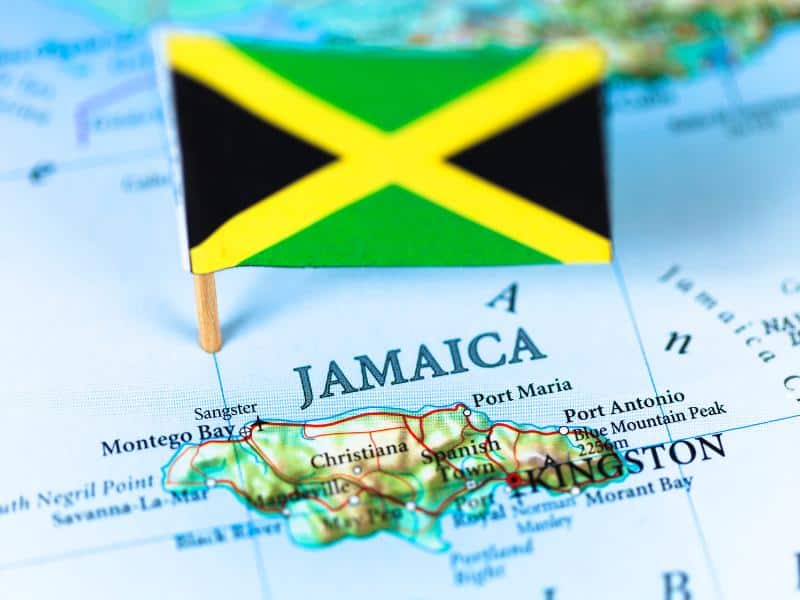
Jamaica’s history is a tapestry of indigenous cultures, colonial influences, and the struggle for independence. Let’s explore some key historical facts about this Caribbean nation.
- Jamaica was originally inhabited by the Arawak and Taino peoples who arrived around 600 AD before Christopher Columbus arrived during his second voyage to the Americas in 1494, marking Jamaica as the first land he encountered.
- The country’s name derives from the indigenous Taino word “Xaymaca,” meaning “land of wood and water,” which perfectly captures the island’s lush landscape and abundant natural resources.
- The Jamaican Maroons, descendants of enslaved Africans who escaped to the mountains, successfully fought against British colonial rule and secured treaties in 1739 and 1740, gaining autonomy over parts of the island that continues to this day.
- After being held by Spanish rule for 161 years, Jamaica became a British colony in 1655 when English forces seized it, making it Britain’s first permanent Caribbean colony and one of the world’s largest sugar producers by the 1700s.
- Jamaica gained independence from the United Kingdom on August 6, 1962, becoming the first British Caribbean colony to achieve independence, and remains the third-largest English-speaking country in the Americas.
Suggested Read:
Natural Wonders and Geography

Jamaica’s landscape is diverse and breathtaking, featuring lush mountains, pristine beaches, and unique natural phenomena. Here are some fascinating geographical facts about the island.
- The Blue Mountains, Jamaica’s longest mountain range, peak at 2,256 meters (7,402 feet) above sea level at Blue Mountain Peak, making it the third-highest island peak in the Caribbean and producing the world-renowned Blue Mountain Coffee. [Learn more: 25 Fun Facts About Mountains: Earth’s Majestic Giants]
- Jamaica is home to over 120 rivers despite its relatively small size of 10,991 square kilometers, with the Rio Minho being the longest at 92.8 kilometers and providing essential water resources for agriculture and hydroelectric power.
- The island boasts seven major ecosystems across just 0.007% of the world’s land surface, featuring tropical and subtropical forests, dry limestone forests, and montane rainforests that support thousands of plant and animal species.
- Luminous Lagoon near Falmouth is one of only four places in the world where bioluminescent microorganisms create a stunning blue glow in the water when disturbed, a phenomenon caused by microscopic plankton called dinoflagellates.
- Jamaica is the third-largest island in the Caribbean after Cuba and Hispaniola, spanning approximately 235 kilometers from east to west and 80 kilometers from north to south at its widest points.
Suggested Read: 120 Charming Facts About Cuba
Cultural Treasures

Jamaica’s vibrant culture is renowned worldwide, influencing music, sports, and cuisine. Let’s delve into some intriguing cultural facts about this island nation.
- Reggae music, Jamaica’s most famous cultural export, developed in the late 1960s from earlier forms like ska and rocksteady, with Bob Marley becoming its most iconic ambassador and influencing music globally.
- Jamaica has won more Olympic medals per capita than any other country, with only 2.7 million people but producing sprinting legends who have collected over 80 Olympic medals since 1948.
- Ackee and saltfish, Jamaica’s national dish, features ackee fruit that must be properly ripened to avoid toxicity, combined with salted codfish in a dish that originated from the combination of Jamaican and British culinary influences.
- Jamaican Patois, a creole language combining English, Spanish, African languages, and other influences, is spoken by over 90% of the population and was officially recognized as a language by the Jamaican Language Unit in 2009.
- Jamaica has the highest number of rum bars per square mile of any country and is the birthplace of both dreadlocks as a cultural expression and the distinctive musical riddim that forms the backbone of modern dancehall music.
Famous Jamaicans and Achievements
Jamaica has produced numerous notable figures who have made significant impacts globally. Here are some facts about famous Jamaicans and their achievements.
- Usain Bolt, born in Trelawny, Jamaica, is the fastest human in recorded history, holding world records in the 100m (9.58 seconds) and 200m (19.19 seconds) sprints that remain unbroken since 2009.
- Marcus Garvey, born in St. Ann’s Bay in 1887, founded the Universal Negro Improvement Association and African Communities League, establishing himself as the most influential Black leader of the early 20th century and inspiring the Rastafarian movement.
- Louise Bennett-Coverley, known as “Miss Lou,” was Jamaica’s first female cultural icon who elevated Jamaican Patois to an art form through her poetry and folklore performances, receiving the Order of Merit for her contributions to Jamaican culture.
- Jamaica’s bobsled team, immortalized in the 1993 film “Cool Runnings,” made their actual Olympic debut in 1988 at the Calgary Winter Games, with the team winning admirers worldwide despite their tropical origins and limited resources.
- Sir Philip Sherlock, born in Jamaica in 1902, became the first Vice-Chancellor of the University of the West Indies and wrote extensively about Caribbean literature and culture, helping establish the region’s academic identity.
Suggested Read: 100 Fascinating Facts About Florida
Economic Insights

Jamaica’s economy is diverse, with several key industries contributing to its growth. Here are some interesting economic facts about the island.
- Tourism is Jamaica’s largest source of foreign exchange, attracting over 4.3 million visitors annually and accounting for about 30% of the country’s GDP, with cruise ship tourism growing by 65% between 2010 and 2019.
- Jamaica is the world’s seventh-largest producer of bauxite and holds the world’s fifth-largest bauxite reserves, with approximately 2 billion metric tons of the aluminum ore beneath its red soil.
- Jamaica’s Blue Mountain Coffee, grown at elevations between 910 and 1,700 meters, commands prices up to $50 per pound, making it one of the most expensive coffees in the world due to its mild flavor and perfect growing conditions.
- Remittances from Jamaicans living abroad, particularly in the US, UK, and Canada, exceed $2.5 billion annually, representing about 17% of GDP and supporting approximately one-third of all households.
- Jamaica has achieved 31 consecutive quarters of economic growth since 2014, marked by improved debt-to-GDP ratio reduction from 147% to 94%, demonstrating successful economic reforms and fiscal discipline.
Unique Flora and Fauna

Jamaica’s biodiversity is remarkable, with many species found nowhere else on Earth. Let’s explore some facts about the island’s unique plant and animal life.
- The red-billed streamertail hummingbird, Jamaica’s national bird and also called the “doctor bird,” has males with tail feathers twice the length of their bodies, creating a distinctive humming sound during flight that inspired its nickname.
- Jamaica hosts 27% of the world’s total endemic bird species and has more endemic plants per square kilometer than any other island in the world, with 923 flowering plant species found nowhere else on Earth.
- The Jamaican iguana, once thought extinct for 42 years, was dramatically rediscovered in 1990 when a pig hunter brought one to a naturalist, leading to a successful conservation program that has saved the species from extinction.
- Over 200 species of orchids are native to Jamaica, with 73 endemic species including the national flower, Lignum Vitae, which produces wood so hard and dense it sinks in water and was used by the British Navy for propeller shaft bearings.
- The Jamaican boa, known locally as the “yellow snake,” can grow up to 2 meters long, making it one of the largest snakes in the Caribbean, and plays a crucial role in controlling rodent populations.
Discover More Interesting Facts About Nature:
Quirky and Fun Facts About Jamaica

To round off our exploration of Jamaica, here are some fun and unusual facts that showcase the island’s unique character.
- Appleton Estate, established in 1749, is the oldest rum distillery in the world still in continuous operation, producing rum for over 270 years and maintaining traditional fermentation methods on the same estate.
- Ian Fleming wrote all 14 James Bond novels at his Jamaican estate, GoldenEye, and several Bond films were shot on the island, including “Dr. No” (1962), which filmed at Dunn’s River Falls and the Blue Mountains.
- Jamaica was the first Caribbean country and one of the first developing nations to launch a website in 1994, demonstrating early technological adoption despite limited infrastructure.
- Jamaican jerk seasoning originated with the Maroons who used it to preserve meat while hiding from colonial forces, creating the unique blend of allspice, scotch bonnet peppers, and thyme that defines authentic jerk cuisine.
- The Manchester Golf Club, established in 1865 at an elevation of 609 meters, is not only the oldest golf course in the western hemisphere but also one of the highest courses in the Caribbean, offering unique playing conditions.
- Jamaica has the highest concentration of churches per square mile of any country in the world, with over 1,600 churches serving a population of 2.7 million, resulting in approximately one church for every 1,700 people.
- The Caribbean Sea surrounding Jamaica contains the world’s largest underwater stalactite, Alligator Cave, stretching 2.2 kilometers and discovered by divers in the early 2000s.
Explore Facts About the Caribbean and Central America
Discover fascinating insights about Jamaica’s Caribbean neighbors and nearby Central American countries.
- 32 Fun Facts About Belize: The Jewel of the Caribbean
- 35 Interesting and Fun Facts About the Dominican Republic
- 120 Charming Facts About Cuba: The Pearl of the Antilles
- 35 Fun Facts About Trinidad and Tobago: Island Nation
- 25 Interesting Facts About Honduras: Land of Ancient Maya
- 25 Fun Facts About Guatemala: Land of Eternal Spring
- 90 Interesting Facts About Panama
- 35 Fun Facts About Colombia: Gateway to South America


