
10 Fun Facts About Lithuania: Baltic Gem of History and Nature
Discover the hidden treasures of the Baltic with these fascinating, fun facts about Lithuania. This small but mighty nation in Northern Europe boasts a rich history, stunning landscapes, and a unique cultural heritage.
From ancient forests to modern innovations, Lithuania has much to offer. So what makes this Baltic state so special? Let’s explore!
Lithuania At-a-Glance
Location: Northern Europe, bordering the Baltic Sea
Population: Approximately 2.8 million
Area: 65,300 square kilometers (25,200 square miles)
Capital: Vilnius
Languages: Lithuanian (official), Polish, Russian
Religion: Predominantly Roman Catholic
Climate: Temperate, transitional between maritime and continental
Source: CIA World Factbook
Historical Significance
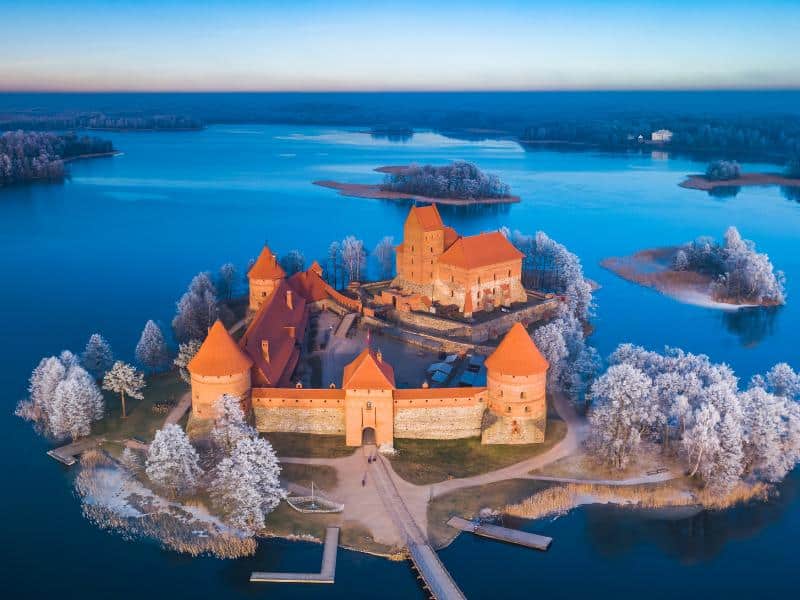
Lithuania’s history is a tapestry of resilience and cultural pride. From medieval grandeur to modern independence, the country has played a significant role in European history.
- Lithuania was the last pagan country in Europe, officially adopting Christianity in 1387. This late conversion allowed for the preservation of many unique pre-Christian traditions that still influence Lithuanian culture today.
- The Grand Duchy of Lithuania was once the largest state in Europe, stretching from the Baltic to the Black Sea in the 14th century. At its peak, it encompassed modern-day Lithuania, Belarus, parts of Ukraine, and western Russia.
- Trakai Island Castle, a picturesque medieval fortress built on an island in Lake Galvė, served as a residence for Lithuanian Grand Dukes and is one of Lithuania’s most iconic national landmarks today.
Suggested Read: 33 Brilliant Facts About Belarus, the Lungs of Europe
Natural Wonders

Lithuania’s landscape is a testament to the beauty of the Baltic region, featuring diverse ecosystems and unique geographical features.
- The Curonian Spit, a UNESCO World Heritage site, is home to the highest-moving sand dunes in Europe. This narrow peninsula, shared with Russia, features stunning beaches and unique ecosystems.
- Lithuania is often called the “Land of Storks,” with one of the largest white stork populations in Europe. These birds are considered a national symbol and are believed to bring good luck.
Cultural Quirks
Lithuanian culture is rich with unique traditions and modern innovations that set it apart from its European neighbors.
- Basketball is often considered the second religion in Lithuania. The country has one of Europe’s most successful national teams, winning multiple Olympic medals and European championships.
- Lithuania has a national scent called “The Scent of Lithuania,” which was created to capture the essence of the country. It features notes of wildflowers, ginger, raspberry, and musk.
Suggested Read: 34 Interesting Facts About Poland, the Land of Fields
Linguistic Marvels

The Lithuanian language is a linguistic treasure, preserving ancient Indo-European features and boasting a rich vocabulary.
- Lithuanian is one of the oldest living Indo-European languages and shares some similarities with Sanskrit. It has retained many archaic features lost in other Indo-European languages, making it valuable for linguistic studies.
- The Lithuanian language has two main dialect groups – Aukštaitijan (Highland Lithuanian) and Žemaitijan (Lowland Lithuanian) – with several subdialects within each group. These dialects can vary significantly in pronunciation and vocabulary.
Modern Achievements
Lithuania has significantly contributed to science, technology, and global connectivity despite its small size.
- Lithuania has become a leader in Europe’s financial technology (FinTech) sector. As of 2024, it boasts one of the most FinTech-friendly regulatory environments, attracting numerous international startups and established companies to set up operations in the country, particularly in its capital, Vilnius.
Suggested Read: 32 Fun Facts About the Black Sea: The Inhospitable Sea


