
25 Facts About Memorial Day: Honoring America’s Fallen
These facts about Memorial Day explore the history, traditions, and meaning behind one of America’s most significant holidays. Observed on the last Monday of May, Memorial Day honors the men and women who gave their lives in military service.
From its origins as Decoration Day after the Civil War to today’s traditions of cemetery visits, parades, and the National Moment of Remembrance, the holiday has evolved while preserving its central purpose: remembering those who made the ultimate sacrifice.
Memorial Day Facts At-a-Glance
Date: Last Monday in May
Also Known As: Decoration Day (historically)
Commemorates: U.S. military personnel who died in service
Federal Holiday Since: 1971, when the Uniform Monday Holiday Act took full effect
Flag Protocol: Half-staff from sunrise to noon, then raised to full-staff
Moment of Remembrance: 3:00 p.m. local time
Key Symbols: American flags, red poppies, memorial wreaths
Sources: Wounded Warrior Project, History
Origins and Civil War Roots
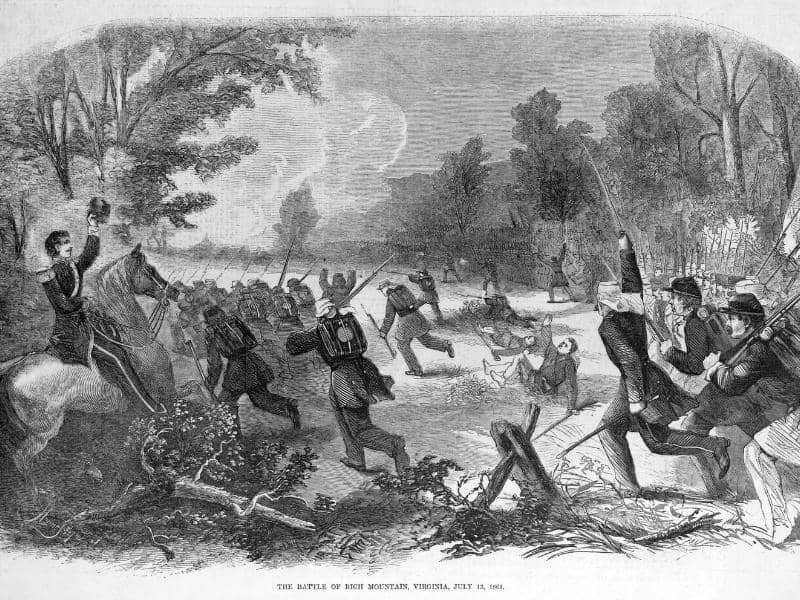
Memorial Day grew directly out of the staggering human cost of the Civil War and the urgent need communities felt to honor their dead.
- The Civil War claimed roughly 620,000 soldiers — about 2 percent of the entire U.S. population — leaving communities so devastated that springtime grave-decoration gatherings emerged organically and eventually became the foundation of Memorial Day.
- One of the earliest recorded commemorations took place on May 1, 1865, in Charleston, South Carolina, where formerly enslaved people transformed a racetrack that had served as a Union prison into a proper burial ground and led a procession of 3,000 schoolchildren carrying flowers to honor the fallen.
- The holiday was originally called Decoration Day, a name that captured the central act of placing flowers, flags, and other tributes on the graves of soldiers killed in battle.
- On May 5, 1868, Major General John A. Logan — commander of the Grand Army of the Republic — issued a formal order designating May 30 as a nationwide day for decorating soldiers’ graves, giving the observance its first official structure.
- Logan selected May 30 deliberately: the date avoided any specific battle anniversary, and late May guaranteed that flowers would be in bloom throughout the country.
- The inaugural Decoration Day on May 30, 1868, drew approximately 5,000 people to Arlington National Cemetery, where General James Garfield delivered remarks and attendees placed small American flags on the graves of 20,000 buried Civil War soldiers.
- What began as a tribute to Civil War dead gradually broadened after World War I to honor fallen soldiers from every American conflict, and as that scope widened, the name Decoration Day slowly gave way to Memorial Day.
Suggested Read: Facts About The United States
Disputed Birthplaces and Official Recognition
Pinning down exactly where Memorial Day began has proven surprisingly complicated, with communities across the country staking competing claims.
- More than half a dozen American cities and towns have put forward claims to be the birthplace of Memorial Day, a testament to how widely and independently the grave-decoration tradition took root after the Civil War.
- In 1966, President Lyndon B. Johnson signed a proclamation naming Waterloo, New York, the official birthplace of Memorial Day, citing the town’s May 5, 1866, observance — during which all businesses closed so residents could decorate veterans’ graves with flowers and American flags. [Learn more: 150 Notable Facts About New York City]
- By 1890, every Northern state had formally recognized Decoration Day as a state holiday, while Southern states continued to hold separate observances for their Confederate dead until after World War I.
- Several Southern states still maintain a distinct holiday to honor Confederate soldiers, separate from the national Memorial Day.
Suggested Read: 50 Fun Facts About May: Blooming with Surprises
The Path to a Federal Holiday

Turning a widely observed tradition into a uniform national holiday required decades of legislation and presidential action.
- A congressional law enacted in 1887 declared “Memorial or Decoration Day” a holiday for all federal employees, capturing in its very title the period when both names were still in common use.
- The Uniform Monday Holiday Act of 1968 moved Memorial Day from its fixed date of May 30 to the last Monday in May, creating a three-day weekend for federal workers.
- Memorial Day became a nationwide federal holiday in 1971, when the Uniform Monday Holiday Act took full effect and standardized the observance across the country.
- In 1950, President Harry Truman proclaimed that Memorial Day should also be set aside for nationwide prayer for permanent peace, establishing an 11 a.m. EDT hour of prayer as part of the day’s observance.
Ceremonies, Symbols, and Solemn Traditions

The rituals that define Memorial Day — from flag protocol to wreath-laying — connect present-day Americans to more than a century of remembrance.
- At its core, Memorial Day is a federal holiday dedicated to honoring U.S. military service members who died while serving their country, observed every year on the last Monday in May.
- By tradition, the U.S. flag flies at half-staff from sunrise until noon on Memorial Day as a mark of respect for the fallen, then is raised to full-staff for the rest of the day.
- Across the country, flags, flowers, and other tributes are placed on veterans’ graves in cemeteries on Memorial Day, carrying forward the decorating custom that gave the holiday its original name.
- One of the most prominent Memorial Day ceremonies is the laying of a wreath at the Tomb of the Unknowns at Arlington National Cemetery in Virginia.
- Americans are encouraged each Memorial Day to observe a national moment of remembrance at 3:00 p.m. local time, pausing to honor all those who died in military service.
- Some Americans wear red poppies on Memorial Day as symbols of remembrance for fallen soldiers, a practice inspired by the 1915 World War I poem “In Flanders Fields” by Lieutenant Colonel John McCrae.
- Because Memorial Day is reserved for honoring those who died in service, many etiquette guides advise against saying “Happy Memorial Day” or directing thanks to living veterans on that day, encouraging more solemn expressions of respect instead.
Parades, Community, and Modern Observance
Beyond private reflection, Memorial Day brings Americans together through public gatherings that range from solemn ceremonies to the unofficial launch of summer.
- Cities and towns throughout the United States hold Memorial Day parades featuring military personnel and veterans’ organizations, with major events taking place in Chicago, New York City, and Washington, D.C.
- Memorial Day and Veterans Day serve distinct purposes: Memorial Day is dedicated to those who died in military service, while Veterans Day recognizes all who have served, with special emphasis on living veterans.
- Memorial Day weekend is widely regarded as the unofficial start of the American summer season, blending barbecues, picnics, and travel with the day’s solemn remembrance ceremonies.
Explore More American Facts
Continue your journey through American history and culture with our comprehensive collection of location-based facts.
- 55 Interesting Facts About North America – Discover fascinating facts about the entire North American continent.
- Interesting Facts About US States – Explore fun facts about every US state, from their unique histories and landmarks to cultural traditions and natural wonders.
- 20 Fun Facts About 4th of July: America’s Birthday
- 25 Fun Facts About Thanksgiving Day: America’s Feast
- 20 Facts About Veterans Day: Honoring Those Who Served
Featured State Fact Collections:
- 100 California Fun Facts – The Golden State’s entertainment industry and natural diversity
- 75 Fun Facts About Texas – The Lone Star State’s cowboy culture and space exploration
- 100 Interesting Facts About New York State – The Empire State’s iconic landmarks and cultural influence
- 100 Fascinating Facts About Florida – The Sunshine State’s unique wildlife and theme park capital
- 100 Meaningful Facts About Massachusetts – The Bay State’s Revolutionary War history and founding heritage
- 80 Unique Facts About Utah – The Beehive State’s stunning national parks and pioneer heritage
- 100 Fascinating Facts About Louisiana – The Pelican State’s Creole culture and jazz music birthplace
- 80 Interesting Facts About Nebraska – The Cornhusker State’s agricultural heritage and pioneer trails
- 88 Fun Facts About Kentucky – The Bluegrass State’s bourbon distilleries and horse racing tradition
- 95 Fun Facts About Pennsylvania – The Keystone State’s Independence Hall and founding father legacy


