
87 Interesting Facts About Nova Scotia: Atlantic Canada
Nova Scotia is a small Atlantic province with a long coastline, deep Mi’kmaq, Acadian and Scottish roots, and a strong sense of identity. This article groups its facts by geography, people, landmarks, economy, culture and history.
Nova Scotia Facts At-a-Glance
Area: 55,284 km² (21,345 mi²), the 2nd smallest province in Canada
Population: 980,000, the 4th least populous province in Canada
Capital: Halifax, population 417,000
Name: “New Scotland” in Latin
Coastline: 13,300 km (8,264 mi)
Bay of Fundy tides: Up to 16 meters, the highest in the world
World Heritage Sites: Three UNESCO World Heritage Sites
Confederation: One of the original four provinces of Canada in 1867
Where Nova Scotia Sits in Canada
- It is 1 of the 6 provinces in Eastern Canada, 1 of the 4 provinces of Atlantic Canada (along with New Brunswick, Prince Edward Island, and Newfoundland and Labrador), and 1 of the 3 Maritime Provinces (along with NB and PEI).
- Nova Scotia is 1 of the 4 original provinces of Canada, along with Ontario, Quebec, and New Brunswick.
- At 55,284 km2 (21,345 mi2), Nova Scotia is the 2nd smallest province in Canada, after PEI. It accounts for only 0.6% of Canada’s total area.
- Nova Scotia is similar in size to Croatia, or twice as large as Massachusetts.
- Nova Scotia is located exactly halfway between the Equator and North Pole, sitting at 45 degrees N.
- Nova Scotia is surrounded by the Atlantic Ocean (including the Gulf of Saint Lawrence, Bay of Fundy, and Gulf of Maine), except for the its 24 km (15 mi) land border with New Brunswick on the Isthmus of Chignecto.
Recommended Read: 155 Captivating Facts About Canada: The Great White North
Coastline, Islands and Tides
- No point in Nova Scotia is more than 67 km (42 mi) away from the ocean.
- Nova Scotia’s coastline totals 13,300 km (8264 mi), more than double the entire width of Canada.
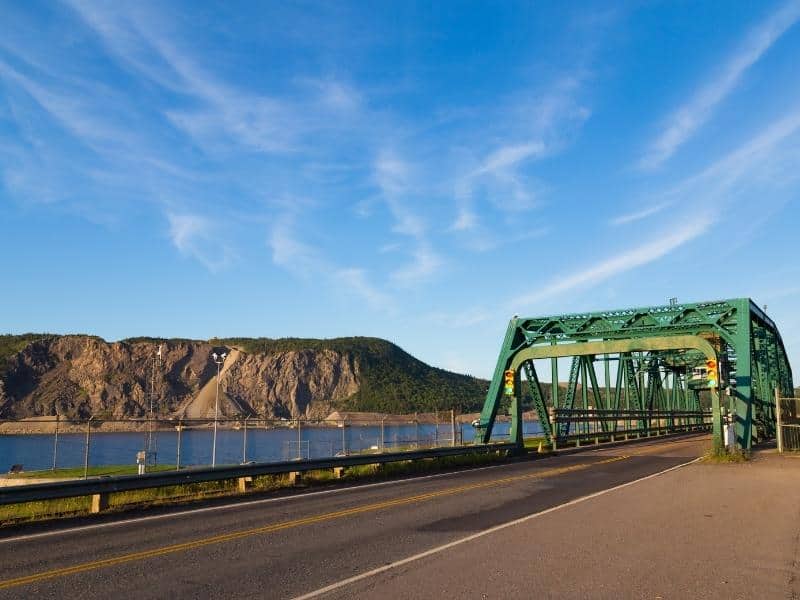
- Nova Scotia’s largest island is Cape Breton Island, which makes up 18.65% of Nova Scotia’s land. It is connected to the Nova Scotia Peninsula by a 1,385 m (4,544 ft) rock-filled causeway called the Canso Causeway.
- There are 3800 other smaller islands in Nova Scotia.
- In 1955, the Canso Causeway between the Nova Scotian Peninsula and Cape Breton was opened to traffic.
- Sable Island, a long thin island 175 km (110 mi) off the south coast of Nova Scotia, is known for causing numerous shipwrecks, with around 350 ships sunken as a result of its sandbars. The island is a national park reserve and home to wild horses.
- The Bay of Fundy between Nova Scotia and New Brunswick is known for having the highest tides in the world, up to 16 meters. 160 billion tons of water flow into and out of the bay daily, which is more than the combined volume of all the world’s rivers.
Parks, Lakes and Scenic Drives

- Nova Scotia is home to two national parks: Kejimkujik National Park, a forested landscape a few hours west of Halifax, and Cape Breton Highlands National Park on Cape Breton.
- Cape Breton Highlands National Park is famous for Cabot Trail, a highly scenic, 298 km (185 mi) winding drive along the north coast of the island. It was named after John Cabot, the first European to see the Atlantic Coast of Canada after the Vikings, although he likely saw Newfoundland, not Cape Breton.
- There are over 5000 lakes in Nova Scotia, the largest freshwater one being Lake Ainslie, while the even larger saltwater Bras d’Or Lake is technically a huge estuary. The latter is a UNESCO Biosphere Reserve.
- Acadian Skies and Mi’kmaq Lands is the first destination in North America to receive Starlight designation from the UNESCO-supported Starlight Foundation, meaning it’s a good place to stargaze.
Population, Halifax and Everyday Language

- With a population of 980,000, Nova Scotia is the 4th least populous province in Canada, but the most populous in Atlantic/Maritime Canada.
- Nova Scotia has the 2nd highest population density in Canada (18 people per km2), surpassed only by PEI.
- The capital and (by far) largest city in Nova Scotia is Halifax. It has a population of 417,000, making it the 13th largest city in Canada.
- Halifax is more than 10 times bigger than any other city in Nova Scotia. 43% of people in Nova Scotia live in Halifax.
- Scots remain the largest ethnic group in Nova Scotia, followed closely by British. English is the primary language of 92% of people in Nova Scotian.
- People in Nova Scotia speak with an accent that is influenced by Scottish, Irish, and Gaelic, plus lots of slang and expressions unique to the Maritimes or not found in any other province.
- People from Nova Scotia are called Nova Scotians, and people from Halifax are called Haligonians.
- A slang term for Nova Scotians is “Bluenosers”. The term was first used by Loyalists to describe the New England farmers who lived there before they arrived. It may have referred to their cold noses in winter or to a purplish-blue potato grown there.
Mi’kmaq, Black Nova Scotian and Scottish Heritage
- The area of Nova Scotia was traditionally inhabited by the Miꞌkmaq people of the Algonquian language family. Today, First Nations and Métis make up 6% of the population.
- According to local indigenous legends, a figure named Glooscap was the creator of the Mi’kmaq people. When he slept, Nova Scotia was his bed, and Prince Edward Island was his pillow.
- There are around 22,000 Black Nova Scotians, 2.4% of the population. Their ancestors were freed slaves from the US, and they once made up 37% of all Africans in Canada. In the 1960s, they were evicted and their houses burned down. Their history is honoured at the Africville Museum in Halifax and Black Cultural Centre for Nova Scotia in Cherrybrook, just outside of Halifax.
- A replica of Hector ship, which brought one of the first major waves of Scottish settlers to Nova Scotia in 1773, lies in the harbour at Pictou, NS.
- Cèilidhs, traditional Scottish or Irish gatherings with dancing and folk music, are common across Nova Scotia, as are “kitchen parties”; in other words, parties often end up in the kitchen, with food being served and people singing or playing instruments.
Names, Symbols and Nicknames

- Nova Scotia means “New Scotland” in Latin. The name goes all the way back to 1621, when Scotsman Sir William Alexander was given the right to colonize the region.
- There are over 40 places in Nova Scotia named after places in the United Kingdom. These include Halifax, Cambridge, Liverpool, Manchester, and Oxford.
- Nova Scotia has been nicknamed “The Mineral Province” (for its iron, gypsum and other mineral deposits), and “The Sea Bound Coast”, while its license plates say “Canada’s Ocean Playground.”
- The flag of Nova Scotia shows a blue Saint Andrew’s Cross on a white background, with the Royal Arms of Scotland at its centre.
- The May Flower is the official flower of Nova Scotia, as well as the US state of Massachusetts, and has been a symbol of NS since 1820.
Recommended Read:
Landmarks, Lighthouses and Heritage Sites

- There are three UNESCO World Heritage Sites in Nova Scotia: Old Town Lunenburg, a picturesque colonial town and harbour, Joggins Fossil Cliffs, which have produced rainforest fossils from 300 mya, and Landscape of Grand-Pré, an early Acadian community.
- The small fishing village of Peggy’s Cove near Halifax is one of the province’s most iconic attractions, featuring quintessential Nova Scotian coastal households and scenery.
- Nova Scotia is also famous for its beautiful lighthouses, with some of the prettiest being Cape D’Or Lighthouse, Peggy’s Cove Lighthouse, and Cape Forchu Lighthouse. There are more than 150 of them across the province.
- There are 87 National Historic Sites in Nova Scotia, including the Fortress of Louisbourg on Cape Breton and Citadel Hill in Halifax.
- The CSS Acadia, which chartered much of the coastline of Eastern Canada, is parked at the Maritime Museum of the Atlantic in Halifax.
Annapolis Valley Farms and Wine

- Annapolis Valley, which lies between two coastal mountain ranges on the Bay of Fundy coast, is a fertile region known for its wine vineyards and apple plantations, with a similar latitude to Bordeaux, France. Tidal Bay white wine is the first Nova Scotian wine appellation.
- Annapolis Valley is the site of Port Royal, France’s first permanent settlement in North America and the capital of Acadia, and Annapolis Royal, their second settlement 8 km (5 mi) away after the English destroyed the first one.
Lobster, Fishing and Local Dishes

- Some 30 restaurants are featured on Nova Scotia’s Lobster Trail. There’s even lobster ice cream and lobster beer in Nova Scotia.
- The largest lobster ever caught in the world was in Nova Scotia, weighing 20.14 kg (44 lbs 6 oz).
- The province also exports over $1 billion worth of fish to 90+ countries around the world every year.
- The doner first entered Canada through Halifax, where it was called and spelled “donair”, then spread across the country. Today it is considered the city’s official food.
- Hodge-podge, a creamy stew made with various ingredients, originated in Nova Scotia.
Business, Exports and Famous Brands
- Nova Scotia has the highest GDP of the Atlantic provinces, but it is still well below the national average.
- Nova Scotia is the world’s top exporter of Christmas trees, lobster, wild berries, and gypsum.
- Scotiabank, Canada’s 3rd largest bank, was founded in 1832 in Halifax.
- Alexander Keith’s, one of the most well-known beers in Canada, was started founded in Halifax in 1820 by a Scottish immigrant of the same name. It remains the most popular beer in Nova Scotia.
- The Canadian grocery chain Sobeys started was founded in Nova Scotia in 1907. Today it operates over 1500 stores across Canada.
Music, Film and Famous Nova Scotians

- Nova Scotia is widely known for its music, especially folk, Celtic, and traditional Scottish music. The province hosts several folk and Celtic festivals, including Stanfest, Celtic Colors, and Nova Scotia Gaelic Mod.
- Famous musicians and bands from Nova Scotia include Hank Snow, Rita MacNeil, Anne Murray, Sarah McLachlan, Stan Rogers, April Wine, Sloan, Feist, Denny Doherty of the Mamas and the Papas, fiddler Ashley MacIsaac, songwriter Cirkut, and rappers Buck 65 and Classified.
- The legendary Canadian mockumentary TV series Trailer Park Boys is set in Dartmouth, NS. The actors who play Julian, Bubbles, Jim Lahey, and others are Nova Scotians and speak with a typical Nova Scotian accent (Rob Wells, who plays Ricky, is however from New Brunswick). The show’s creator, Mike Clattenburg, is also from NS.
- Other famous people from Nova Scotia include actor Eliot Page (formerly Ellen Page) hockey players Nathan MacKinnon and Sidney Crosby, and poet George Elliott Clarke.
- Kiefer Sutherland made his acting debut in The Bay Boy, a film set in Glace Bay, Cape Breton.
- Over 100 films per year are shot in Nova Scotia. Films shot there include Titanic, K-19: The Widowmaker, Shipping News, and Amelia.
- Three Canadian Prime Ministers were born in Nova Scotia: Sir John Sparrow David Thompson (4th) Sir Charles Tupper (6th), and Sir Robert Laird Borden (8th).
Ancient Land and Indigenous Beginnings

- The rocky land that makes up the Maritimes is different than that of the Canadian Shield and was once near the South Pole.
- Glaciers covering Nova Scotia retreated from 13,500 to 11,000 years ago.
- Indigenous archaeological sites in Nova Scotia go back as early as 10,600 years ago.
- At the time of European contact, Algonqian-speaking Mi’kmaq lived in Nova Scotia, including settlements in the Annapolis Valley. They had lived in the Maritimes and Maine, USA for thousands of years.
Acadia, British Rule and the Great Expulsion

- Italian explorer John Cabot arrived on Canada’s Atlantic coast in 1497.
- In 1605, the French established the first permanent European settlement in North America at Port Royal in Nova Scotia. The area came to be known as Acadia, and Port Royal was its capital.
- The settlement was conquered various times by the British, including when it was forced to move to a new location nearby, called Annapolis Royal. It was also captured briefly by the Dutch in 1674.
- In the late 1600s, Acadians moved away from the capital to found other settlements, such as Grand Pré.
- In 1710, the English took over the capital and region for good in the Siege of Port Royal.
- In 1749, the British Nova Scotia colony capital was moved from Annapolis Royal to Halifax.
- In 1752, the Halifax Gazette became the first printed newspaper in Canada.
- From 1755–1764, around the time of the Seven Years War (called the French and Indian War in N. America) between the British and French, the British forcefully removed most of the Acadians from the region, called the Great Expulsion, taking them to Louisiana (where they were later referred to as Cajuns) and to England and France.
Settlers, Loyalists and Growth of the Colony
- In 1763, Cape Breton became a part of the British colony of Nova Scotia.
- In 1769, St. John’s Island (now PEI) became its own colony separate from Nova Scotia.
- From the late 1700s to mid 1800s, there was a large increase of immigrants from Scotland to Nova Scotia, and Gaelic speakers soon outnumbered the English and remaining French speakers in Nova Scotia.
- At the end of the American Revolution (1783), some 30,000 Loyalists (those still loyal to England) fled the 13 colonies and were allowed to settle in Nova Scotia and present-day New Brunswick.
- In 1789, the University of King’s College was established in Halifax, becoming the first English university in the commonwealth outside of the UK. It is the oldest university in Canada.
- Many Loyalists settled in Cape Breton, which then became a separate colony until it rejoined Nova Scotia in 1820.
- Around 3000 Black Loyalists founded a settlement at Birchtown, NS, but after poor treatment by locals, relocated to Sierra Leone in Africa.
Recommended Read: 25 Fun Facts About Sierra Leone: A Diamond-Rich African Hub
Confederation, Industry and Disasters

- In 1848, Nova Scotia became the first British colony with responsible government.
- In 1867, Canada’s Confederation, Nova Scotia became one of the original four provinces of Canada.
- In 1876, the railway from Quebec to Halifax was completed.
- In the late 1800s, Nova Scotia became a global leader of shipbuilding, and the province prospered.
- In 1909, John Alexander Douglas McCurdy, the 20th Lieutenant Governor of Nova Scotia, flew an aircraft for the first time anywhere in the British Empire, taking off from Bras d’Or Lake in NS.
- In 1917, a ship filled with explosives exploded near the coast of Halifax, destroying much of the city and killing 1782 people. It was the largest human-made explosion ever at the time.
- In 1998, Swiss Air Flight 111 crashed into the sea in St. Margaret’s Bay, NS, killing all 229 on board.
- In 2020, Gabriel Wortman went on the deadliest rampage in Canadian history, killing 22 in various communities in Nova Scotia, including one RCMP officer.
- In September 2022, Hurricane Fiona brought winds of 105 mph (170 km/h) to Nova Scotia and left 80% of residents without power. It was the most expensive disaster in Atlantic Canada’s history.
Recommended Read: 34 Interesting Facts About Croatia, The Land of 1000 Islands


