
50 Interesting Facts About Pittsburgh: The Steel City
Discover the captivating charm of Pennsylvania’s second-largest city with these interesting facts about Pittsburgh.
From its industrial heritage to its modern transformation into a hub of technology and culture, Pittsburgh has evolved from the “Steel City” into a vibrant metropolis. What makes this city at the confluence of three rivers so special? Let’s explore the unique characteristics that define Pittsburgh.
Pittsburgh Facts At-a-Glance
Location: Western Pennsylvania, USA
Population: 303,255 (city), 2,353,538 (metropolitan area)
Area: 58.35 square miles (151.1 km²)
Languages: English (primary), with various immigrant languages
Religion: Diverse, predominantly Christian denominations
Climate: Humid continental
Sources: U.S. Census Bureau, City of Pittsburgh Official Website
Geography and Location
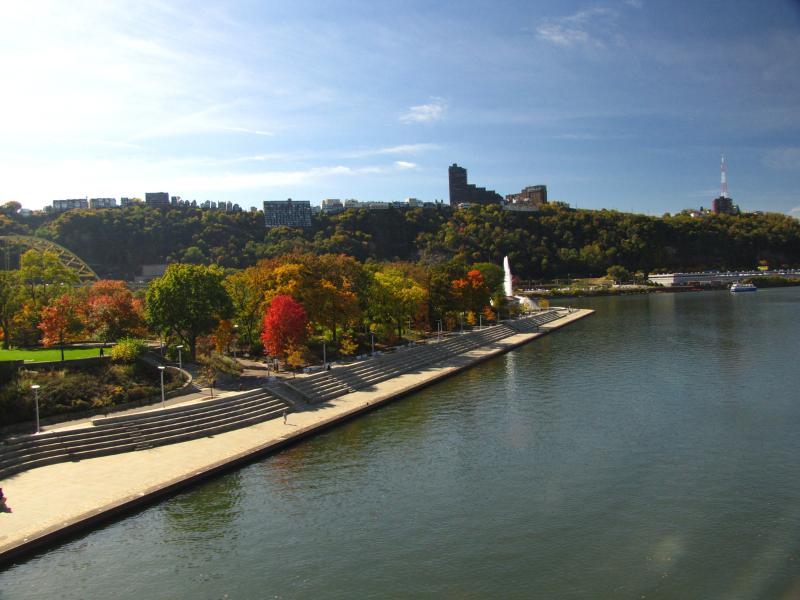
Pittsburgh’s unique geographical position and natural features have played a crucial role in shaping its development and character.
- Point State Park, a 36-acre riverfront urban park, marks the historic confluence of three rivers and offers stunning panoramic views.
- Pittsburgh sits at the same latitude as Madrid, Spain, creating interesting climate parallels between these two major cities.
- The city has experienced extreme temperature ranges, from a scorching 103°F (39.4°C) in 1988 to a frigid −22°F (−30°C) in 1994.
- The city’s unique topography includes numerous hills and valleys, earning it the nickname “The City of Bridges.”
Historical Significance
From ancient settlements to industrial revolution, Pittsburgh’s history is rich with significant events and transformations.
- The Paleo-Indians were the first inhabitants of Pittsburgh, settling in the area as early as 19,000 years ago.
- The city was officially founded on November 27, 1758, and named after William Pitt 1st Earl of Chatham.
- Pittsburgh’s first newspaper, The Gazette, began publication in 1786 as a four-page weekly.
- The world’s first commercial oil well was drilled by Edwin Drake in Titusville, Pennsylvania, about 100 miles north of Pittsburgh.
- The first Ferris Wheel was designed and constructed by George Washington Gale Ferris Jr., a structural engineer from Pittsburgh, in 1893.
- In 1911, the United States Geographic Board officially changed the city’s spelling from “Pittsburg” to “Pittsburgh.”
Suggested Read: 95 Fun Facts About Pennsylvania
Innovation and Technology
Pittsburgh has been at the forefront of numerous technological and scientific breakthroughs throughout its history.
- The world’s first commercial radio station, KDKA, began broadcasting from East Pittsburgh in 1920.
- Jonas Salk and his team developed the groundbreaking Polio vaccine at the University of Pittsburgh.
- The first internet emoticon, the smiley face :-), was invented by Professor Scott Fahlman at Carnegie Mellon University (located in Pittsburgh) in 1982.
- The world’s first movie theater opened in Pittsburgh in 1905, featuring 96 seats.
Architecture and Landmarks

The city’s skyline and architectural heritage reflect its evolution from industrial powerhouse to modern metropolis.
- The US Steel Tower, Pittsburgh’s tallest building, stands 841 ft (256 m) tall with 64 floors.
- The historic Duquesne Incline, a 140-year-old cable car system, offers spectacular city views from 400 feet above ground.
- The first cable suspension bridge, The Monongahela Bridge, was constructed in 1846.
- Iconic buildings include the Church of the Epiphany, Bellefield Tower, Union Station, and Allegheny County Courthouse.
Culture and Entertainment

Pittsburgh’s rich cultural scene encompasses museums, gardens, and entertainment venues that attract visitors from around the world.
- The Strip District, covering 390 acres, has transformed from an industrial area into a thriving food and cultural hub.
- The Phipps Conservatory and Botanical Gardens, established in 1893, spans 15 acres and operates sustainably.
- The Carnegie Museum of Natural History, founded in 1896, ranks as the nation’s 5th best natural history museum.
- The Pittsburgh Zoo & PPG Aquarium houses over 4,000 animals from 475 different species across 77 acres.
- Notable movies filmed in Pittsburgh include “Jack Reacher,” “Fences,” and “Unstoppable.”
Sports and Recreation
Pittsburgh’s passionate sports culture has earned it numerous championships and loyal fans across multiple professional leagues.
- The city hosts three major professional sports teams: the Steelers (NFL), Penguins (NHL), and Pirates (MLB).
- The Steelers pioneered NFL cheerleading with the Steelerettes from 1961-1970.
- The Pittsburgh Penguins have won five Stanley Cup championships.
- The Pirates, founded in 1882, have claimed five World Series titles.
- Olympic swimmer Leah Smith won Bronze and Gold medals at the Rio Games.
Economy and Education

Pittsburgh’s economic landscape combines traditional industry with modern innovation and educational excellence.
- The Greater Pittsburgh area boasts the 25th largest economy in the United States.
- Seven Fortune 500 companies call Pittsburgh home, including PNC Financial Services Group and PPG Industries.
- The city hosts over 29 colleges and universities, led by The University of Pittsburgh.
- Pittsburgh International Airport served nearly 5 million passengers in 2019.
- The city has experienced significant economic transformation, with technology and healthcare replacing steel as primary industries.
Famous Personalities
Pittsburgh has produced numerous notable figures who have made significant contributions to various fields.
- Andy Warhol, a pioneering figure in pop art, was born and raised in Pittsburgh.
- The Andy Warhol Museum, one of the four Carnegie Museums of Pittsburgh , explores the artist’s legacy through the largest collection of Warhol art and archives in the world.
- Fred Rogers, beloved creator of “Mister Rogers’ Neighborhood,” called Pittsburgh home.
- Acclaimed actors Jeff Goldblum and Michael Keaton are Pittsburgh natives.
- Musical talents Christina Aguilera and Wiz Khalifa were born in the city.
- Notable bands from Pittsburgh include Anti-Flag and Rusted Root.
Modern Pittsburgh

Today’s Pittsburgh combines its rich heritage with contemporary developments and achievements.
- The Greater Pittsburgh metropolitan area has a population of 2,353,538 as of 2020 census data.
- Ed Gainey made history in 2022 as Pittsburgh’s first African-American mayor.
- The city maintains 18 sister city relationships worldwide, including with Skopje and Sheffield.
- Pittsburgh’s flag ranks 24th out of 150 municipal flags in North America.
- The city’s official slogan is “Pittsburgh. Mighty. Beautiful.”
Suggested Read: 80 Fascinating Facts About Delaware
Community and Lifestyle
Pittsburgh’s unique character is reflected in its neighborhoods, local culture, and community spirit.
- Locals are known as “Yinzers,” speaking a distinct dialect called “Pittsburghese.”
- The trendiest neighborhoods include Downtown, Strip District, Mount Washington, and Oakland.
- Popular shopping destinations include 5th Avenue Place, Station Square, and the Waterfront.
- The city has two major newspapers: Pittsburgh Post-Gazette and Pittsburgh Tribune-Review.
- Around 12.8% of all Yinzers reside in the Greater Pittsburgh Area.
- Pittsburgh’s crime rate falls between Cleveland and Gilbert, Arizona, making it relatively safe for a major city.
Suggested Read: 88 Mesmerizing Facts About Maryland


