
25 Interesting Facts About Rivers: Life Lines
Facts about rivers explain how flowing water shapes landscapes, supports ecosystems, and sustains human civilization. From ancient trade routes to modern water supplies, rivers such as the Nile, Amazon, Mississippi, and Yangtze have played a central role in Earth’s natural and human history.
Rivers Facts At-a-Glance
What: Natural flowing bodies of freshwater
Primary Source: Rainfall, snowmelt, glaciers, or springs
Flow Direction: From higher to lower elevation due to gravity
End Point: Oceans, seas, lakes, or inland basins
Time Scale: Thousands to millions of years
Major Rivers:
– Nile
– Amazon
– Yangtze
– Mississippi
– Danube
– Volga
1. Rivers Always Flow Downhill
Rivers flow from higher to lower elevation due to gravity, following the path of least resistance. This constant downward movement drives erosion and sediment transport.
2. Rivers Begin at a Source
Every river starts at a source, which may be a spring, glacier, lake, or melting snowpack. For example, the Nile’s source lies in East Africa, while the Amazon’s headwaters originate in the Andes Mountains.
3. The Amazon Is the Largest River by Volume of Water Discharge
The Amazon River carries more water than any other river on Earth, releasing about 20% of the world’s total river discharge into the oceans. This massive flow strongly influences global ocean circulation and climate. [Learn more: 30 Amazing Facts About Amazon Rainforest]
4. The Amazon River Basin Is the Largest Drainage Basin on Earth
The Amazon River Basin covers about 7 million square kilometers (2.7 million square miles) across nine countries, making it the largest drainage basin on the planet. This vast basin is the primary reason the Amazon carries more water than any other river.
5. The Nile Is the Longest River in the World
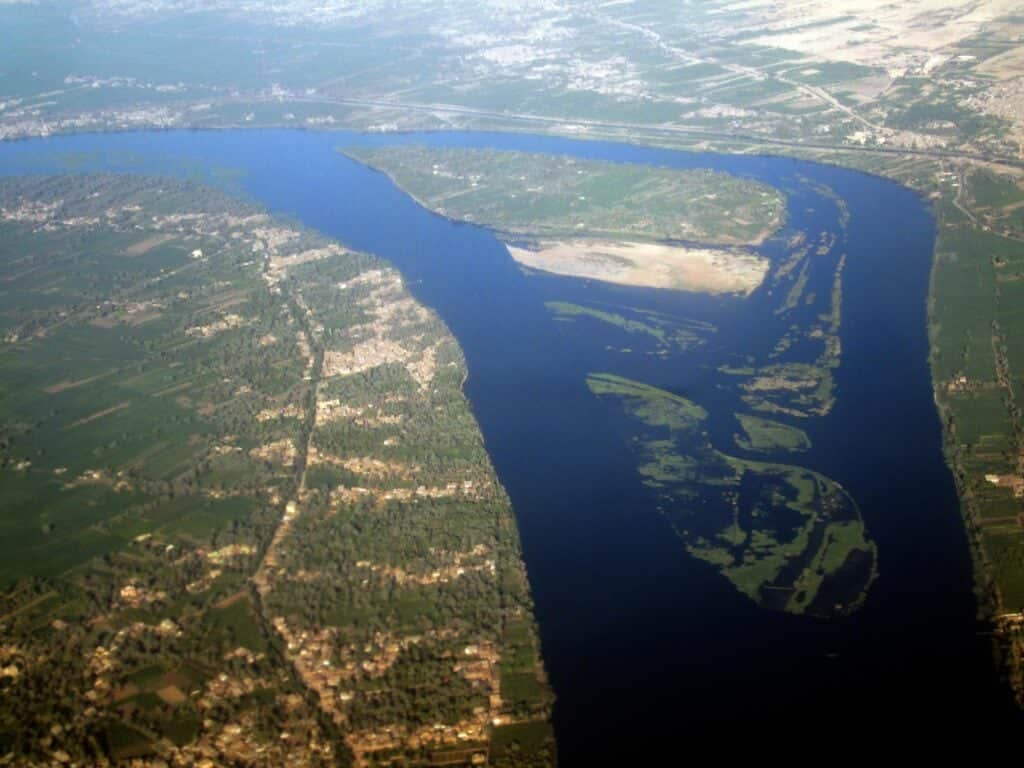
The Nile River stretches roughly 6,650 kilometers (4,130 miles), making it the longest river in the world. Its length has supported civilizations in northeastern Africa for thousands of years.
Suggested Read:
6. Rivers Carve Valleys and Floodplains
Over time, flowing water erodes surrounding land, creating valleys and wide floodplains. These areas often become fertile agricultural regions, such as along the Mississippi River. [Learn more: 90 Interesting Facts About Mississippi]
7. Rivers Transport Sediment
Rivers carry sand, silt, and gravel downstream through suspension and rolling movement. This sediment reshapes riverbeds and builds deltas at river mouths.
8. River Deltas Form Where Flow Slows
When a river enters a lake or ocean, its velocity decreases and sediment is deposited. The Nile Delta and Mississippi Delta are classic examples of this process.
9. Rivers Can Change Course Naturally
Rivers naturally meander and sometimes abandon old channels through a process called avulsion. These shifts can reshape landscapes and affect nearby settlements.
10. Rivers Support Biodiversity

Freshwater rivers provide habitat for fish, plants, insects, and mammals. The Amazon River basin contains one of the highest levels of biodiversity on Earth.
11. Rivers Are Part of the Water Cycle
River water originates from precipitation and eventually returns to the ocean, where it evaporates and continues the global water cycle. This process redistributes freshwater across continents.
12. Rivers Can Flow Across Multiple Countries
Many major rivers cross political boundaries, such as the Danube in Europe and the Mekong in Southeast Asia. This makes river management an international concern.
Suggested Read:
13. Rivers Have Shaped Human Civilization
Early civilizations developed along rivers like the Nile, Tigris, Euphrates, and Indus. Reliable water access supported agriculture, trade, and population growth.
14. Rivers Are Used for Transportation
Rivers have long served as natural transportation routes. The Rhine and Mississippi remain important commercial waterways today.
15. River Flow Varies Seasonally
River discharge often changes with seasons due to rainfall patterns and snowmelt. Seasonal flooding replenishes nutrients in floodplain soils.
16. Rivers Can Flood Naturally

Flooding occurs when river volume exceeds channel capacity. While floods can cause damage, they are essential for maintaining healthy ecosystems.
17. Rivers Can Be Altered by Humans
Dams, levees, and canals change natural river flow. Large dams on rivers like the Yangtze have altered sediment transport and ecosystems.
18. Rivers Erode Rock at Different Rates
Erosion speed depends on water velocity, sediment load, and rock type. Faster flow and softer rock result in more rapid erosion.
Suggested Read: 10 Interesting Facts About Rocks: Earth’s Building Blocks
19. Rivers Can Flow Underground
In karst landscapes, rivers may flow underground through caves and reemerge downstream. This is common in limestone regions.
20. Rivers Do Not Always Reach the Ocean
Some rivers end in inland basins or evaporate before reaching the sea. The Okavango River forms a delta within the Kalahari Desert.
21. River Water Is Not Always Fresh
Near river mouths, freshwater mixes with saltwater, creating estuaries. These zones are biologically productive and ecologically important.
22. Rivers Record Climate History
Sediments deposited by rivers preserve evidence of past climates. Scientists study these layers to understand historical environmental change.
23. Rivers Can Be Very Old
Some rivers have existed for tens of millions of years. The Appalachian rivers in North America predate the mountains they cut through.
24. Rivers Continue to Shape the Land Today
Erosion, sediment transport, and flooding remain active processes. Rivers are constantly reshaping landscapes even in modern times.
25. Rivers Are Essential to Life on Earth
Rivers provide drinking water, food, energy, and transportation. Their continued health is critical to both ecosystems and human societies.
Discover More About Nature’s Water Magic:


