
50 Fascinating Facts About Russia: Land of Extremes
Discover interesting and fun facts about Russia, the world’s largest country, in this captivating exploration. From its vast landscapes to its rich cultural heritage, Russia is a land of extremes and contrasts. Join us as we uncover the unique aspects that make this nation truly extraordinary.
Russia Facts At-a-Glance
Location: Northern Eurasia
Population: 143,449,286 (2023 estimate)
Area: 17,098,246 km² (6,601,670 sq mi)
Languages: Russian (official), 35+ minority languages
Religion: Orthodox Christianity, Islam, Buddhism
Climate: Varied (Arctic to subtropical)
Sources: CIA World Factbook, Knoema
Geography and Natural Wonders
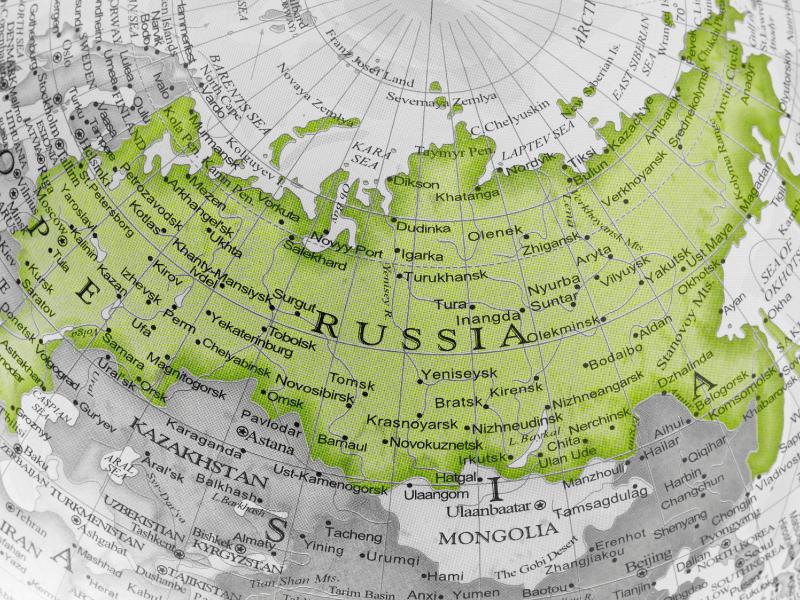
Russia’s vast expanse encompasses a diverse range of landscapes and natural phenomena, from frozen tundras to subtropical beaches. [Learn more: 20 Fun Facts About The Tundra: Frozen Biome]
- Russia is the largest country in the world by land area, covering more than one-eighth of Earth’s inhabited land area at 17.1 million square kilometers (6.6 million square miles).
- The country spans 11 time zones, more than any other nation on Earth, stretching from Kaliningrad in the west to the Kamchatka Peninsula in the east. [Learn more: 20 Interesting Facts About Time Zones]
- Lake Baikal, located in Siberia, is the world’s oldest and deepest freshwater lake, containing about 20% of the world’s unfrozen fresh water and reaching a maximum depth of 1,642 meters (5,387 feet).
- The Ural Mountains, which run north to south through western Russia, are considered the natural boundary between Europe and Asia, making Russia a transcontinental country. [Learn more: 25 Fun Facts About Mountains]
- Russia is home to the world’s largest forest area, the Siberian taiga, which accounts for about 10% of the world’s total forest cover and serves as a crucial carbon sink.
- The Kamchatka Peninsula features over 160 volcanoes, with 29 of them active, earning it recognition as a UNESCO World Heritage site called “Volcanoes of Kamchatka.” [Learn more: 25 Vivid Facts About Volcanoes]
- Russia’s Arctic coastline stretches for 24,140 kilometers (15,000 miles), comprising nearly half of the total Arctic coast in the world.
- The Lena Delta in Siberia is one of the largest river deltas in the world, spanning 32,000 square kilometers (12,355 square miles) and creating a maze of waterways and islands.
History and Cultural Heritage

Russia’s rich history and cultural traditions have shaped its unique identity and global influence.
- The Romanov dynasty ruled Russia for over 300 years, from 1613 until the Russian Revolution in 1917, with Nicholas II being the last emperor.
- St. Basil’s Cathedral in Moscow’s Red Square was built between 1555 and 1561 on the orders of Ivan the Terrible to commemorate military victories.
- The Trans-Siberian Railway, completed in 1916, is the longest railway line in the world, spanning 9,289 kilometers (5,772 miles) and connecting Moscow with Vladivostok.
- Russia was the first country to send a human into space, with Yuri Gagarin orbiting the Earth in 1961 aboard the Vostok 1 spacecraft.
- The Hermitage Museum in St. Petersburg houses one of the world’s largest and oldest art collections, with over 3 million items displayed across 360 rooms.
- Russian ballet is world-renowned, with the Bolshoi Theatre in Moscow being one of the most prestigious ballet companies globally since its founding in 1776.
- Russia’s Victory Day on May 9th commemorates the Soviet victory over Nazi Germany in World War II, during which an estimated 26-27 million Soviet citizens died.
- The Winter Palace in St. Petersburg served as the official residence of Russian emperors from 1732 to 1917 and is now part of the Hermitage Museum complex.
Language and Literature

The Russian language and its literary traditions have had a profound impact on world culture.
- Russian is the 8th most spoken language in the world, with about 258 million speakers globally, and is one of the six official languages of the United Nations.
- The Russian alphabet, known as Cyrillic, consists of 33 letters and was derived from the Greek alphabet in the 9th century by Saints Cyril and Methodius.
- Leo Tolstoy’s “War and Peace” is considered one of the greatest novels ever written, with over 580,000 words in its original Russian version and featuring more than 500 characters.
- Alexander Pushkin’s “Eugene Onegin” is regarded as the foundation of modern Russian literature and is written entirely in verse with 389 fourteen-line stanzas.
- The Russian language has six cases, making it one of the more complex languages for English speakers to learn, but it allows for incredible flexibility in sentence structure.
- Fyodor Dostoevsky’s “Crime and Punishment,” published in 1866, is one of the most influential psychological novels ever written and has been translated into more than 30 languages.
- Russia celebrates “Pushkin Day” annually on June 6th, honoring the birth of the nation’s most beloved poet, Alexander Pushkin.
Science and Technology

Russia has made significant contributions to scientific advancement and technological innovation.
- Dmitri Mendeleev, a Russian chemist, created the first version of the periodic table of elements in 1869, organizing them by atomic weight and chemical properties.
- The Soviet Union launched the first artificial satellite, Sputnik 1, into orbit in 1957, marking the beginning of the Space Age and the space race with the United States.
- Russian scientist Igor Sikorsky invented the first successful helicopter in 1939, the VS-300, which laid the foundation for modern helicopter design.
- The AK-47, one of the most widely used assault rifles in the world, was designed by Russian inventor Mikhail Kalashnikov and has been produced in greater numbers than any other assault rifle.
- Russia’s Akademik Lomonosov is the world’s first floating nuclear power plant, commissioned in 2019 and designed to supply energy to remote Arctic regions.
- Russian mathematician Nikolai Lobachevsky developed non-Euclidean geometry in the early 19th century, revolutionizing our understanding of space and laying groundwork for Einstein’s theory of relativity.
- Sophia Kovalevskaya, the first major Russian female mathematician, became the first woman in Europe to earn a doctorate in mathematics in 1874 and later made significant contributions to analysis, differential equations, and mechanics.
Unique Traditions and Customs

Russian culture is rich with distinctive traditions and customs that reflect its diverse history.
- Traditional Russian nesting dolls, known as Matryoshka, originated in the late 19th century and symbolize fertility and motherhood, with each smaller doll nested inside a larger one.
- Russians celebrate “Old New Year” on January 14th, based on the Julian calendar used before 1918, giving them two opportunities to mark the beginning of the new year.
- The traditional Russian sauna, called a “banya,” involves beating oneself with dried birch branches (veniks) to improve circulation and is considered both a health practice and social tradition.
- Maslenitsa, a week-long festival before Lent, features the consumption of blini (pancakes) and the burning of a straw effigy to symbolize the end of winter and the arrival of spring.
- It’s considered bad luck in Russia to shake hands or give something through a doorway, as doorways are traditionally believed to be the boundary between worlds.
- Russians typically remove their shoes when entering a home and wear slippers provided by the host, a custom that keeps homes clean and reflects the significance of domestic space in Russian culture.
- Russians typically give an odd number of flowers for happy occasions and an even number for funerals, with the exception of 13, which is considered unlucky.
Facts About Modern Russia

Contemporary Russia continues to evolve, blending its rich history with modern developments.
- Russia is the world’s largest exporter of natural gas and the second-largest producer of crude oil, making energy resources a cornerstone of its economy.
- The Russian city of Oymyakon is known as the coldest permanently inhabited place on Earth, with temperatures dropping to -71.2°C (-96.16°F) in January 1924.
- Moscow’s Metro system is renowned for its beautiful architecture, with many stations resembling underground palaces adorned with chandeliers, mosaics, and sculptures.
- Russia has the highest number of university graduates in Europe, with over 54% of the population holding a tertiary education degree, reflecting the country’s strong emphasis on education.
- The 2014 Sochi Winter Olympics were the most expensive Olympic Games in history, costing an estimated $51 billion and showcasing Russia’s ability to host major international events.
- Russia’s caviar, particularly from the beluga sturgeon, is considered among the finest in the world and has been a luxury export since the time of the tsars.
- The Russian State Library in Moscow is one of the largest libraries in the world, housing over 47 million items including books, journals, maps, and manuscripts in 367 languages.
- The Millionka ice cave in the Ural Mountains contains ice crystals that remain frozen year-round, creating spectacular formations regardless of the outside temperature.
- Chess has been an integral part of Russian culture for centuries, with the country producing more chess grandmasters than any other nation in the world.
- Lake Karachay in Russia was once considered the most polluted spot on Earth due to nuclear waste dumping, though it has since been filled in with concrete blocks to contain the contamination.
- The Russian city of St. Petersburg experiences “White Nights” during summer when the sun never fully sets, allowing for visibility even at midnight due to its northern latitude.
- The world’s deepest hole, the Kola Superdeep Borehole, is located in Russia and reaches 12,262 meters (40,230 feet) into the Earth’s crust – a Soviet scientific drilling project that took nearly 20 years to complete.
- The Russian city of Norilsk is the northernmost city with more than 100,000 inhabitants and is completely inaccessible by road – visitors must arrive by plane or boat during the brief summer season when waterways aren’t frozen.
Discover the Remarkable Continents of Our Planet
Across our world’s seven continents, you’ll find extraordinary ecological diversity, rich cultural heritage, and remarkable human achievements that have shaped our global story throughout millennia.
- 75 Amazing Facts About Asia: Land of Diversity
- 60 Essential Facts About Europe: A Continental Journey
- 55 Interesting Facts About North America: A Diverse Continent
- 50 Fascinating Facts About South America: Land of Wonders
- 50 Fascinating Facts About Africa: Cradle of Humanity
- 35 Fun Facts About Australia: Discover The Land Down Under
- 50 Amazing Facts About Antarctica: Icy Wonders


