
10 Interesting Facts About Snow: Nature’s Icy Art
Diving into the interesting facts about snow reveals a world of crystalline beauty and scientific wonder. This frozen precipitation, which blankets landscapes in pristine white, plays a crucial role in Earth’s water cycle and climate systems. Let’s explore the intriguing aspects of this wintry phenomenon that transforms our world each year.
Snow Facts At-a-Glance
Type/Classification: Solid precipitation
Geographic Distribution: Global, primarily in polar and temperate regions
Notable Examples: Antarctic snow, Alpine snowfall
Key Characteristics: Crystalline structure, high albedo
Scientific Significance: Climate regulation, water cycle component
Environmental Impact: Insulation for plants and animals, water storage
Human Interaction: Winter sports, water resource management
Research Status: Ongoing studies on formation, distribution, and climate impact
1. Snow is translucent, not white
While snow appears white to our eyes, it’s actually translucent. The white color we see is due to light scattering and reflection off the countless tiny ice crystals that make up snow. When light hits these crystals, it bounces around and reflects back to us as white light, similar to how a prism works but in reverse.
2. All snowflakes have six sides
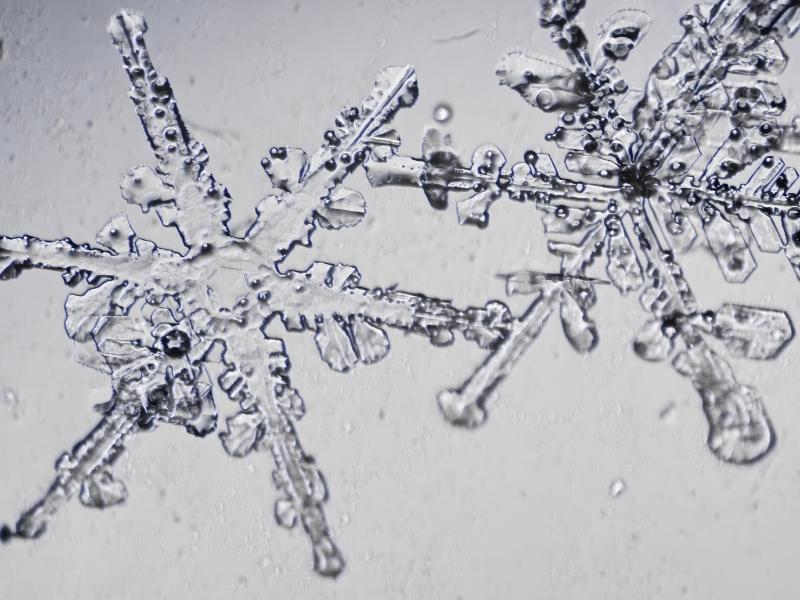
Every snowflake is built on a hexagonal (six-sided) foundation due to the molecular structure of water. When water molecules freeze, they naturally arrange themselves in a hexagonal pattern. While the basic structure is always six-sided, the intricate details and branches of each snowflake vary based on temperature and humidity conditions during formation.
3. Snow is technically a mineral
According to geological definitions, snow qualifies as a mineral. It’s a naturally occurring, inorganic solid with a definite chemical composition (H2O in ice crystal form) and a crystalline structure. This makes snow part of the same category as quartz, diamonds, and other minerals we typically think of as rocks.
4. Snow is an excellent insulator

Fresh snow can contain up to 90% trapped air, making it a surprisingly effective insulator. This air-filled structure means that even when surface temperatures plummet well below freezing, the ground beneath a thick layer of snow can remain close to 32°F (0°C). Many animals rely on this insulating property to survive harsh winters.
Discover Fascinating Facts About The Seasons of the Year:
5. Snow can absorb pollutants from the air
As snowflakes fall through the atmosphere, they act like tiny air filters, trapping pollutants such as soot, dust, and chemical particles. This is why snow in urban areas often appears dirty or gray, and why the first snowmelt of spring can contain concentrated pollutants that were absorbed during winter.
6. Snow can be red, pink, or other colors
While we typically expect snow to be white, it can appear in various colors. “Watermelon snow” gets its pink or red color from algae that thrives in cold conditions. Snow can also appear blue in deep accumulations, yellow from certain types of algae or pollution, or even brown from dust and dirt particles.
7. Not all snowstorms are blizzards

A blizzard is a specific type of snowstorm with strict meteorological criteria: sustained winds of at least 35 mph and visibility reduced to less than a quarter mile for at least three hours. Many heavy snowstorms that people call “blizzards” are technically just snowstorms because they don’t meet these wind and visibility requirements.
Suggested Read: 10 Interesting Facts About Blizzards: Winter’s Fury
8. There are many different types of snow
Snow isn’t just snow—meteorologists recognize numerous types based on formation conditions. Powder snow is light and fluffy, perfect for skiing. Wet snow has higher water content and is ideal for building snowmen. Graupel consists of small, round pellets, while corn snow has a granular texture that develops during spring melting cycles.
9. Identical snowflakes do exist
Contrary to the popular saying “no two snowflakes are alike,” scientists have actually found identical snowflakes. In 1988, researchers discovered two snowflakes that were virtually identical under microscopic examination. While the chances are extremely rare due to the countless variables during formation, identical snowflakes are theoretically and practically possible.
10. Snow forms directly from water vapor
Snow doesn’t form from frozen raindrops—that would be sleet or ice pellets. Instead, snow crystals form when water vapor in clouds transitions directly into ice through a process called deposition, skipping the liquid water phase entirely. This direct transformation from gas to solid is what creates the delicate, branched structures we recognize as snowflakes.
Discover Fascinating Facts About Earth’s Natural Wonders:


