
50 Fascinating Facts About South America: Land of Wonders
Embark on a journey through fascinating facts about South America, a continent of incredible diversity and natural wonders. From the Amazon rainforest to the Andes Mountains, South America boasts a rich tapestry of cultures, landscapes, and history. Let’s explore this captivating continent and uncover its many secrets.
South America Facts At-a-Glance
Location: Southern Hemisphere, bordered by Pacific and Atlantic Oceans
Population: Approximately 430 million
Area: 17.84 million km² (6.89 million sq mi)
Languages: Spanish, Portuguese, and numerous indigenous languages
Religion: Predominantly Christian (Catholic and Protestant)
Climate: Varied, from tropical to temperate and polar
Sources: CIA World Factbook, National Geographic
Geography and Natural Wonders
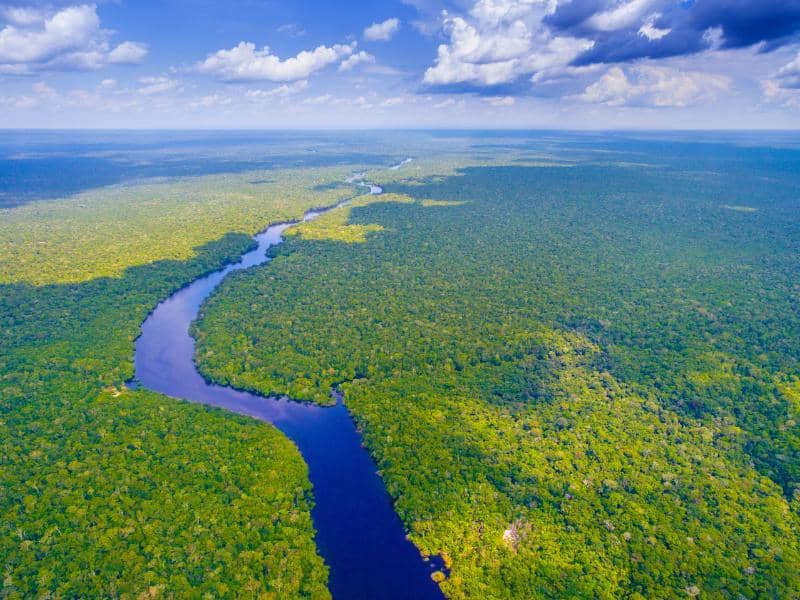
South America’s diverse landscape includes some of the world’s most iconic natural features. From towering mountains to vast rainforests, the continent is a treasure trove of geographical marvels.
- The Amazon River is the world’s largest river by water volume, discharging about 209,000 cubic meters of water per second into the Atlantic Ocean, which is more than the next seven largest rivers combined. [Learn more: Facts about the Amazon Rainforest]
- The Andes Mountains, running along South America’s western coast, form the world’s longest continental mountain range, stretching over 7,000 km (4,300 mi) through seven countries: Venezuela, Colombia, Ecuador, Peru, Bolivia, Chile, and Argentina. [Learn more: Facts about Mountains]
- The Atacama Desert in Chile is the driest non-polar desert in the world, with some areas having never recorded rainfall and others that haven’t seen rain in over 400 years.
- Angel Falls in Venezuela is the world’s highest uninterrupted waterfall, with a height of 979 meters (3,212 ft) and a plunge of 807 meters (2,648 ft), making it 15 times higher than Niagara Falls. [Learn more: 40 Interesting Facts About Venezuela]
- Lake Titicaca, straddling the border of Peru and Bolivia, is the highest navigable lake in the world at 3,812 meters (12,507 ft) above sea level and contains more than 40 islands, many of which are inhabited.
- The Salar de Uyuni in Bolivia is the world’s largest salt flat, covering over 10,000 square kilometers (3,900 sq mi) and containing an estimated 10 billion tons of salt.
- South America is home to the world’s largest wetland area, the Pantanal, which spans approximately 195,000 square kilometers (75,000 sq mi) across Brazil, Bolivia, and Paraguay.
Want to Discover More About Each South American Country?
Curious about the amazing cultures, landmarks, and hidden gems in these fascinating nations? Check out our country fact guides below 👇
Biodiversity and Wildlife

South America is home to an incredible array of plant and animal species, making it one of the most biodiverse regions on Earth.
- The Galápagos Islands, located off the coast of Ecuador, inspired Charles Darwin’s theory of evolution and are home to unique species found nowhere else, including the marine iguana—the world’s only sea-going lizard.
- The Amazon rainforest covers about 40% of South America and is home to 10% of the world’s known species, including approximately 40,000 plant species, 3,000 freshwater fish species, and more than 370 types of reptiles.
- The Andean condor, found in the Andes Mountains, has the largest wingspan of any land bird, reaching up to 3.3 meters (10.8 ft), and can soar for hours without flapping its wings.
- The giant anteater, native to South America, can eat up to 35,000 ants and termites in a single day using its specialized 2-foot-long tongue that can flick in and out up to 150 times per minute.
- The Amazon River dolphin, also known as the pink dolphin, is the largest river dolphin species in the world and can turn bright pink when excited or surprised due to blood rushing to vessels near their skin.
- The poison dart frog, found in South America’s rainforests, is among the most toxic animals on Earth—the golden poison dart frog contains enough poison to kill up to 20 adult humans.
- The anaconda, native to South America’s tropical regions, is the world’s heaviest snake, with females reaching lengths of over 8.5 meters (28 ft) and weights exceeding 200 kg (440 lbs). [Learn more: 40 Fascinating Facts About Snakes: Slithering Wonders]
Historical Landmarks and Ancient Civilizations

South America’s rich history is reflected in its numerous archaeological sites and ancient ruins, testament to the advanced civilizations that once thrived on the continent.
- Machu Picchu, the ancient Incan city in Peru, was built in the 15th century and remained hidden to the outside world until its rediscovery in 1911 by American explorer Hiram Bingham.
- The Nazca Lines in Peru are a series of ancient geoglyphs etched into the desert floor, with some figures spanning more than 370 meters (1,200 ft) and believed to have been created between 500 BCE and 500 CE.
- Tiwanaku, an ancient city in Bolivia, flourished around 500-1000 CE and is known for its impressive stone architecture including precisely cut massive stone blocks weighing up to 130 tons.
- The moai statues on Easter Island (a territory of Chile) were carved by the Rapa Nui people between 1250 and 1500 CE, with the tallest erected statue measuring almost 10 meters (33 ft) high and weighing 82 tons.
- Chan Chan in Peru was the largest pre-Columbian city in South America, covering an area of approximately 20 square kilometers (7.7 sq mi) and serving as the capital of the Chimú Empire from 900 to 1470 CE.
- The Inca Empire, centered in Peru, built an impressive network of roads called Qhapaq Ñan that stretched over 39,000 km (24,200 mi) across South America, connecting various parts of their vast empire.
- The Caral-Supe civilization in Peru is the oldest known civilization in the Americas, dating back to 2600 BCE, making it contemporary with ancient Egypt and the early Mesopotamian civilizations.
Suggested Read: 50 Interesting Facts About Peru: Land of Incas
Cultural Diversity and Languages

South America’s cultural landscape is as diverse as its natural one, with a rich tapestry of languages, traditions, and customs.
- The Carnival in Rio de Janeiro, Brazil, is the largest carnival celebration in the world, attracting millions of visitors annually and featuring elaborate costumes, samba music, and spectacular parades.
- There are over 448 languages spoken in South America, with many indigenous languages still in use today despite centuries of European colonization.
- Brazil is the only country in South America where Portuguese is the official language, while Spanish is the predominant language in most other South American countries.
- The Quechua language, spoken by about 8-10 million people primarily in Peru, Bolivia, and Ecuador, is the most widely spoken indigenous language in South America and was the official language of the Inca Empire.
- Tango, the famous dance and music genre, originated in the working-class port neighborhoods of Buenos Aires, Argentina in the late 19th century, blending African, European, and native influences.
- The indigenous Mapuche people of Chile and Argentina successfully resisted Spanish conquest for more than 300 years, maintaining their independence until the late 19th century.
- Yerba mate, a traditional South American caffeine-rich drink, is consumed at a rate of over 11 pounds per person annually in Uruguay, making Uruguayans the world’s largest per capita consumers of this beverage.
Economic and Natural Resources

South America is rich in natural resources, which have played a significant role in shaping the continent’s economy and global importance.
- Brazil is the world’s largest producer of coffee, accounting for about one-third of global production and has held this position for over 150 years.
- Chile and Peru are among the world’s top copper producers, with Chile alone providing nearly 28% of the world’s copper supply.
- Venezuela has the world’s largest proven oil reserves, with approximately 300 billion barrels, surpassing even Saudi Arabia’s reserves.
- The Cerro Rico mountain in Bolivia was once the world’s largest silver mine, significantly influencing the global economy during colonial times and financing much of the Spanish Empire.
- The lithium triangle—spanning parts of Bolivia, Chile, and Argentina—contains approximately 75% of the world’s lithium reserves, a critical component in batteries for electric vehicles and electronics.
- Brazil is home to the largest commercial cattle herd in the world, with over 200 million head of cattle, making it the world’s largest beef exporter.
- Colombia is the world’s largest producer of emeralds, providing more than 70% of the global market for this precious gemstone.
Discover the Remarkable Continents of Our Planet
Across our world’s seven continents, you’ll find extraordinary ecological diversity, rich cultural heritage, and remarkable human achievements that have shaped our global story throughout millennia.
- 50 Fascinating Facts About Africa: Cradle of Humanity
- 55 Interesting Facts About North America: A Diverse Continent
- 60 Essential Facts About Europe: A Continental Journey
- 35 Fun Facts About Australia: Discover The Land Down Under
- 75 Amazing Facts About Asia: Land of Diversity
- 50 Amazing Facts About Antarctica: Icy Wonders
Sports and Recreation

South America has a passionate sports culture, with football (soccer) being particularly revered across the continent.
- Brazil has won the FIFA World Cup a record five times, more than any other nation, and is the only country to have participated in every World Cup tournament since its inception in 1930.
- The Maracanã Stadium in Rio de Janeiro, Brazil, once held the world record for the largest stadium by capacity, holding nearly 200,000 people during the 1950 World Cup final—a record for the highest attendance at a football match.
- Pato, a sport that combines elements of polo and basketball played on horseback, is Argentina’s national sport, though football remains more popular among the general population.
- The Dakar Rally, a famous off-road endurance race, was held in South America from 2009 to 2019 after being relocated from its original Africa route due to security concerns.
- Capoeira, a Brazilian martial art that combines elements of dance, acrobatics, and music, originated among enslaved Africans in Brazil as a way to disguise fighting practice as dancing.
- Three South American countries—Uruguay (1930, 1950), Argentina (1978, 1986, 2022), and Brazil (1958, 1962, 1970, 1994, 2002)—have won 9 of the 22 FIFA World Cup tournaments held to date.
- The highest football stadium in the world is Estadio Daniel Alcides Carrión in Cerro de Pasco, Peru, which sits at an altitude of 4,380 meters (14,370 ft) above sea level.
Unique Facts and Curiosities

South America is full of fascinating peculiarities that make it truly unique. Here are some intriguing facts that showcase the continent’s diversity and distinctiveness.
- The Trans-Amazonian Highway, stretching 4,000 km (2,485 mi) across Brazil, was built to connect the Atlantic coast with remote western regions but remains partially unpaved and can become impassable during the rainy season.
- Uruguay was the first country in the world to fully legalize the production, sale, and consumption of cannabis for recreational use nationwide in 2013.
- The Catatumbo lightning in Venezuela is a unique atmospheric phenomenon where lightning strikes continuously for up to 10 hours a night, 140-160 nights per year, generating up to 280 strikes per hour.
- South America is home to the world’s largest rodent, the capybara, which can weigh up to 65 kg (143 lbs) and is semi-aquatic, capable of remaining underwater for up to five minutes.
- The “Door to Hell” or Puerta del Diablo in El Salvador is a natural rock formation featuring two massive boulders that form a narrow passage with a 40-meter drop, offering breathtaking views of surrounding valleys and mountains.
- Angel Falls in Venezuela was named after American aviator Jimmy Angel, who flew over it in 1933 and crash-landed nearby, with the falls remaining relatively unknown to the outside world until the 1950s.
- The engineering behind many Inca stone structures was so precise that many walls were built without mortar, with stones cut so perfectly that even today it’s impossible to slide a piece of paper between them.
- The Charles Darwin Research Station in the Galápagos Islands has successfully bred and reintroduced over 7,000 giant tortoises to their native islands, helping to save this iconic species from extinction.
Explore the Vibrant Nations of South America
Each of these diverse countries has its own unique culture, landscapes, and fascinating stories waiting to be discovered.
- 95 Fun Facts About Argentina: Heritage and Modernity
- 30 Fun Facts About Brazil: Samba, Sun, and Soccer
- 37 Interesting Facts About Chile: The Country Of Poets
- 25 Fascinating Facts About Paraguay: Guaraní Nation
- 35 Fun Facts About Colombia: Gateway to South America
- 40 Interesting Facts About Ecuador: Ancient and Modern
- 50 Interesting Facts About Peru: Land of Incas
- 10 Interesting Facts About Uruguay: A Progressive Pioneer
- 20 Fascinating Facts About Bolivia: Landlocked Legacy


