
25 Fascinating Facts About South Korea: Global Powerhouse
There are countless surprising facts about South Korea that reveal a nation of extraordinary contrasts — a country that rose from the ashes of war to become a global powerhouse in technology, culture, and innovation within a single generation.
From the UNESCO-recognized art of kimchi-making to the record-breaking cinema of Bong Joon-ho, and from ancient Joseon Dynasty palaces to the neon-lit streets of Seoul, South Korea offers a depth of history, culture, and modernity that continues to captivate the world.
South Korea Facts At-a-Glance
Official Name: Republic of Korea
Location: Southern Korean Peninsula, East Asia
Capital: Seoul (pop. ~9.7 million city; ~25 million metro)
Population: Approx. 51.7 million
Area: ~100,363 sq km
GDP Rank: Consistently ranked among the world’s 13 largest economies by nominal GDP
Government: Unitary presidential constitutional republic
Major Milestones: Hosted 1988 Summer Olympics, 2002 FIFA World Cup, 2018 Winter Olympics
South Korea Geography
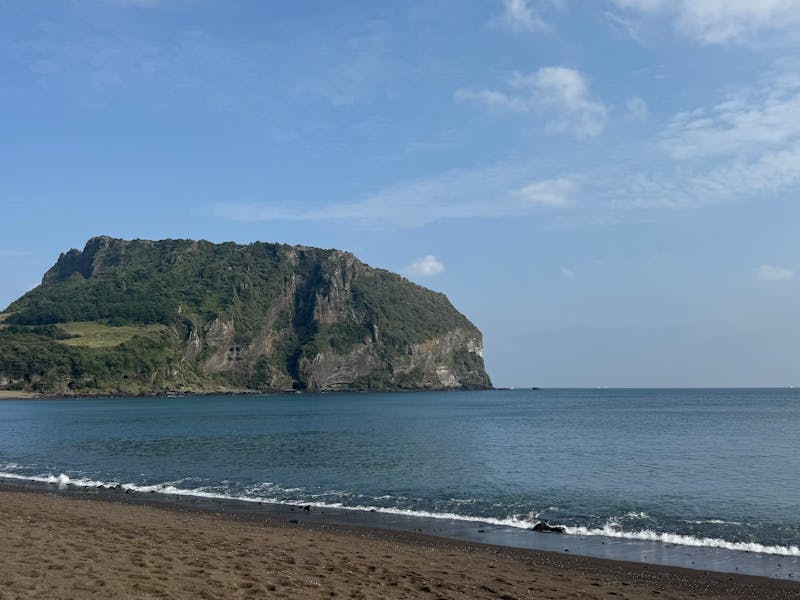
South Korea’s landscape is defined by rugged mountains, a dramatic coastline, and one of the world’s most densely populated capital regions. Its geography has shaped everything from its military history to its celebrated cherry blossom seasons.
- South Korea, officially the Republic of Korea, occupies the southern portion of the Korean Peninsula in East Asia, covering an area of approximately 100,363 square kilometers — slightly larger than the state of Indiana in the United States.
- The country shares its only land border with North Korea along the Korean Demilitarized Zone (DMZ), a 250-kilometer-long buffer strip established after the Korean War armistice was signed on July 27, 1953.
- Seoul, the capital city, is home to approximately 9.7 million people within city limits and over 25 million in the greater metropolitan area, making it one of the most densely populated urban regions on Earth.
- The country is approximately 70% mountainous, with the Taebaek Mountain Range running along the eastern coast and Hallasan on Jeju Island being the highest peak at 1,950 meters above sea level.
- South Korea experiences four distinct seasons, with hot and humid summers influenced by monsoon rains, cold and dry winters driven by Siberian air masses, and particularly celebrated spring cherry blossom seasons that draw millions of domestic and international tourists.
- Jeju Island, a volcanic island located about 80 kilometers south of the Korean Peninsula, is famous for its haenyeo — female free divers who harvest seafood from the ocean floor without breathing equipment — a tradition dating back over 1,500 years that was recognized by UNESCO in 2016.
Suggested Read: 75 Amazing Facts About Asia: Land of Diversity
Facts About South Korea History
South Korea’s history spans millennia, from ancient dynasties to a devastating 20th-century war that technically never ended. Understanding this history is essential to understanding the country today.
- The Korean War, which began on June 25, 1950, when North Korean forces invaded the South, technically never officially ended with a peace treaty — only an armistice agreement was signed, meaning the two Koreas remain in a legal state of war to this day.
- The Joseon Dynasty, founded in 1392 by General Yi Seonggye, ruled the Korean Peninsula for over 500 years until 1897, making it one of the longest-ruling Confucian dynasties in world history and profoundly shaping Korean language, culture, and social structure.
- The Korean alphabet, Hangul, was created in 1443 under the direction of King Sejong the Great of the Joseon Dynasty specifically to improve literacy among ordinary Koreans, offering an accessible alternative to the complex Chinese character system that had largely been mastered only by the educated elite.
Facts About South Korea Economy and Technology

South Korea’s economic transformation is one of the most remarkable in modern history, driven by technological innovation, global exports, and world-class infrastructure.
- South Korea transformed from one of the world’s poorest countries in the 1950s — with a GDP per capita of around $67 — into an economy consistently ranked among the world’s 13 largest by nominal GDP by the 2020s, a phenomenon economists call the “Miracle on the Han River.”
- South Korea has one of the world’s fastest average internet speeds and among the world’s highest rates of internet connectivity, with over 97% of the population having access to broadband internet as of the early 2020s.
- Samsung, headquartered in Suwon, South Korea, is one of the world’s largest technology conglomerates and alone accounts for roughly 20% of South Korea’s total export earnings, illustrating how deeply a single company can influence a national economy.
- South Korea has long been ranked among the world’s leading shipbuilders, with companies like Hyundai Heavy Industries, Samsung Heavy Industries, and Daewoo Shipbuilding constructing a significant portion of the world’s large vessels, including supertankers, container ships, and liquefied natural gas carriers.
- The country operates one of the world’s most extensive and efficient public transportation systems, with Seoul’s subway network spanning over 340 stations across nine major lines and carrying approximately 7 million passengers daily.
South Korea Culture and Entertainment

From Oscar-winning cinema to globally beloved pop music, South Korea has become one of the most influential cultural exporters of the 21st century.
- K-pop, or Korean pop music, has become a global cultural phenomenon, with the boy band BTS becoming the first Korean act to reach number one on the US Billboard Hot 100 chart in 2020 with their song “Dynamite,” which was also their first entirely English-language single.
- South Korean director Bong Joon-ho made history at the 92nd Academy Awards in 2020 when his film Parasite became the first non-English-language film to win the Best Picture Oscar, also taking home awards for Best Director, Best Original Screenplay, and Best International Feature Film.
- South Korea is one of the world’s largest exporters of cultural content, with the Korean Wave — or Hallyu — generating an estimated $12.3 billion in cultural exports in 2022, encompassing K-pop, Korean cinema, television dramas, beauty products, and cuisine that have gained massive followings across Asia, the Americas, and Europe.
- Kimchi, a traditional fermented vegetable dish typically made with cabbage and chili peppers, is so central to Korean culture that South Korea produces approximately 1.85 million tons of it annually, and the practice of making kimchi — called Kimjang — was inscribed on UNESCO’s Intangible Cultural Heritage list in 2013.
- Taekwondo, a martial art developed in Korea with roots going back over 2,000 years, became an official Olympic sport at the 2000 Sydney Games and is practiced by an estimated 80 million people in more than 200 countries worldwide.
- South Korea is home to numerous UNESCO-recognized World Heritage Sites, including the Gyeongju Historic Areas, Jeju Volcanic Island and Lava Tubes, and the Royal Tombs of the Joseon Dynasty, reflecting thousands of years of continuous civilization.
Facts About South Korea Society and Demographics
South Korean society is shaped by intense cultural values around education, appearance, and national service — alongside some of the most striking demographic statistics in the world.
- South Korea has one of the world’s lowest birth rates, recording a total fertility rate of just 0.72 in 2023 — widely reported as the lowest total fertility rate ever recorded for any country — posing severe long-term challenges for its aging population and workforce sustainability.
- South Korea is often cited as having one of the world’s highest rates of plastic surgery per capita, with widely reported estimates suggesting that a significant proportion of women in Seoul have undergone some form of cosmetic procedure, reflecting an intense cultural emphasis on appearance and beauty standards.
- The country has an exceptionally high education attainment rate, with over 70% of South Korean adults aged 25 to 34 holding a tertiary education degree — one of the highest rates among OECD member nations — driven by intense cultural pressure known as “education fever,” or gyoyuk yeol.
- South Korea has mandatory military service for all able-bodied male citizens, who are required to serve approximately 18 to 21 months depending on the branch of service, a policy maintained due to the ongoing security threat from North Korea.
South Korea Sports and International Events
South Korea has established itself as a premier host of global sporting events, cementing its place on the world stage across multiple decades.
- South Korea hosted the Summer Olympic Games in Seoul in 1988, the FIFA World Cup jointly with Japan in 2002, and the Winter Olympic Games in Pyeongchang in 2018, making it one of the very few countries to have hosted all three of the world’s most prestigious international sporting events.
Suggested Read: 110 Fascinating Facts About Bangkok


