
50 Interesting Facts About Spain: Iberian Nation
Discover fascinating facts about Spain, a country celebrated for its vibrant culture, rich history, and striking regional diversity. From the cosmopolitan streets of Madrid and Barcelona to sun-drenched Mediterranean beaches and rugged mountain landscapes, Spain offers a unique blend of traditions, languages, and lifestyles.
Spain Facts At-a-Glance
Location: Southwestern Europe (Iberian Peninsula)
Population: ~49 million (early 2025)
Area: 505,990 sq km (195,360 sq mi)
Languages: Spanish (Castilian, official); Catalan, Galician, Basque (co-official regionally)
Religion: Christianity (predominantly Roman Catholic), with Muslim, Jewish, and non-religious minorities
Climate: Varied; Mediterranean along the coast, continental in the interior, oceanic in the north
Source: CIA World Factbook
Geography and Natural Features
- Spain is the fourth-largest country in Europe by land area, covering 505,990 square kilometers (195,364 square miles), making it roughly twice the size of the United Kingdom and slightly larger than California.
- Spain’s highest peak is Mount Teide on the Canary Island of Tenerife, standing at 3,715 meters (12,188 feet) above sea level, making it not only Spain’s tallest mountain but also the world’s third-largest volcanic structure.
- The Strait of Gibraltar, separating Spain from Africa by just 14 kilometers (8.7 miles) at its narrowest point, has been a crucial maritime passage throughout history and remains one of the world’s busiest shipping lanes.
- Spain’s Canary Islands, located off the coast of Africa, enjoy a subtropical climate year-round with average temperatures rarely dropping below 15°C (59°F) or exceeding 25°C (77°F), earning them the nickname “Islands of Eternal Spring.”
- Spain has 15 National Parks protecting diverse ecosystems from the Pyrenees mountains to volcanic landscapes, including Doñana National Park, which serves as a crucial stopover for millions of migratory birds traveling between Europe and Africa.
- Spain’s Meseta Central, a vast plateau covering much of the interior, sits at an average elevation of 600-700 meters above sea level, making Spain the second-highest country in Europe after Switzerland.
- Spain’s Costa del Sol receives over 300 days of sunshine annually, making it one of Europe’s premier beach destinations and contributing significantly to the country’s tourism economy.
- The country is home to Europe’s only desert, the Tabernas Desert in Almería, which has served as the filming location for numerous Western movies due to its resemblance to the American Southwest.
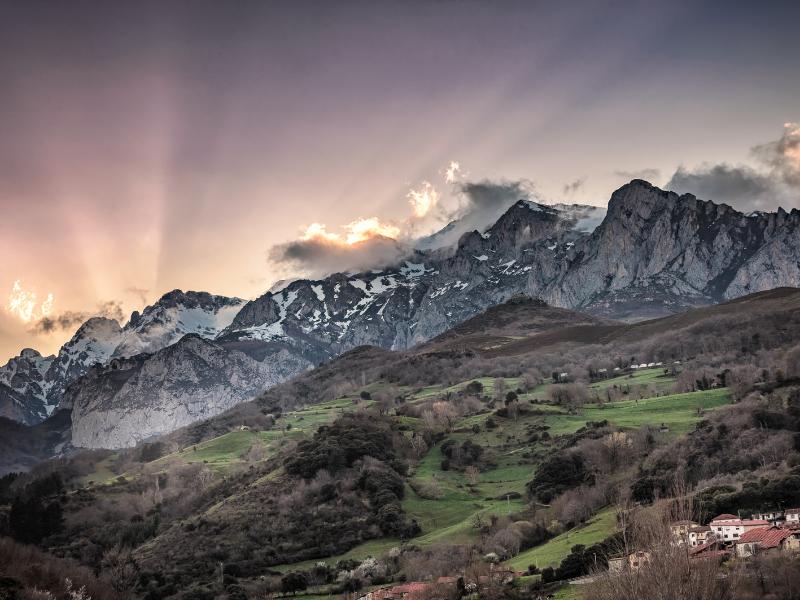
- The Picos de Europa National Park contains some of Europe’s most dramatic limestone peaks, rising directly from sea level to over 2,600 meters within just 20 kilometers of the coast.
- The country’s diverse geography encompasses everything from the snow-capped Pyrenees mountains to tropical Canary Island beaches, Mediterranean coastlines, Atlantic cliffs, central plateaus, and even volcanic landscapes, making Spain one of Europe’s most geographically varied nations.
History
- Spain has been inhabited for over 35,000 years, with the famous Altamira Cave paintings in Cantabria dating back approximately 36,000 years, representing some of the earliest known examples of human artistic expression in Europe.
- The Spanish Civil War (1936-1939) was a devastating conflict that resulted in an estimated 500,000 deaths and served as a precursor to World War II, with Nazi Germany and Fascist Italy supporting Franco’s Nationalist forces.
- The Spanish Inquisition, established in 1478, lasted for over 350 years until its abolition in 1834, making it one of the longest-running religious tribunals in European history.
- The Spanish Empire was once the largest empire in history, spanning four continents at its peak in the 18th century and including territories from the Philippines to the Americas, influencing global culture, language, and religion.
- The Spanish Armada of 1588, consisting of 130 ships and 30,000 men, was defeated by the English fleet and storms, marking the beginning of the decline of Spanish naval dominance.
- The Spanish monarchy was restored in 1975 after Franco’s death, with King Juan Carlos I playing a crucial role in Spain’s transition to democracy, and the current king, Felipe VI, ascending to the throne in 2014.
- Spanish universities, including the University of Salamanca founded in 1218, are among Europe’s oldest, with Spain’s higher education system attracting over 150,000 international students annually.
Suggested Read: 50 Interesting Facts About Italy: La Dolce Vita
Language and Culture
- The Spanish language is spoken by over 500 million people worldwide, making it the second most spoken native language globally after Mandarin Chinese, with Spain being the birthplace of this influential Romance language.
- The Basque language (Euskera) spoken in northern Spain is a language isolate with no known linguistic relatives, making it one of the most unique languages in the world and predating all other European languages.
- Spain has four official languages: Spanish (Castilian), Catalan, Galician, and Basque, with regional languages being co-official in their respective autonomous communities and actively promoted through education and media.
- The country experiences one of the world’s most extreme daily schedules, with lunch typically served between 2-4 PM and dinner between 9-11 PM, reflecting a cultural adaptation to the hot Mediterranean climate.
- Spain’s siesta tradition, while often stereotyped, actually developed as a practical response to extreme afternoon heat, though modern work schedules have significantly reduced its practice in urban areas.
- The country’s life expectancy is among the highest in the world at approximately 83.5 years, attributed to the Mediterranean diet, active lifestyle, and strong social connections.
- Spain’s gender equality laws are among the most progressive in Europe, including comprehensive domestic violence legislation and paternity leave policies, with women comprising over 40% of the Spanish Parliament.
Festivals and Traditions
- Spain’s La Tomatina festival in Buñol involves over 20,000 participants throwing approximately 150,000 tomatoes at each other in the world’s largest food fight, held annually on the last Wednesday of August.

- The Camino de Santiago, a network of ancient pilgrimage routes leading to Santiago de Compostela, attracts over 300,000 pilgrims annually from around the world, with the main route covering approximately 800 kilometers.
- The Running of the Bulls in Pamplona during the San Fermín festival involves six bulls running through the city’s narrow streets for approximately 875 meters, a tradition dating back to the 14th century.
- Spain’s Holy Week (Semana Santa) processions, particularly in Seville and Málaga, feature elaborate floats weighing up to 5,000 kilograms carried by dozens of men, representing centuries-old religious traditions.

- Spain’s bull-fighting tradition, while controversial, remains deeply embedded in certain regions’ cultural identity, with the largest bullring, Las Ventas in Madrid, holding 23,798 spectators.
Suggested Read: 30 Interesting Facts About Madrid: Spanish Capital
Art and Architecture
- The country is home to 49 UNESCO World Heritage Sites, including the Alhambra in Granada, the Sagrada Familia in Barcelona, and the historic city of Toledo, making it the third country with the most World Heritage Sites globally.
- The Prado Museum in Madrid houses the world’s finest collection of European art from the 12th to early 20th centuries, including masterpieces by Velázquez, Goya, and El Greco, with over 3 million visitors annually.
- Spain’s Guggenheim Museum Bilbao, designed by Frank Gehry and opened in 1997, is credited with transforming Bilbao from an industrial city into a major tourist destination, demonstrating the “Bilbao Effect” in urban regeneration.
- The Alhambra in Granada receives over 2.7 million visitors per year, making advance reservations essential, and its intricate Islamic architecture represents the pinnacle of Moorish art in Western Europe.

- The country has produced numerous influential artists including Pablo Picasso, Salvador Dalí, and Joan Miró, with Spain’s artistic heritage spanning from prehistoric cave paintings to contemporary avant-garde movements.
- The Spanish guitar, developed in Andalusia during the 19th century, evolved from earlier instruments and became the standard classical guitar worldwide, with Spanish luthiers like Antonio Torres revolutionizing its design.
- The country’s film industry has produced internationally acclaimed directors like Luis Buñuel, Pedro Almodóvar, and Alejandro Amenábar, with Spanish cinema gaining global recognition for its artistic innovation and cultural depth.
- The Sagrada Familia in Barcelona, designed by Antoni Gaudí, has been under construction since 1882 and is expected to be completed around 2026, making it one of the longest construction projects in modern history.

Food and Agriculture
- Spain produces approximately 44% of the world’s olive oil, with the Andalusian province of Jaén alone containing over 66 million olive trees, earning it the nickname “the world capital of olive oil.”
- Spain produces more than 50% of the world’s cork, primarily from cork oak forests in Andalusia and Extremadura, with these sustainable forests also serving as crucial habitats for endangered species like the Iberian lynx.
- Spanish ham (jamón) production is a carefully regulated art form, with the finest jamón ibérico de bellota requiring pigs to roam oak forests eating acorns, and the curing process taking up to four years.
- Spanish cuisine varies dramatically by region, from Basque pintxos and Galician seafood to Andalusian gazpacho and Valencian paella, with each region maintaining distinct culinary traditions and ingredients.
- Spain’s wine production dates back over 4,000 years, with the country now being the world’s third-largest wine producer, featuring famous regions like Rioja, Ribera del Duero, and Jerez.
Economy and Infrastructure
- Spain is the world’s second-most visited country, welcoming over 83 million international tourists annually, with tourism contributing approximately 12% to the national GDP.
- Spain’s high-speed rail network, the AVE (Alta Velocidad Española), is the longest in Europe and second-longest in the world, with trains reaching speeds of up to 310 km/h (193 mph) and connecting major cities across the country.
- The country’s unemployment rate reached a peak of 26.9% during the 2008 financial crisis, particularly affecting young people, though it has since decreased to around 13-15% in recent years.
- Spain’s renewable energy sector is highly advanced, with wind and solar power generating over 40% of the country’s electricity, making it a European leader in clean energy production.
- The Spanish postal system includes one of the world’s most unusual post offices: a underwater mailbox off the coast of Vigo, where divers can send waterproof postcards from 20 meters below sea level.
Government and Society
- The Spanish Civil Guard (Guardia Civil) was established in 1844 and is famous for its distinctive tricorn hats, serving as both a military force and police force in rural areas and national highways.
- Spain’s autonomous communities enjoy significant self-governance, with regions like Catalonia and the Basque Country having their own parliaments, tax collection systems, and cultural policies.
Wildlife and Environment
- Spain’s Iberian Peninsula is home to the endangered Iberian lynx, which was reduced to fewer than 100 individuals in 2002 but has recovered to over 1,100 thanks to intensive conservation efforts.
Explore Facts About Europe’s Iconic Landmarks:


