
38 Splashy Facts About Swimming: Making Waves
Swimming is one of humanity’s oldest skills and one of its most popular sports. These facts about swimming trace its path from prehistoric rock art to Olympic pools, covering the four competitive strokes, famous open-water feats, and a few surprises about how our bodies behave in water.
Swimming Facts At-a-Glance
Competitive Strokes: Freestyle, backstroke, breaststroke, butterfly
Olympic Debut: 1896 Athens Games
Women’s Olympic Debut: 1912 Stockholm Games
Olympic Pool Length: 50 meters (long course)
Governing Body: World Aquatics (formerly FINA)
Most Olympic Golds: Michael Phelps, 23
First Unassisted Channel Swim: Matthew Webb, 1875
Ancient Roots of Swimming
- The Cave of Swimmers in Egypt’s remote Gilf Kebir plateau holds prehistoric rock paintings of figures that appear to be swimming. The site gained fame after explorer László Almásy documented it in 1933.
- The Great Bath at Mohenjo-daro, built by the Indus Valley Civilization in the third millennium BCE, is one of the earliest known public water tanks. Its watertight brick construction still impresses archaeologists today. [Learn more: 30 Fascinating Facts About India: Culture, History & Diversity]
- Ancient Greeks valued swimming as a basic skill. Plato recorded a saying that described an uneducated person as someone who could neither read nor swim.
- According to Greek legend, Leander swam the Hellespont each night to visit his love, Hero. In 1810, the poet Lord Byron swam the same strait, now called the Dardanelles, to show the crossing was possible.
- In feudal Japan, samurai trained in suijutsu, a martial discipline that included swimming in armor and fighting or signaling while in the water.
- One of the earliest known books devoted to swimming is Colymbetes, written by the German scholar Nikolaus Wynman and published in 1538.
- As a boy, Benjamin Franklin made wooden paddles to strap onto his hands so he could swim faster. His early tinkering helped earn him a place in the International Swimming Hall of Fame.
Recommended Read:
Strokes and Technique
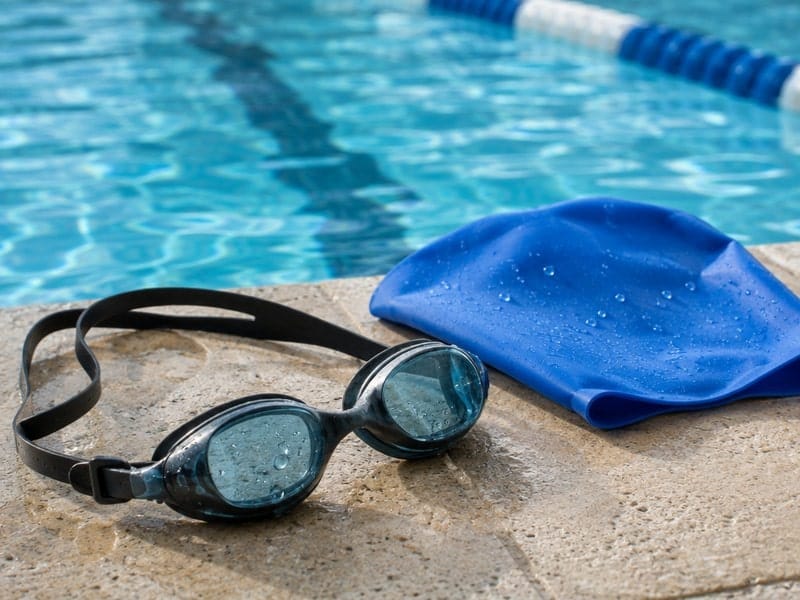
- Competitive swimming uses four strokes: freestyle, backstroke, breaststroke, and butterfly. Each has its own rules for arm movement, kicking, turns, and finishes.
- In freestyle races, swimmers may technically use any stroke they like. Nearly everyone chooses the front crawl because it is the fastest.
- Breaststroke is the slowest of the four competitive strokes. Its glide and frog-style kick make it popular with recreational swimmers who like to keep their heads above water.
- Butterfly grew out of breaststroke when swimmers began bringing their arms forward over the water. It became recognized as its own separate stroke in the 1950s.
- Backstroke is the only competitive stroke that starts in the water. Swimmers begin by holding the wall or starting grips instead of diving from a block.
- In the individual medley, one swimmer covers all four strokes in this order: butterfly, backstroke, breaststroke, then freestyle.
- The medley relay uses a different order: backstroke, breaststroke, butterfly, and freestyle. Backstroke goes first because it starts in the water, so it would be awkward to begin mid-race.
Olympic Waves
- Swimming has been part of every modern Summer Olympics since the first Games in 1896. That year, races were held in the chilly open waters of the Bay of Zea near Piraeus, Greece.
- Hungary’s Alfréd Hajós won two swimming events at the 1896 Olympics, the 100 meters and the 1,200 meters, becoming the first modern Olympic swimming champion. [Learn more: 30 Interesting Facts About Budapest: Vibrant Culture & History]
- At the 1900 Paris Olympics, swimming took place in the Seine River. The program even included unusual events such as an obstacle race and an underwater swimming contest.
- Women first competed in Olympic swimming at the 1912 Stockholm Games. Australia’s Fanny Durack won the 100-meter freestyle to become the first female Olympic swimming champion in an individual event.
- In 1922, American Johnny Weissmuller became the first person to swim 100 meters freestyle in under a minute. He went on to win five Olympic gold medals and later starred as Tarzan in Hollywood films.
- Mark Spitz won seven gold medals at the 1972 Munich Olympics, a single-Games record that stood for 36 years.
- Michael Phelps broke Spitz’s mark by winning eight gold medals at the 2008 Beijing Olympics. He retired with 23 Olympic golds and 28 total medals, both records.
- The 10-kilometer marathon swim joined the Olympic program at the 2008 Beijing Games, bringing open-water racing back to the Olympics.
- Swimming has been part of the Paralympic Games since the first Paralympics in Rome in 1960.
- Synchronized swimming entered the Olympics in 1984 and was renamed artistic swimming in 2017. Men were allowed to compete in the Olympic team event for the first time at Paris 2024.
Pools, Gear, and Rules

- Olympic and other long-course pools are 50 meters long, while short-course pools are 25 meters. Records are kept separately for each length because more turns change race times.
- Pools used for the Olympics and world championships must be at least 2 meters deep. Deeper water reduces waves bouncing off the bottom, which helps swimmers go faster.
- High-tech polyurethane supersuits helped swimmers shatter dozens of world records in 2008 and 2009. The sport banned them starting in 2010, limiting suits to textile fabrics.
- Swim goggles were not common in elite pool racing until the 1970s. Before that, competitors often swam long training sessions with stinging, unprotected eyes.
- The international governing body for swimming was known as FINA for more than a century. It changed its name to World Aquatics in 2022.
Open-Water Feats
- In 1875, English swimmer Matthew Webb became the first person recorded to swim the English Channel without artificial aids. He crossed from England to France in under 22 hours.
- In 1926, American Gertrude Ederle became the first woman to swim the English Channel. Her time of 14 hours and 39 minutes beat the existing men’s record by about two hours.
- The Strait of Dover, the narrowest part of the English Channel, is about 33 kilometers (21 miles) wide. Tides and currents push swimmers off course, so the actual distance they swim is usually much longer.
The Body and Water Safety
- That strong “chlorine smell” at a pool is mostly caused by chloramines, which form when chlorine reacts with sweat, urine, and other substances from swimmers. A well-maintained pool usually smells less like chemicals.
- Chloramines are also a major cause of red, irritated eyes after swimming, not just chlorine itself.
- Humans share a mammalian diving reflex with seals and whales. When the face meets cold water, the heart rate slows, helping the body conserve oxygen.
- Young babies placed face down in water often make rhythmic paddling motions. This reflex fades during the first months of life and does not mean infants can actually swim.
- Real drowning is often quiet. A person in trouble usually cannot shout or wave, which is why lifeguards are trained to watch for subtle signs instead of dramatic splashing.
- Because water supports much of the body’s weight, swimming is a low-impact exercise. It is often recommended for people with joint pain or those recovering from injuries.
Recommended Read:


