
40 Interesting Facts About Venezuela
Venezuela sits on South America’s Caribbean coast and packs Andean peaks, vast grasslands, rainforest, and ancient tabletop mountains into one country. It is the birthplace of Simón Bolívar and home to the world’s highest waterfall. These facts cover its landscapes, wildlife, history, economy, and lively culture.
Venezuela Facts At-a-Glance
Location: Northern coast of South America
Capital: Caracas
Area: About 916,000 sq km (354,000 sq mi)
Languages: Spanish (official); Indigenous languages also recognized
Religion: Mostly Roman Catholic
Climate: Tropical, cooler in the highlands
Government: Federal presidential republic
Currency: Bolívar
Geography and Landscapes
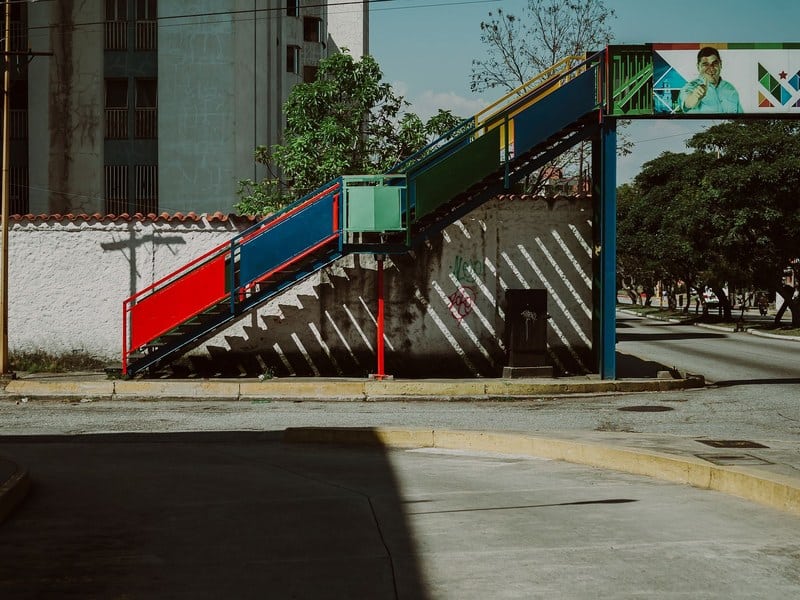
- Venezuela lies along the northern edge of South America. It borders Colombia to the west, Brazil to the south, and Guyana to the east, and it has a long coastline on the Caribbean Sea.
- Angel Falls is the world’s highest uninterrupted waterfall, with a total height of 979 m (3,212 ft). It plunges from the edge of Auyán-tepui, and in the Pemon language it is called Kerepakupai Merú. [Learn more: 10 Fascinating Facts About Waterfalls: Power of Nature]
- The falls take their English name from Jimmie Angel, an American aviator who flew over them in 1933. He returned in 1937 and landed his plane on top of Auyán-tepui, where it became stuck.
- Canaima National Park in southeastern Venezuela became a UNESCO World Heritage Site in 1994. It is famous for its tepuis, sheer-sided tabletop mountains made of some of the oldest rock on Earth.
- Mount Roraima, a dramatic tepui, marks the point where Venezuela, Brazil, and Guyana meet. It is often cited as an inspiration for Arthur Conan Doyle’s adventure novel The Lost World.
- The Orinoco is one of South America’s longest rivers. It loops through much of the country before spreading into a broad delta on the Atlantic coast.
- The Casiquiare is a rare natural channel that links the Orinoco basin with the Amazon basin. It allows water to flow between two of the continent’s great river systems. [Learn more: 30 Amazing Facts About Amazon Rainforest: Nature’s Marvel]
- Lake Maracaibo, in the northwest, is one of the largest lakes in South America. A narrow strait connects it to the Gulf of Venezuela and the Caribbean Sea.
- Where the Catatumbo River meets Lake Maracaibo, frequent nighttime storms create the famous Catatumbo lightning. The area holds a Guinness World Record for the highest concentration of lightning on Earth.
- Pico Bolívar is Venezuela’s highest mountain, rising to about 4,978 m (16,332 ft) in the Andes’ Sierra Nevada de Mérida. It is named after the independence hero Simón Bolívar.
Recommended Read:
Nature and Wildlife
- Venezuela is considered one of the world’s megadiverse countries. Its mix of mountains, plains, rainforests, and coastline supports an exceptional variety of plants and animals.
- The national bird is the turpial, or Venezuelan troupial. This black, orange, and white songbird is known for its bright colors and melodic calls.
- The araguaney is the national tree and blooms in brilliant yellow flowers during the dry season. The national flower is the orchid Cattleya mossiae.
- Los Roques, a Caribbean archipelago of coral islands and cays, is protected as a national park. Its clear lagoons and reefs make it a popular spot for snorkeling and diving.
- The Orinoco crocodile lives only in the Orinoco basin of Venezuela and Colombia. It is one of the most critically endangered crocodile species in the world.
History and Independence

- Christopher Columbus reached the Paria Peninsula in 1498 on his third voyage. It was the first time he set foot on the mainland of the Americas.
- According to the most widely told account, the country’s name comes from a 1499 Spanish expedition that included Amerigo Vespucci. The explorers saw stilt houses over the water around Lake Maracaibo and called the area “little Venice.”
- Caracas was founded in 1567 by Diego de Losada as Santiago de León de Caracas. The city sits in a mountain valley separated from the sea by the Ávila range.
- Venezuela declared independence from Spain on July 5, 1811, making it one of the first Spanish colonies in the Americas to do so. July 5 is still celebrated as Independence Day.
- Simón Bolívar was born in Caracas in 1783. Known as El Libertador, he led independence struggles that freed several South American nations from Spanish rule.
- The Battle of Carabobo on June 24, 1821, was a decisive victory for independence forces. The anniversary is a national holiday in Venezuela.
- After independence, Venezuela became part of Gran Colombia, a large republic led by Bolívar. It separated and became a fully independent state in 1830.
- The 1999 constitution changed the country’s official name to the Bolivarian Republic of Venezuela. The new name honors Simón Bolívar.
- The Venezuelan flag’s yellow, blue, and red stripes trace back to the independence leader Francisco de Miranda. An arc of white stars sits on the blue stripe, and an eighth star was added in 2006.
Oil and Economy
- Venezuela is frequently cited as having the largest proven oil reserves in the world. Much of this oil is extra-heavy crude found in the Orinoco Belt.
- Venezuela was a founding member of OPEC in 1960. Venezuelan oil minister Juan Pablo Pérez Alfonzo was one of the organization’s main architects.
- The country’s oil age took off in 1914, when the Zumaque I well struck oil in the Maracaibo basin. Oil soon became the backbone of the national economy.
- Long before the oil boom, Venezuela was famous for its cacao. Its fine Criollo varieties, including beans from the coastal village of Chuao, are prized by chocolate makers.
- Venezuela’s currency, the bolívar, is named after Simón Bolívar. His name also appears on states, cities, and countless plazas across the country.
Culture and Daily Life
- The arepa, a round cornmeal flatbread, is a daily staple across Venezuela. It is split open and stuffed with fillings such as cheese, shredded beef, or the chicken-and-avocado mix called reina pepiada.
- Pabellón criollo is widely considered the national dish. It combines shredded beef, black beans, white rice, and fried sweet plantains on one plate.
- At Christmas, families gather to make hallacas, corn dough parcels filled with a savory stew and wrapped in plantain leaves. Preparing them is often an all-day family project.
- Baseball is Venezuela’s most popular sport, and the country has sent many players to Major League Baseball. Shortstop Luis Aparicio became the first Venezuelan inducted into the Baseball Hall of Fame, in 1984.
- Venezuela is a beauty pageant powerhouse with multiple Miss Universe titles. Its winners in 2008 and 2009 made it the first country to win the crown in consecutive years.
- El Sistema, a free youth music education program, was founded in 1975 by José Antonio Abreu. Its best-known graduate is the internationally celebrated conductor Gustavo Dudamel.
- Joropo is the country’s signature folk music and dance, rooted in the Llanos plains. It is typically played on the harp, maracas, and the cuatro, a small four-string guitar.
- Rómulo Gallegos wrote Doña Bárbara (1929), one of Latin America’s classic novels, set on the Llanos. He later became president of Venezuela in 1948.
- The Ciudad Universitaria de Caracas, designed by architect Carlos Raúl Villanueva, became a UNESCO World Heritage Site in 2000. The campus blends modernist architecture with works by major artists.
- The Dancing Devils of Corpus Christi perform in colorful masks during the Catholic feast of Corpus Christi. UNESCO added the tradition to its list of Intangible Cultural Heritage in 2012.
- From 2007 to 2016, Venezuela used an unusual half-hour time zone, UTC−4:30. The country then returned to UTC−4. [Learn more: 20 Interesting Facts About Time Zones: How Time Works]
Recommended Read:


