
20 Fascinating Sleep Facts You Didn’t Know About a Good Night’s Rest
The human experience is often measured by what we achieve while the sun is up, yet nearly a third of our existence unfolds in the quiet, mysterious theater of sleep. Far from being a mere biological “reset” button, sleep is a sophisticated psychological workshop where our brains consolidate memories, process complex emotions, and even rehearse for future challenges.
To truly understand ourselves, we must look at what happens when our eyes close—from the ancient survival reflexes that make us “jerk” awake to the fascinating ways our minds populate our dreams with familiar faces.
20 Important Facts About Sleep
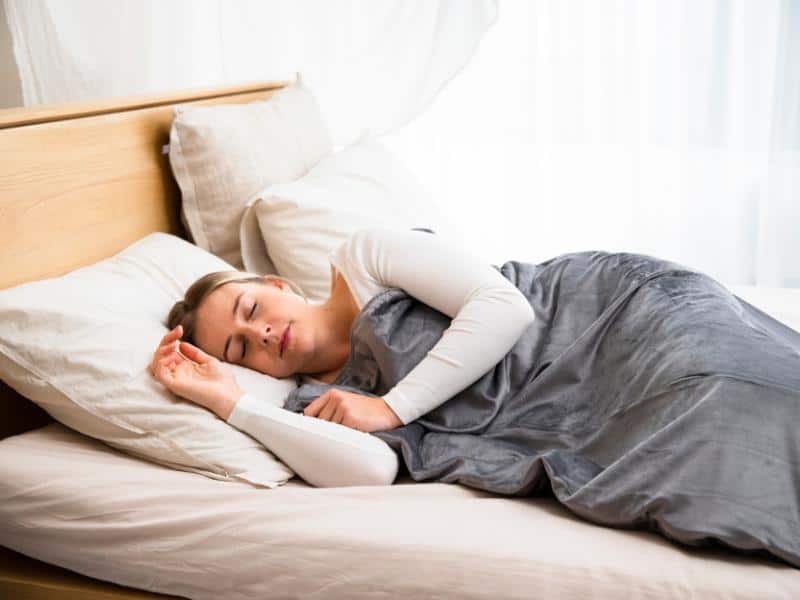
By exploring the following 20 surprising facts, we can begin to appreciate sleep not as a lost chunk of time, but as a vital pillar of mental health and a fascinating journey into the depths of our own subconscious.
The Human Side of Sleep
- Humans are the only mammals that willingly delay sleep. Every other animal on Earth goes to sleep when their body tells them to, but humans will push through tiredness for work, entertainment, or stress.
- You spend about one-third of your life asleep. If you live to be 75, you will have spent approximately 25 years in bed. It is a lot, but not the reason to delay it or ignore your need to rest at night as humans still need this time to reload and feel well. Lack of sleep can lead to serious health issues, both on physical and mental level.
- Before color TV, most people dreamed in black and white. Studies from the 1940s showed that most people reported monochromatic dreams. Today, with color media, only about 12% of people dream entirely in black and white.
- You grow taller while you sleep. Without gravity compressing your spine, you can be up to 0.3 inches taller in the morning. However, you “shrink” back down within hours of waking up.
- Sleep deprivation can be as dangerous as being drunk. After 18 hours of being awake, your reaction times and cognitive impairment are similar to a blood alcohol level of 0.05%. After 24 hours, it’s closer to 0.10%. You might try to find ways to stay healthy without it and use helpful apps to hack your body, but googling things like ‘what is Liven’ won’t give you the rest your body really needs.
- “Knocker-ups” were the original alarm clocks. In the 1800s and early 1900s, people were hired to walk around cities and tap on windows with long sticks to wake workers up for their shifts.
- Smell does not wake you up. While a loud noise can rouse you, your sense of smell essentially shuts down during deep sleep. This is why smoke detectors with loud alarms are so critical for fire safety.
- The “falling” sensation has a name. That sudden jerk that wakes you up just as you’re drifting off is called a hypnic jerk. Scientists believe it might be an ancient reflex to prevent our ancestors from falling out of trees.
The Science & Biology of Dreams
- You forget 90% of your dreams. Within 5 minutes of waking up, half of your dream is gone from your memory; within 10 minutes, 90% is forgotten.
- Your brain is more active during REM sleep than when you’re awake. During the Rapid Eye Movement (REM) stage, your brain is busy processing emotions and consolidating memories.
- You are paralyzed while you dream. To prevent you from physically acting out your dreams (and potentially hurting yourself), your brain sends a signal to relax all your muscles, essentially paralyzing your limbs.
- You can only dream of faces you’ve already seen. Your brain doesn’t “invent” people; it uses the faces of strangers you’ve passed on the street or seen on TV to populate your dream world.
- It is physically impossible to sneeze while asleep. Your body’s sneezing reflex is suppressed during REM sleep.
Fascinating Animal Sleep Facts

- Dolphins sleep with half their brain at a time. One hemisphere stays awake so they can continue to swim and surface for air, while the other half rests. This is called unihemispheric sleep.
- Sea otters hold hands when they sleep. This keeps them from drifting away from each other and their group (called a “raft”) while they snooze in the water.
- Snails can sleep for up to three years. This is a form of hibernation/aestivation used to survive extreme weather conditions.
- Horses and cows can sleep standing up. They have a “stay apparatus” in their legs that allows them to lock their joints so they don’t fall over, though they must lie down for deep REM sleep.
Suggested Read: 50 Mind-Blowing Facts About Nature for Students
Health & Record Breaking
- The record for the longest time without sleep is 11 days. Randy Gardner set this record in 1964. By the end, he suffered from hallucinations, paranoia, and extreme cognitive decline.
- New parents lose a massive amount of sleep. It is estimated that a new parent loses between 400 and 750 hours of sleep in the first year of a baby’s life.
- Ideally, it should take you 10 to 15 minutes to fall asleep. If you fall asleep in less than five minutes, you are likely severely sleep-deprived.
Ultimately, sleep is a profound biological dance that bridges our ancient instincts with modern psychology. From the three-year slumber of snails to the “knocker-ups” of the past, these twenty facts reveal that rest is far more than physical recovery.
It is a time when we grow taller, process the faces of strangers, and protect our minds through temporary paralysis. By respecting your body’s need for this vital “night shift,” you transform sleep from a luxury into a powerful tool for self-discovery.


