
10 Interesting Facts About Gold: Precious Metal Secrets
Gold has captivated humanity for thousands of years with its brilliant luster, resistance to tarnishing, and inherent beauty that transcends cultures and civilizations. Let’s explore fascinating facts about gold, a precious metal has shaped economies, sparked massive migrations during gold rushes, and continues to play crucial roles in modern technology from smartphones to space exploration.
Gold Facts At-a-Glance
Chemical Symbol: Au (from Latin “aurum”)
Atomic Number: 79 on the periodic table
Formation: Created in exploding stars (supernovae)
Total Mined: Approximately 244,000 metric tons throughout history
Major Producers: China, Russia, Australia, United States
Purity Measurement: Karats (24-karat = pure gold)
Melting Point: 1,948°F (1,064°C)
Primary Uses: Jewelry, electronics, investment, medical applications
1. All gold on Earth was forged in exploding stars
Every piece of gold on our planet was created billions of years ago inside massive dying stars called supernovae. When these stars exploded, they scattered gold and other heavy elements across space, which eventually became part of the material that formed Earth. This means the gold in your jewelry is literally made of stardust, making each piece a cosmic treasure with an origin story spanning billions of years.
Suggested Read: 10 Interesting Facts About Stars: Cosmic Wonders
2. All the gold ever mined could fit in four Olympic swimming pools
Despite thousands of years of mining, humans have extracted surprisingly little gold from the Earth. The total amount of gold ever mined in human history—approximately 244,000 metric tons—would form a cube measuring only about 72 feet on each side. This relatively small amount could fit comfortably in four Olympic-sized swimming pools, highlighting just how rare this precious metal truly is.
3. Gold is so malleable it can be beaten into sheets one atom thick
Gold possesses extraordinary malleability, meaning it can be hammered or pressed into incredibly thin sheets without breaking. A single ounce of gold can be beaten into a sheet covering 300 square feet, and modern techniques can create gold leaf so thin it’s nearly transparent—just a few atoms thick. This unique property makes gold invaluable for decorative applications and specialized scientific instruments.
4. Pure gold is completely indestructible under normal conditions
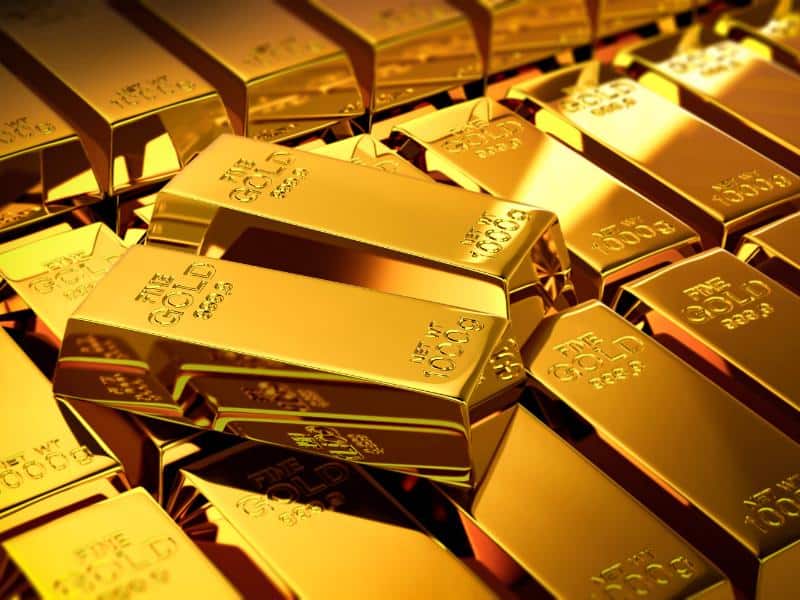
Gold never rusts, tarnishes, or corrodes under normal environmental conditions, making it virtually eternal. Unlike iron or silver, gold doesn’t react with oxygen, water, or most chemicals, which explains why ancient gold artifacts emerge from archaeological sites looking as brilliant as the day they were made. This permanence has made gold a symbol of eternal value across virtually every culture in human history.
5. Gold conducts electricity better than almost any other metal
Gold is an excellent electrical conductor that never corrodes, making it essential for modern electronics. Every smartphone, computer, and GPS device contains small amounts of gold in its circuitry because gold ensures reliable connections that won’t degrade over time. NASA uses gold coating on spacecraft and satellite components to protect against radiation and ensure long-lasting electrical connections in the harsh environment of space.
6. The human body naturally contains about 0.2 milligrams of gold
Every human body contains tiny traces of gold, primarily concentrated in blood and bones. While this amount is incredibly small—worth only a few cents—it demonstrates that gold is naturally present throughout Earth’s environment. Scientists believe this gold comes from trace amounts in food and water that we consume throughout our lives, though the exact biological role of gold in the human body remains unclear.
7. Gold can be safely eaten and is used in luxury foods
Pure gold is completely non-toxic and passes through the human digestive system unchanged, making it safe to eat. Luxury restaurants and confectioners use edible gold leaf to decorate expensive dishes, chocolates, and beverages. While gold adds no flavor or nutritional value, these gilded foods can cost hundreds of dollars, proving that gold’s appeal extends far beyond its practical applications.
8. California’s Gold Rush moved more earth than the Panama Canal

The California Gold Rush of 1849-1855 was so intensive that miners moved an estimated 1.5 billion cubic yards of earth and rock—more material than was excavated to build the entire Panama Canal. This massive environmental impact reshaped entire landscapes and river systems throughout California. The rush brought over 300,000 people to California in just six years, transforming it from a sparsely populated territory into a thriving state and demonstrating gold’s power to reshape entire civilizations. [Learn more: 100 California Fun Facts]
9. The largest gold nugget ever found weighed over 170 pounds
The “Welcome Stranger,” discovered in Australia in 1869, was the largest gold nugget ever recorded, weighing 173 pounds and containing 156 pounds of pure gold. This massive find was so large that it had to be broken up to fit on the scales for weighing. At today’s gold prices, this single nugget would be worth several million dollars, representing one of the most valuable single discoveries in mining history. [Learn more: 35 Fun Facts About Australia]
10. Gold has been found on every continent including Antarctica
Gold deposits exist on every continent on Earth, including Antarctica, where gold particles have been discovered in ice and rock samples. This global distribution occurs because gold formed during Earth’s early geological history and was distributed worldwide through tectonic activity and erosion. However, most of the world’s easily accessible gold has already been mined, leading to increasingly challenging extraction methods.
Discover the Remarkable Continents of Our Planet
Across our world’s seven continents, you’ll find extraordinary ecological diversity, rich cultural heritage, and remarkable human achievements that have shaped our global story throughout millennia.
- 50 Amazing Facts About Antarctica: Icy Wonders
- 50 Fascinating Facts About Africa: Cradle of Humanity
- 75 Amazing Facts About Asia: Land of Diversity
- 55 Interesting Facts About North America: A Diverse Continent
- 50 Fascinating Facts About South America: Land of Wonders
- 35 Fun Facts About Australia: Discover The Land Down Under
- 60 Essential Facts About Europe: A Continental Journey


