
10 Interesting Facts About Gravity: Force of Nature
Let’s explore amazing facts about gravity and uncover the surprising science behind this fundamental force that governs everything from falling apples to massive galaxies.
Gravity is the invisible force that keeps our feet on the ground, holds planets in orbit around stars, and shapes the entire structure of the universe. Despite being the most familiar force in our daily lives, gravity remains one of the most mysterious and fascinating aspects of physics, with properties that often defy our common sense understanding of how the world works.
Gravity Facts At-a-Glance
Type: Fundamental force of nature
Strength: Weakest of the four fundamental forces
Discovery: Described by Newton in 1687, refined by Einstein in 1915
Speed: Gravitational effects travel at the speed of light
Range: Infinite, but weakens with distance
Earth’s Pull: 9.8 meters per second squared acceleration
Study Field: Physics and astrophysics
Modern Understanding: Described as curved spacetime by Einstein’s General Relativity
1. Gravity is actually the weakest fundamental force in nature
Despite holding entire galaxies together, gravity is by far the weakest of the four fundamental forces in physics. It’s approximately 10^36 times weaker than the electromagnetic force, which is why a small magnet can easily overcome Earth’s gravitational pull when it picks up a paperclip. The only reason gravity seems strong to us is because planets and stars contain enormous amounts of mass, amplifying gravity’s cumulative effect.
Aside: Comparison of the Four Fundamental Forces
Here’s how gravity compares to the other fundamental forces that govern our universe:
| Fundamental Force | Characteristics |
|---|---|
| Strong Nuclear Force | Holds atomic nuclei together; operates at subatomic scale |
| Electromagnetic Force | Electricity, magnetism, and light; binds atoms and molecules |
| Weak Nuclear Force | Causes radioactive decay; transforms particles |
| Gravitational Force | Attracts masses; infinite range but extremely weak |
2. Everything falls at the same speed in a vacuum
Regardless of their weight, all objects fall at exactly the same rate when air resistance is eliminated. A feather and a hammer dropped simultaneously on the Moon (which has no atmosphere) will hit the ground at the same time. This counterintuitive fact was first proposed by Galileo and later explained by Einstein’s theory that gravity isn’t actually a force pulling objects down, but rather curved spacetime.
3. Gravity makes time move slower
Einstein’s theory of relativity revealed that stronger gravitational fields actually slow down the passage of time. Clocks run slightly slower at sea level than on mountaintops because Earth’s gravity is stronger closer to the planet’s center. This effect, called gravitational time dilation, is so precise that GPS satellites must account for it to maintain accuracy—without these corrections, GPS would be off by several miles.
4. There’s no such thing as “zero gravity” in space
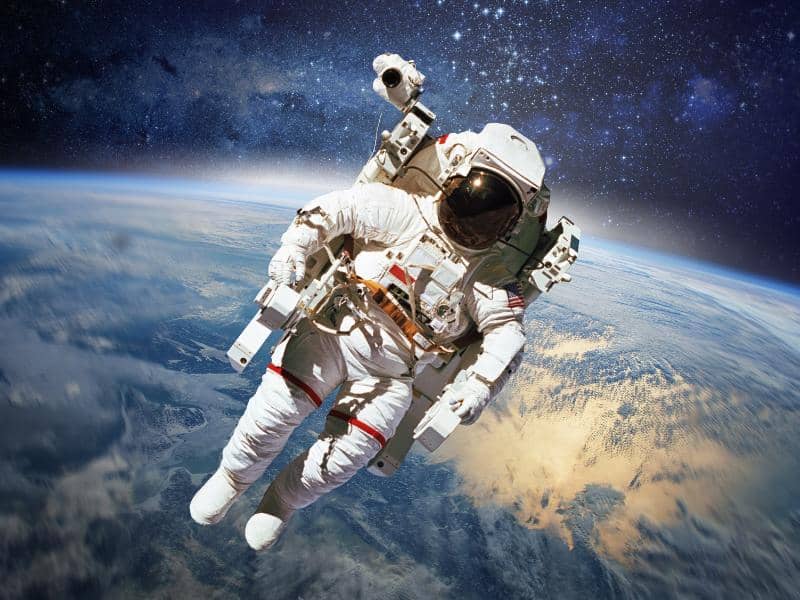
Astronauts floating in the International Space Station aren’t experiencing zero gravity. They’re actually in constant free fall toward Earth. The station and everything inside it are falling at the same rate, creating the sensation of weightlessness. Earth’s gravity at the ISS altitude is still about 90% as strong as it is on the surface, but the station’s forward motion keeps it perpetually “missing” Earth as it falls.
5. Gravity creates ocean tides through the Moon’s pull
Ocean tides result from the Moon’s gravitational pull being slightly stronger on the side of Earth facing the Moon. This creates a “bulge” of water on both the near and far sides of Earth—the near side because the Moon pulls the water toward it, and the far side because the Moon pulls Earth itself away from the water. As Earth rotates, different locations experience these bulges as high and low tides.
Discover More About Nature’s Water Magic:
6. Gravity can bend light even though light has no mass
According to Einstein’s general relativity, gravity doesn’t just attract objects with mass—it actually warps the fabric of space and time itself. This means that light, despite having no mass, follows curved paths when passing through gravitational fields. This effect, called gravitational lensing, allows astronomers to see galaxies hidden behind massive objects and has been used to detect dark matter.
7. Gravity varies significantly across Earth’s surface
Earth’s gravitational pull isn’t uniform everywhere on the planet. Gravity is strongest at the poles and weakest at the equator due to Earth’s rotation and slightly flattened shape. Additionally, local variations occur due to differences in rock density, elevation, and underground features. These variations are so precise that scientists use gravity measurements to discover oil deposits and study Earth’s internal structure.
8. Gravitational waves ripple through spacetime

When massive objects like black holes or neutron stars accelerate or collide, they create ripples in spacetime called gravitational waves. These waves travel at the speed of light and were first directly detected in 2015 by the LASER Interferometer Gravitational-Wave Observatory (LIGO). The detection confirmed Einstein’s century-old prediction and opened an entirely new way to study the universe.
9. Gravity on other planets varies dramatically
A person weighing 100 pounds on Earth would weigh only 38 pounds on Mars due to its smaller mass, but would weigh 236 pounds on Jupiter due to its enormous mass. On the Moon, that same person would weigh just 17 pounds. These differences in gravitational strength would significantly affect how you move, jump, and even how your body functions on different worlds.
10. Scientists still don’t fully understand how gravity works
Despite centuries of study, gravity remains the most mysterious fundamental force. Unlike other forces that can be explained by particle interactions, gravity’s quantum mechanics remain unsolved. Scientists have never detected gravitons (theoretical gravity particles), and reconciling Einstein’s gravity with quantum physics is one of the greatest unsolved problems in modern science, driving ongoing research into theories like string theory and quantum gravity.
Discover More Interesting Facts About Nature
Learn about the mysteries and marvels of our planet’s most remarkable natural features.
- 10 Interesting Facts About Stars: Cosmic Wonders
- 25 Cool Facts About Sound Waves: Physics Made Simple
- 10 Interesting Facts About Rocks: Earth’s Building Blocks
- 10 Interesting Facts About Gold: Precious Metal Secrets
- 10 Interesting Facts About Wildfires: Ecosystem Role
- 25 Fascinating Facts About Earthquakes: Earth’s Tremors
- 10 Interesting Facts About Snow: Nature’s Icy Art
- 50 Mind-Blowing Facts About Nature for Students


