
10 Interesting Facts About Stars: Cosmic Wonders
Stars are massive, glowing spheres of gas that light up the night sky and serve as the fundamental building blocks of galaxies throughout the universe. These cosmic furnaces have fascinated humans for thousands of years, serving as navigation tools, calendar markers, and sources of wonder about our place in the cosmos. Let’s explore the remarkable facts about stars, these celestial giants that make life on Earth possible.
Stars Facts At-a-Glance
Composition: Primarily hydrogen and helium gas
Energy Source: Nuclear fusion in their cores
Nearest Star: The Sun (93 million miles away)
Visible Stars: About 9,000 stars visible to naked eye from Earth
Total in Milky Way: Estimated 100-400 billion stars
Lifespan Range: Millions to trillions of years
Temperature Range: 3,000°F to over 100,000°F surface temperature
Study Field: Astronomy and astrophysics
1. Stars are born in giant cosmic nurseries
Stars form inside massive clouds of gas and dust called nebulae, which can stretch across hundreds of light-years. When gravity causes parts of these clouds to collapse, the material heats up and eventually becomes dense and hot enough to trigger nuclear fusion. The Eagle Nebula, one of the most famous star-forming regions, is actively creating new stars that will shine for billions of years.
Suggested Read: 10 Interesting Facts About Gravity: Force of Nature
2. Our Sun is actually a middle-aged, medium-sized star
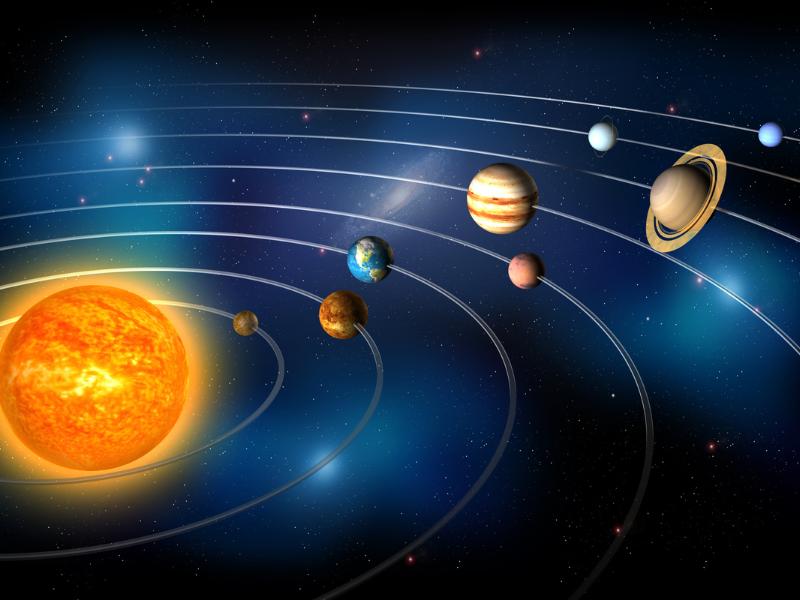
While the Sun seems enormous to us, it’s considered a “yellow dwarf” star and is quite average in the cosmic scale. At 4.6 billion years old, it’s roughly middle-aged and has about 5 billion more years before it begins to die. The Sun converts 4 million tons of its mass into energy every single second through nuclear fusion, providing the light and heat that sustains life on Earth.
3. Some stars are so large they could swallow our entire solar system
The largest known star, UY Scuti, has a radius about 1,700 times larger than our Sun. If UY Scuti replaced our Sun, its surface would extend beyond the orbit of Jupiter, completely engulfing Mercury, Venus, Earth, and Mars. Despite its enormous size, UY Scuti is actually less massive than many smaller stars because it’s much less dense.
4. Stars twinkle because of Earth’s atmosphere, not space

Stars appear to twinkle when viewed from Earth because their light passes through our planet’s turbulent atmosphere, which bends and distorts the light rays. In space, astronauts see stars as steady points of light without any twinkling. Planets usually don’t twinkle as much as stars because they appear as small discs rather than single points of light, making them less affected by atmospheric disturbance.
5. Most stars actually come in pairs or groups
About 85% of stars exist in binary or multiple star systems, where two or more stars orbit around each other. Our Sun is unusual for being a single star. In binary systems, stars can transfer material between each other, dramatically affecting their evolution and sometimes creating spectacular explosions called novae when material accumulates and ignites on a star’s surface.
Suggested Read: Explore fascinating facts about Earth’s natural wonders.
6. The light from distant stars shows us the past
When you look at stars, you’re literally seeing into the past because light takes time to travel across the vast distances of space. The light from Proxima Centauri, our nearest star neighbor, takes over 4 years to reach Earth. Light from other stars can take hundreds, thousands, or even millions of years to reach us, meaning we see them as they were long ago.
7. Stars create and scatter the elements essential for life

Stars are cosmic element factories that create heavier elements like carbon, oxygen, iron, and gold through nuclear fusion in their cores. When massive stars explode as supernovae, they scatter these elements throughout space, seeding the universe with the materials needed to form planets and life. Every element in your body except hydrogen was forged inside a star.
8. Some stars spin incredibly fast
While our Sun rotates once every 25 days, some stars spin much faster. Neutron stars, which are the collapsed cores of massive stars, can rotate over 700 times per second. These ultra-dense objects are so compact that a teaspoon of neutron star material would weigh about 6 billion tons on Earth, yet they can spin faster than a kitchen blender.
9. Stars have different colors based on their temperature
Star colors reveal their surface temperatures: blue and white stars are the hottest (over 30,000°F), yellow stars like our Sun are medium temperature (about 10,000°F), and red stars are the coolest (around 3,000°F). Ironically, the hottest blue stars burn through their fuel so quickly that they live only a few million years, while cool red stars can shine for trillions of years.
10. Dead stars can become incredibly dense objects
When stars die, they can become white dwarfs, neutron stars, or black holes depending on their original mass. A white dwarf is roughly the size of Earth but contains as much mass as our Sun. Neutron stars are even more extreme—about 12 miles across but containing 1.5 times the Sun’s mass. Black holes are so dense that not even light can escape their gravitational pull.
Discover Interesting Facts About the Seasons
Learn about the marvels of our planet’s remarkable natural phenomena and seasonal changes.


